

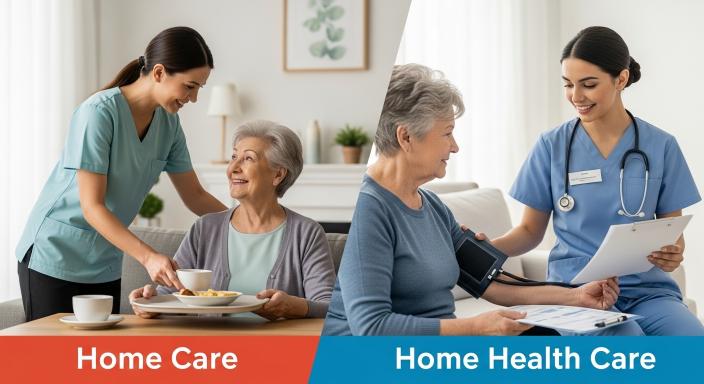
Families across Iowa, Wisconsin, Colorado, New Mexico, Northeast Florida, and beyond face this question every day when arranging support for an maturing parent or loved one recovering at home. Understanding the difference between them can help you choose the right type of care based on health needs and budget.
What Is Home Care?

Home care is non-medical support provided to individuals in their own homes. It is designed to help people with the tasks of daily living that have become difficult due to age, disability, or recovery from illness. Home care does not require a doctor’s prescription. Caregivers who provide home care are trained support workers, not licensed medical professionals. They help with the practical, everyday tasks.
Services Included in Home Care
Personal care is one of the most common home care services. This includes helping someone bathe, dress, groom, and manage personal hygiene. For many seniors or people with limited mobility, these tasks become genuinely difficult without assistance.
A caregiver can plan, shop for, and prepare nutritious meals based on the person’s dietary needs and preferences. This is especially important for seniors who live alone and may not be eating properly.A home care aide can provide regular conversation, accompany someone on walks, play games, or simply be a consistent, friendly presence.
What Is Home Health Care?

Home health care is medical care delivered in the home by licensed healthcare professionals. It is typically prescribed by a doctor and designed to treat a specific health condition, support recovery from surgery or illness. Because home health care involves clinical treatment, it requires qualified professionals such as registered nurses, licensed practical nurses, physical therapists, and speech therapists. Home health care is sometimes called skilled home health or medical home care.
Services Included in Home Health Care
Skilled nursing care is the backbone of home health services. A registered nurse visits the home to monitor vital signs, assess the patient’s condition, administer medications, and communicate with the treating physician about any changes.
A home health nurse can administer injections, set up IV lines, manage complex medication schedules, and monitor for side effects or dangerous interactions. Physical therapy helps patients regain strength, mobility, and function after surgery, a fall, or a stroke.
Key Differences Between Home Care and Home Health Care
 Understand how home care and home health care differ in services, providers, and level of support.
Type of Services
Home care covers personal hygiene, meal preparation, companionship, light housekeeping, and transportation. Home health care covers skilled nursing, wound care, medication management, physical therapy, occupational therapy, and speech therapy.
Who Provides Care
Home care is provided by trained caregivers, home health aides, and personal support workers who are not licensed medical professionals. Home health care is provided by registered nurses, licensed practical nurses, physical therapists, occupational therapists, speech therapists, and medical social workers.
Level of Medical Support
Home care provides no medical treatment. Caregivers can offer medication reminders but cannot administer medications or perform clinical tasks. Home health care provides full clinical treatment within the scope of the assigned professionals, following a physician-approved plan.
Duration and Frequency of Care
Home care can be arranged on an hourly, daily, or live-in basis and can continue indefinitely based on the person’s needs. Home health care is typically short-term, tied to recovery from a specific medical event, and re-certified periodically by a physician.
Cost Differences
Home care is generally the more affordable option and is most commonly paid out of pocket or through long-term care insurance. Home health care costs more because it involves licensed medical professionals. However, it is often covered by Medicare, Medicaid, or private insurance when prescribed by a doctor, which can significantly reduce what families pay directly.
Does Medicare Cover Home Health Care?
Yes, Medicare does cover home health care, but only if the care is medically necessary and meets specific rules. Medicare is designed to support people who need skilled medical treatment at home, not basic daily help. This means it will pay for services like nursing care, physical therapy, and other treatments that help a person recover from illness, surgery, or manage a health condition.
To qualify, a doctor must confirm that home health care is needed and the person must be considered home bound, meaning it is difficult for them to leave home without assistance. The care must also be provided by a Medicare-approved home health agency.
However, Medicare does not cover non-medical services like help with bathing, cooking, or cleaning if that is the only type of care needed. In simple terms, Medicare covers medical home care services, not general personal support at home.
Who Needs Home Care?
Seniors who are maturing in place and need help with daily tasks are the most common recipients of home care. This includes older adults who live alone, those with limited mobility, and people who are physically or cognitively declining but do not have urgent medical needs.
People who need regular companionship also benefit greatly from home care. Isolation is a major health risk for older adults and having a consistent caregiver visit several times a week can significantly improve mental and emotional well-being.
Individuals recovering from a minor illness or procedure who do not need clinical oversight but do need practical support at home are also well suited for home care services.
Who Needs Home Health Care?
Patients recovering from surgery, such as a hip replacement, cardiac procedure, or joint surgery, are among the most common recipients of home health care. They need clinical oversight, wound management, and rehabilitation that only licensed professionals can provide.
People with chronic illnesses such as heart failure, diabetes, C-O-P-D, or cancer who require regular monitoring and medication management at home rely on home health care to stay out of the hospital.
Individuals who have recently been discharged from a hospital or skilled nursing facility and need a structured transition back to independent living at home are also prime candidates for home health care services.
Can Home Care and Home Health Care Work Together?

Yes, and in many cases using both together produces the best outcomes.
They may receive home health care visits from a nurse three times a week for wound care and vital sign monitoring, and physical therapy visits to rebuild strength and mobility. At the same time, they arrange daily home care for meal preparation, bathing assistance, and light housekeeping, tasks the nurse and physical therapist are not there to handle.
The two services address completely different needs. When both are in place and the care teams communicate well, the person at home gets comprehensive support that covers both their medical recovery and their daily living needs.
How to Choose the Right Type of Care

Choosing the right type of care depends on the person’s needs, health condition, and daily routine. Understanding a few key factors can make the decision easier.
Assess Medical Needs
The first question to ask is whether the person needs clinical treatment. If they are recovering from surgery, managing a complex health condition, or require medication management by a nurse, home health care is necessary. If their needs are primarily practical, home care is the right fit.
Consider Daily Living Support
Even if someone qualifies for home health care, they may also need help with daily tasks that clinical professionals do not provide. Assessing whether personal care, meal preparation, and companionship are needed helps determine whether home care should be added alongside medical services.
Speak with Healthcare Professionals
A physician or licensed care coordinator is the best person to help define the right level of care. They can assess the medical situation, write orders for home health if needed, and help connect families with appropriate agencies.
Budget and Availability Factors
Understanding what insurance covers is an important practical step. Medicare covers home health care when prescribed by a physician and eligibility criteria are met. Home care is typically private pay, though some Medicaid programs and long-term care insurance policies cover certain home care services.
Benefits of Home Care
The most significant benefit of home care is that it allows someone to stay in their own home. Independence and familiar surroundings have a measurable positive impact on mental health and quality of life for older adults.
Emotional support and consistent companionship reduce isolation, which is linked to depression, cognitive decline, and even increased mortality risk in seniors. Having a reliable caregiver creates a sense of security and routine that makes a real difference day to day.
Overall quality of life improves when someone has helped with the tasks that have become overwhelming. Eating well, staying clean, living in a tidy home, and having regular social interaction all contribute to better health outcomes over time.
Benefits of Home Health Care
The primary benefit of home health care is faster and safer recovery. Having a licensed professional monitoring a patient’s condition at home catches problems early before they become serious enough to require a return trip to the hospital.
Professional medical supervision in a familiar, comfortable environment reduces the stress of recovery. Patients tend to do better at home than in institutional settings when appropriate clinical support is in place.
Reduced hospital read missions are one of the most well-documented outcomes of home health care. Skilled nursing visits and therapy at home keep patients on track with their recovery and reduce the likelihood of complications that would send them back to the emergency room.
Common Misconceptions About Home Care vs Home Health Care
The most common misconception is that the two are the same thing.
Home care and home health care are the same thing. The services, providers, costs, and coverage are completely different. Choosing based on this assumption can result in someone missing the medical care they need or paying for clinical services they do not require.
Only elderly people use these services. People of all ages recover from surgery, manage chronic illnesses, or need daily support at home. Both services are available to any adult who meets the relevant criteria.
A home care aide can handle medical tasks. Home care aides are trained support workers, not licensed medical professionals. Wound care, medication administration, and clinical tasks are completely outside their scope.
Home health care is only for people who are seriously ill. Home health care is specifically designed as an alternative to institutional care. It allows people to receive clinical-level treatment comfortably at home, even for conditions that are manageable but require professional oversight.
It is not serious enough to need care yet. Most families wait too long. Getting the right support in place early leads to better outcomes and prevents situations from becoming a crisis.
When Should You Seek Professional Advice?
If someone is struggling with daily tasks like bathing, dressing, cooking, or getting around the home safely, that is a sign home care may be needed. If those difficulties are accompanied by social isolation or signs of depression, home care becomes even more important.
If someone has recently been discharged from a hospital or skilled nursing facility, is managing a complex chronic illness, needs wound care or medication management, or is undergoing rehabilitation, home health care is likely necessary.
When both sets of needs are present, a physician or licensed care coordinator can help design a plan that combines both services into a coordinated, effective approach.
Ready to Find the Right Care for Your Loved One?
If your loved one needs help with bathing, meals, companionship, or daily routines, that is home care. In many cases, both work together to provide complete support at home. Contact us At Home Halo, we provide compassionate, non-medical in-home care for seniors and veterans across Iowa, Wisconsin, Colorado, New Mexico, Northeast Florida, Massachusetts, Idaho, and Plano.
Our trained caregivers help with daily living, companionship, dementia care, respite care, and more so your loved one can stay safely and comfortably at home. Our care coordinators listen to your situation, answer your questions, and help you build a care plan that actually fits your loved one’s needs.
Conclusion
The difference between home care and home health care comes down to one core distinction: medical versus non-medical support. Home health care treats illness and supports clinical recovery. Home care helps with daily living and maintains quality of life.
Neither is better than the other. They serve different purposes and often work best together. What matters is matching the right type of care to the actual needs of the person receiving it. The best decisions about care are made with full information, input from healthcare professionals, and a clear understanding of what your loved one actually needs day to day.
Frequently Asked Questions
What is the main difference between home care and home health care?
Home care is non-medical support with daily tasks like bathing, meals, and companionship. Home health care is medical treatment provided by licensed nurses and therapists, prescribed by a doctor.
Does Medicare cover home care or home health care?
Medicare covers home health care when prescribed by a doctor and eligibility requirements are met. It does not cover standard non-medical home care. Home care is typically paid out of pocket or through long-term care insurance.
Can someone receive both home care and home health care at the same time?
Yes. Many people use both together. A nurse or therapist handles medical needs while a home care aide assists with daily tasks. This combination provides comprehensive support during recovery.
Do you need a doctor’s referral for home care?
No. Home care does not require a doctor’s prescription. Home health care, however, always requires a physician’s order before services can begin.
How long does home health care typically last?
Home health care is usually short-term and tied to a specific medical episode such as surgery recovery or illness management. It is re-certified every 60 days by a physician as long as the patient continues to meet eligibility requirements.