

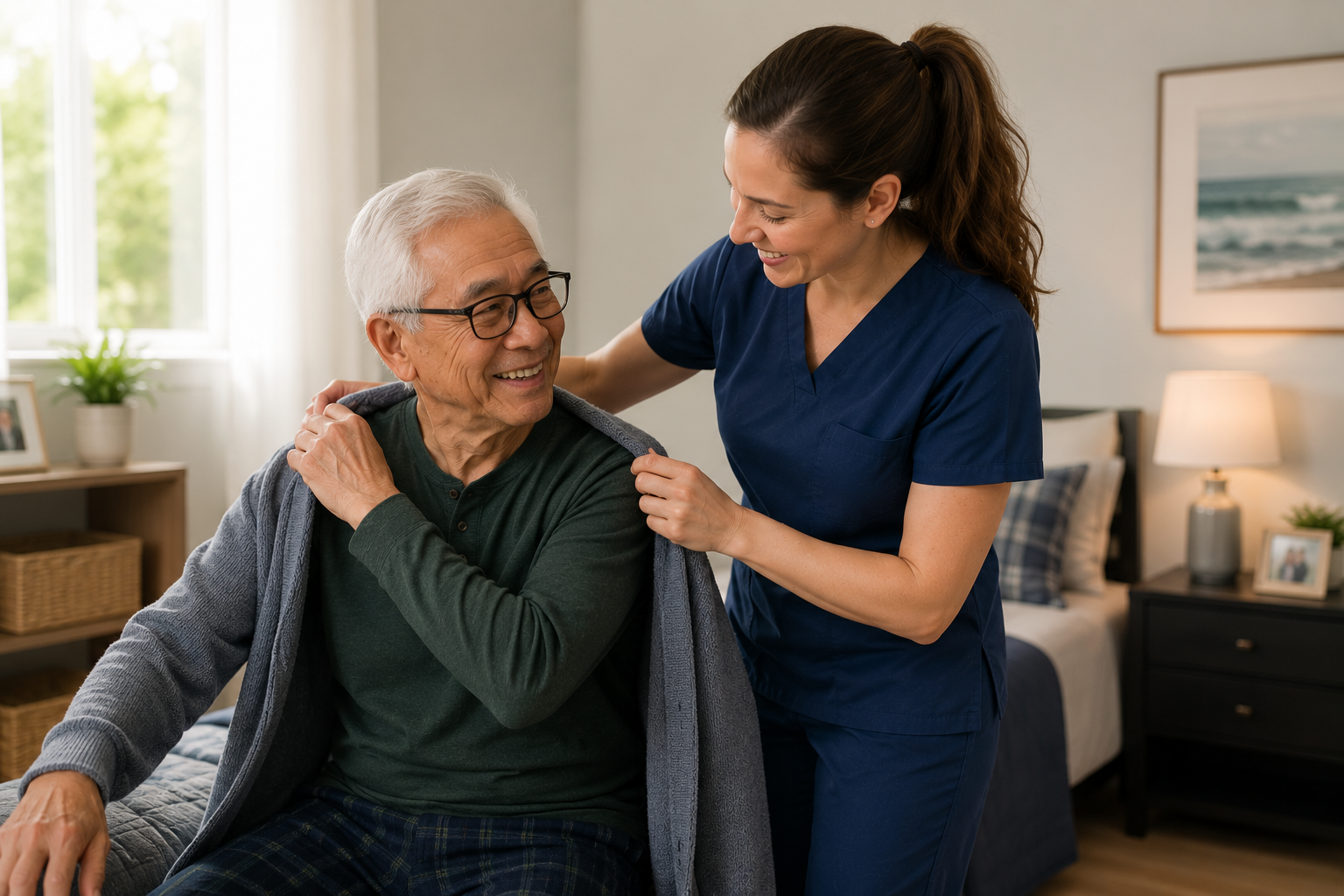
As seniors age, everyday activities that were once simple can become more challenging. Tasks such as bathing, dressing, grooming and moving safely throughout the home may require additional support. While these changes can be difficult for both seniors and their families, receiving assistance does not mean giving up independence.
Personal care assistance provides practical support with daily activities while helping seniors maintain dignity, comfort and quality of life. For many families, personal care services make it possible for a loved one to remain safely at home while receiving the assistance they need.
Understanding what personal care assistance includes and when it may be beneficial can help families make informed decisions about their loved one’s care.
What Is Personal Care Assistance?
Personal care assistance is a non-medical home care service that helps seniors with activities of daily living, often referred to as ADLs. These are essential tasks to support a person’s health, safety and well-being.
These services are designed to provide assistance while encouraging seniors to remain as independent as possible.
Common personal care assistance services include:
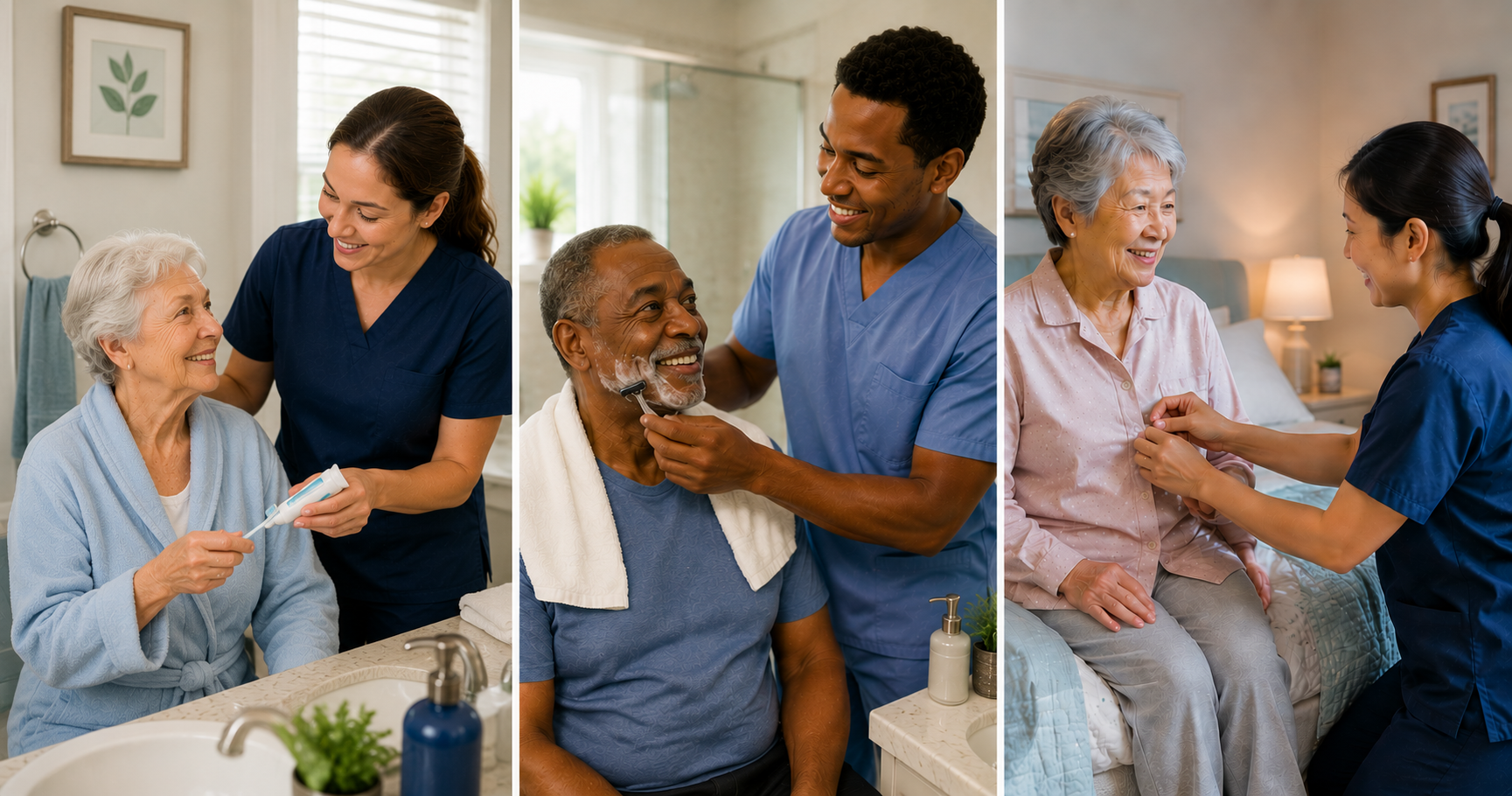
- Bathing assistance
- Dressing assistance
- Grooming and hygiene support
- Toileting assistance
- Mobility support
- Transferring assistance
- Medication reminders
- Meal preparation support
- Assistance with daily routines
The goal of personal care assistance is not to take over tasks completely, but to provide the support necessary to help seniors navigate everyday life.
In-Home Care for Seniors & Veterans
Compassionate, personalized in home care designed to help seniors live safely and independently in the comfort of home. Our trusted home care services provide daily support, companionship, and specialized senior home care giving families peace of mind every step of the way.
Signs a Senior May Benefit from Personal Care Assistance
Many families wonder when it may be time to consider additional support. While every situation is unique, certain signs may indicate that personal care assistance could be beneficial.
Common signs include:
- Difficulty bathing safely
- Trouble getting dressed independently
- Changes in personal hygiene
- Increased fall risk
- Difficulty moving throughout the home
- Missed medications
- Challenges preparing meals
- Recovery following illness, injury or surgery
- Increased caregiver stress within the family
Seeking support early can often help prevent minor challenges from becoming larger concerns while allowing seniors to maintain independence longer.
Benefits of Personal Care Assistance
Personal care assistance offers benefits for both seniors and their families.
Increased Safety
Many seniors experience mobility challenges that can increase the risk of falls and injuries. Having assistance available can help create a safer environment while providing support with daily routines.
Preserved Independence
Receiving help with specific tasks allows many seniors to continue living at home and maintaining control over their daily lives. Personal care assistance is designed to support independence rather than replace it.
Improved Comfort and Confidence
Simple daily tasks can become frustrating when physical limitations make them more difficult. Assistance with personal care routines can help seniors feel more comfortable, confident and supported
Peace of Mind for Families
Family members often worry about a loved one’s safety and well-being. Knowing a trusted caregiver is available to provide support can help reduce stress and provide reassurance.
Support for Family Caregivers
Many family caregivers balance caregiving responsibilities with work, children and other obligations. Personal care assistance can help relieve some of these responsibilities while ensuring a loved one receives dependable support.
Personal Care Assistance and Aging in Place
Many seniors express a desire to remain in their homes for as long as possible. Personal care assistance can play an important role in making aging in place a realistic and sustainable option.
By providing support with daily activities, caregivers help seniors maintain routines, remain comfortable in familiar surroundings and continue participating in the activities that matter most to them.
For many families, personal care assistance becomes a valuable part of a long-term plan that promotes independence and quality of life.
Who Can Benefit from Personal Care Assistance?
While personal care assistance is commonly associated with seniors, many individuals can benefit from these services.
Personal care assistance may be appropriate for:
- Older adults experiencing age-related challenges
- Individuals recovering from surgery or hospitalization
- People living with chronic conditions
- Individuals with mobility limitations
- Seniors living with dementia or memory-related conditions
- Family caregivers seeking additional support
Because every situation is different, care plans can often be customized to meet individual needs and preferences.
Trusted Home Care Services
At The Home Halo®, we are a trusted home care agency dedicated to providing non medical home care, companion care, and caregiver services that support independence, dignity, and comfort at home.
Choosing a Personal Care Assistance Provider
Selecting the right provider is an important decision. Families should look for a provider that prioritizes compassionate care, caregiver training and clear communication.
Consider asking:
- How are caregivers screened and trained?
- How are care plans developed?
- How does the provider communicate with families?
- What personal care services are available?
- Can care schedules be adjusted as needs change?
- What experience does the provider have supporting seniors with similar needs?
Finding the right fit can help families feel confident that their loved one is receiving high-quality support.
Why Families Choose Home Halo
At Home Halo, we understand that every individual’s needs are unique. Our caregivers provide compassionate personal care assistance that helps seniors remain safe, comfortable and independent at home.
We work closely with families to develop personalized care plans that align with individual goals, preferences and routines. Whether a loved one needs occasional support or more consistent assistance, our team is committed to providing dependable care that promotes dignity and quality of life.
Whether assistance is needed with bathing, dressing, mobility support or other daily routines, our caregivers focus on providing respectful, personalized care that helps seniors maintain their independence and quality of life while remaining in the comfort of home.
Frequently Asked Questions About Personal Care Assistance
Families often have questions about what personal care assistance includes and when services may be appropriate. Below are answers to some of the most common questions families ask when exploring care options.
What is included in personal care assistance?
Personal care assistance typically includes help with bathing, dressing, grooming, toileting, mobility support, meal preparation, medication reminders and other daily activities that support health and well-being.
Is personal care assistance considered medical care?
No. Personal care assistance is considered non-medical home care. It focuses on helping individuals with everyday activities rather than providing medical treatment or skilled nursing services.
What is the difference between personal care assistance and companion care?
Personal care assistance focuses on helping seniors with activities of daily living such as bathing, dressing, grooming, mobility support and other personal tasks. Companion care primarily focuses on social interaction, conversation and emotional support. Many seniors benefit from a combination of both services depending on their individual needs.
How do I know if my loved one needs personal care assistance?
Signs may include difficulty managing daily activities, changes in personal hygiene, increased fall risk, mobility challenges or growing caregiver stress within the family.
Can personal care assistance be provided part-time?
Yes. Many families begin with a few hours of support each week and adjust services as needs change over time.
Can personal care assistance help seniors remain at home longer?
In many cases, yes. By providing support with daily activities and promoting safety, personal care assistance can help seniors continue living independently at home for longer periods of time.
Explore more frequently asked questions
Personal care assistance can provide meaningful support for seniors who need help with daily activities while maintaining their independence and dignity. By understanding the available services and recognizing when assistance may be beneficial, families can make informed decisions that support long-term well-being.
Whether support is needed for a few hours each week or on a more consistent basis, personal care assistance can help seniors remain safe, comfortable and confident in the place they call home. For many families, these services provide peace of mind while helping loved ones maintain their independence, routines and quality of life for as long as possible.
Trusted Home Care Services for Seniors & Families
Finding the right home care services for seniors and elderly loved ones can be overwhelming. We make it simple by connecting families with compassionate and reliable in-home care solutions tailored to individual needs.