

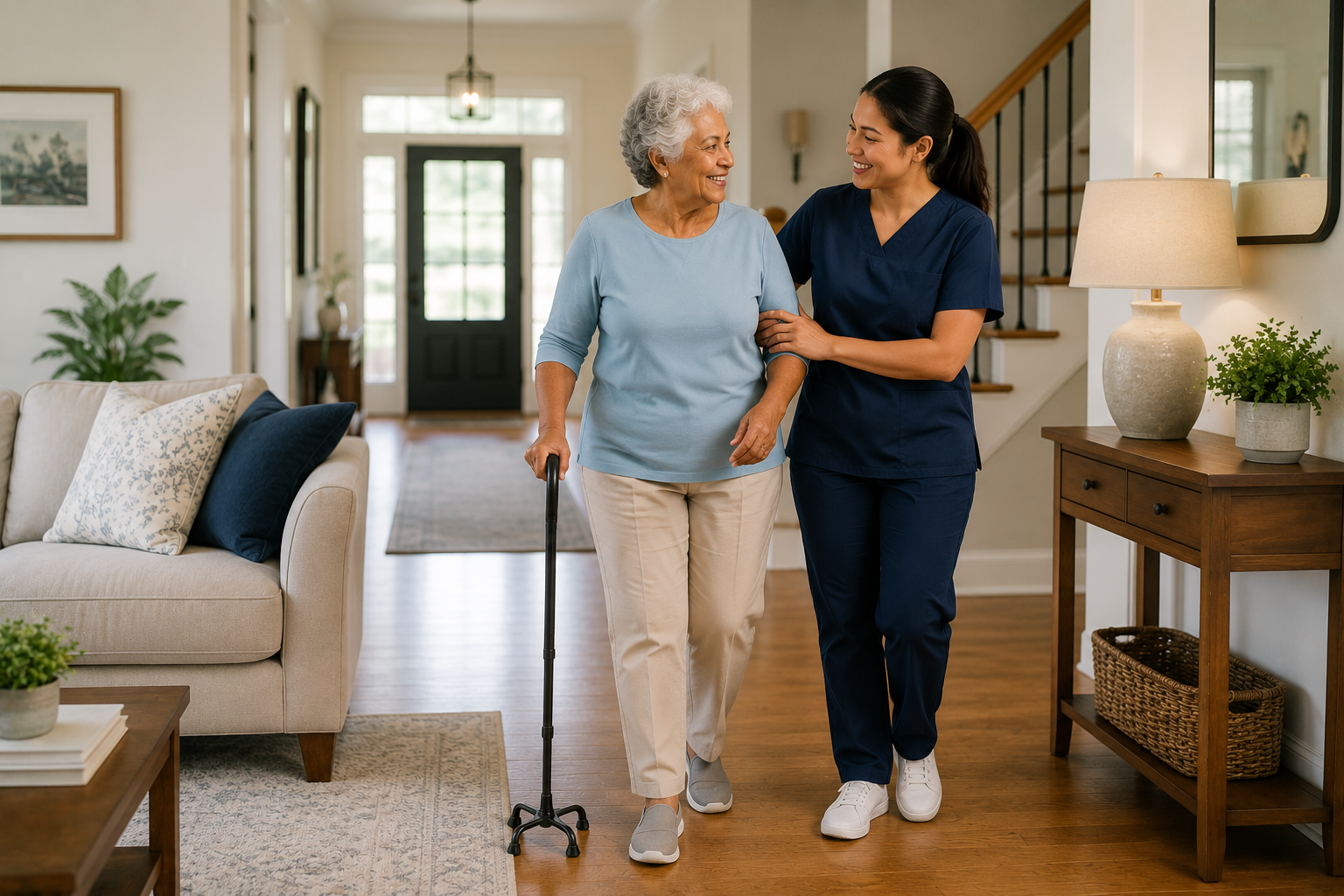
A fall can change an older adult’s confidence, routine, and independence in a matter of seconds. That is why fall prevention for seniors should be part of everyday home safety, not something families think about only after an accident. Small changes to the home, regular health conversations, and the right level of daily support can all help reduce risk while allowing seniors to continue living life on their own terms.
The need is significant. According to the Centers for Disease Control and Prevention (CDC), more than 14 million adults age 65 and older, or about one in four, report falling each year. Falls are also the leading cause of injury for this age group. The encouraging part is that falls are not an unavoidable part of aging. Many risk factors can be identified and addressed before they lead to an injury.
For families, the goal is not to remove every activity or make a loved one feel watched. The goal is to create an environment where the older adult can move with greater confidence, ask for help when needed, and stay involved in the decisions that affect daily life.
Quick answer: What is fall prevention for seniors?
Fall prevention for seniors is a practical approach to reducing the physical, medical, and environmental factors that can lead to a fall. It may include improving lighting, removing trip hazards, reviewing medications, supporting strength and balance, using mobility aids correctly, and arranging help with higher-risk daily activities.
Why Fall Prevention Matters for Older Adults
A fall does not have to cause a major injury to affect someone’s quality of life. After a close call or minor fall, some older adults begin limiting their movement because they are afraid it will happen again. They may stop taking walks, avoid stairs, decline outings, or become hesitant to shower without help. Over time, less activity can contribute to weakness and make safe movement even harder.
This is one reason effective senior fall prevention should protect both physical safety and confidence. A safer home matters, but so does helping a senior continue using their abilities, participating in familiar routines, and staying socially connected. The strongest plans are proactive, personalized, and respectful.
What Can Increase a Senior’s Risk of Falling?
Falls usually do not have one single cause. They often happen when several small risk factors come together. A dim hallway may not be dangerous by itself, but it becomes more concerning when someone also has poor balance, gets up frequently at night, or takes medication that causes dizziness.
Common fall risk factors include:
-
- A previous fall or recent near-fall
- Lower-body weakness, reduced balance, or changes in walking
- Dizziness, lightheadedness, or a sudden drop in blood pressure when standing
- Vision changes or an outdated eyeglass prescription
- Foot pain, numbness, or shoes that do not fit securely
- Medications that may cause sleepiness, confusion, or dizziness
- Arthritis, stroke-related changes, Parkinson’s disease, neuropathy, or other conditions that affect movement
- Memory changes that make it harder to recognize hazards or remember to use an assistive device
- Clutter, loose rugs, poor lighting, uneven flooring, or missing handrails
- Rushing to the bathroom, carrying too much, or attempting a task that has recently become difficult
Because each person’s risk looks different, a home safety checklist is helpful, but it should not replace a conversation with a physician, pharmacist, physical therapist, occupational therapist, or other qualified professional when health or mobility concerns are present.
In-Home Care for Seniors & Veterans
Compassionate, personalized in home care designed to help seniors live safely and independently in the comfort of home. Our trusted home care services provide daily support, companionship, and specialized senior home care giving families peace of mind every step of the way.
Fall Prevention for Seniors Starts With a Room-by-Room Home Review
Walk through the home at the times when your loved one normally uses each space. Notice what the environment looks like early in the morning, after dark, and when the person is tired. The National Institute on Aging’s room-by-room fall prevention guidance can also serve as a useful reference.
Entrances, Hallways, and Common Walkways
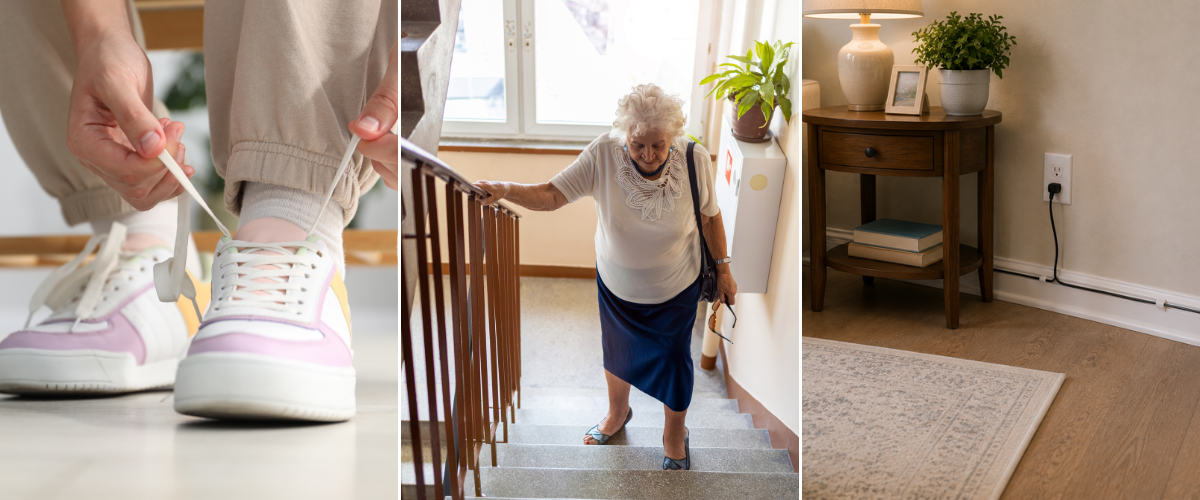
The main path through the home should be wide, clear, and easy to navigate with or without a cane or walker. Remove boxes, baskets, pet toys, electrical cords, and small furniture that narrow the walkway. Repair uneven thresholds and secure flooring that shifts underfoot.
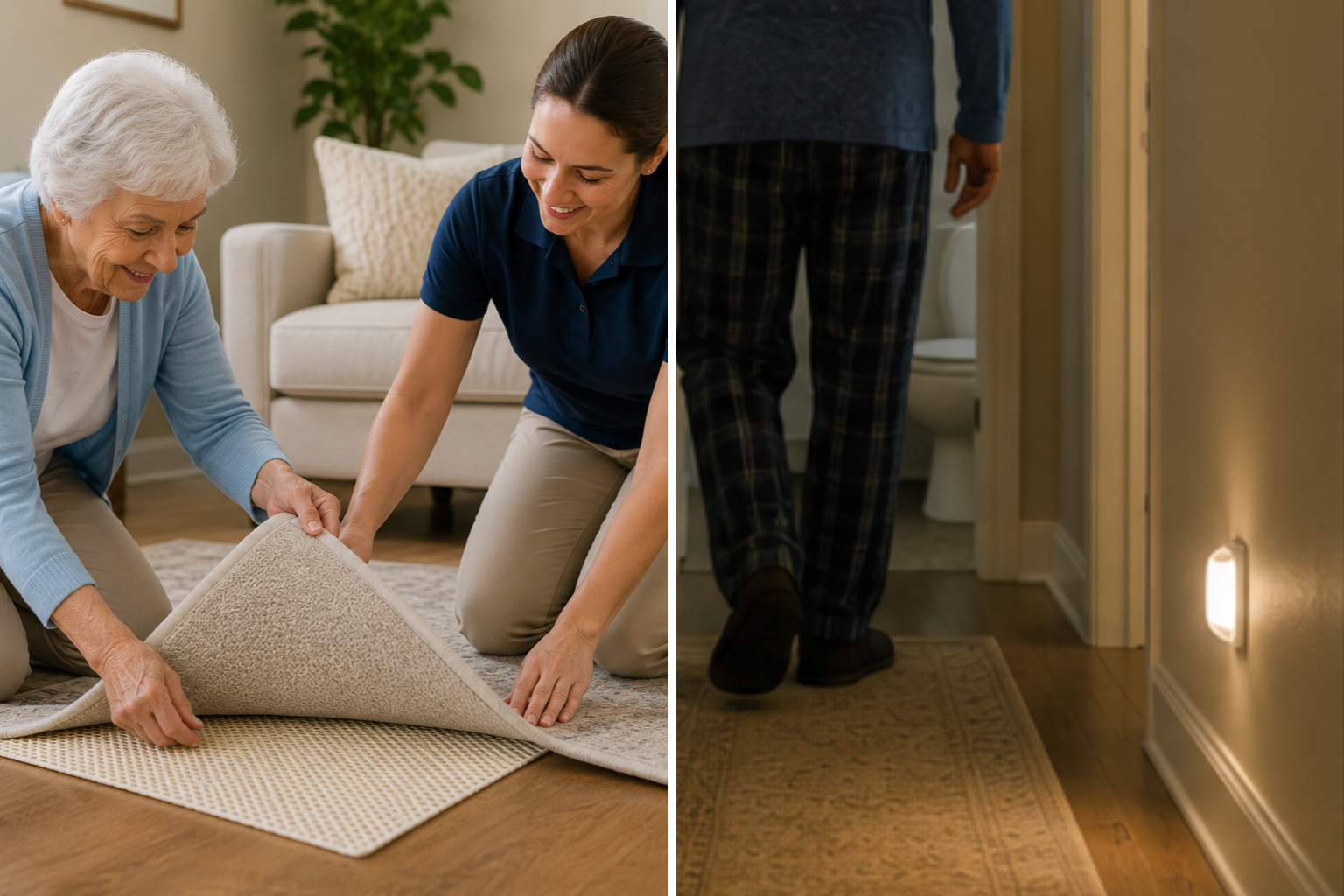
Make sure the older adult can reach a light switch before stepping into a dark space. Night-lights or motion-activated lights can help in hallways, near bathrooms, and along the route from the bedroom to the kitchen. Outside, keep walkways clear of leaves, ice, loose gravel, and other seasonal hazards.
Living Room and Bedroom
Choose chairs with stable arms and a seat height that allows the person to stand without excessive effort. Avoid furniture that slides when used for support. Keep frequently used items, a phone, glasses, water, and mobility aids within comfortable reach so the senior does not need to stretch, climb, or walk across the room in the dark.
In the bedroom, check that the bed is not so high or low that getting in and out feels unstable. Provide a clear path on both sides when possible. A bedside lamp that can be turned on without standing is a simple but meaningful safety improvement.
Kitchen and Dining Areas
Store everyday dishes, food, and cooking supplies between approximately waist and shoulder height. Discourage the use of step stools or chairs for reaching upper cabinets. Clean spills promptly and avoid loose mats that can curl or slide. If fatigue or balance problems make cooking unsafe, consider support with meal preparation rather than expecting the senior to manage every step alone.
Bathroom Safety for Seniors
Bathrooms deserve special attention because wet surfaces, tight spaces, and transfers in and out of the shower or tub can increase risk. Add securely installed grab bars inside and outside the bathing area and near the toilet. A towel bar is not designed to support body weight and should not be used as a substitute.
Use a non-slip surface in the tub or shower and keep the floor dry. Depending on the person’s abilities and professional recommendations, a shower chair, handheld showerhead, raised toilet seat, or transfer bench may make daily routines safer. Make sure toiletries are easy to reach without bending deeply or twisting.
Stairs and Steps
Install secure handrails on both sides of the stairs when possible. Keep every step free of objects, repair loose carpeting or boards, and make sure lighting is available at both the top and bottom. High-contrast tape on the front edge of steps may help some people see changes in level more clearly, although visual needs should be considered individually.
10 Practical Ways to Reduce Fall Risk at Home
A safer environment is important, but the most effective approach also addresses strength, medications, vision, routines, and support. These practical steps can help families build a more complete plan.
- Keep walkways clear and secure flooring. Remove clutter, cords, unstable rugs, and small obstacles. If an area rug is important to the room, use a non-slip backing and confirm that the edges remain flat.
- Good lighting throughout the home reduces fall risk. Replace dim or burned-out bulbs, reduce glare, and place light switches where they can be reached before entering dark areas. Add night-lights along frequently used nighttime routes.
- Bathroom safety deserves special attention. Install appropriate grab bars, use non-slip surfaces, and consider adaptive equipment recommended for the senior’s specific needs. Keep towels and toiletries within reach.
- Supportive footwear makes a difference. Shoes should fit well, stay firmly on the foot, and provide traction. Avoid walking in socks on smooth floors or wearing loose slippers that can catch on surfaces.
- Regular strength and balance activities help maintain mobility. The CDC recommends activities such as tai chi. A healthcare professional or physical therapist can help identify exercises that are appropriate for the individual.
- A medication review with a qualified professional is important. Ask a physician or pharmacist to review prescription and over-the-counter products for side effects or combinations that may increase dizziness or sleepiness.
- Routine vision care can reduce fall risk. Changes in depth perception, contrast sensitivity, or prescription needs can affect safe mobility. Keep glasses clean and easy to find.
- Proper use of mobility aids improves safety. A cane or walker can improve safety only when it fits properly and is used consistently. A therapist can help with fitting and technique.
- Managing dizziness, hydration, and rushing is essential. Encourage the senior to rise slowly, pause before walking, and report repeated dizziness to a healthcare provider.
- An emergency plan provides peace of mind. Keep a phone or alert device within reach, list emergency contacts, and make sure family members know how to enter the home if needed.
The CDC’s fall prevention recommendations emphasize several of the same priorities: talking with a healthcare provider, reviewing medications, doing strength and balance activities, having vision checked, and making the home safer.
Watch for Changes That May Signal a Higher Fall Risk
Fall risk can change quickly after an illness, hospital stay, medication adjustment, surgery, or period of inactivity. Families should pay attention to changes that may be easy to dismiss at first.
-
- Holding onto walls, counters, or furniture while walking
- Taking shorter steps, shuffling, or appearing less steady
- Needing several attempts to stand from a chair
- New bruises or injuries with an unclear explanation
- Avoiding bathing, stairs, or rooms that once felt manageable
- Forgetting to use a cane or walker
- Dizziness after standing or increased fatigue during routine tasks
- A recent fall, even when no major injury occurred
A fall or near-fall is useful information, not something to hide or feel embarrassed about. Reporting it can help a healthcare provider identify treatable issues and reduce the chance of another incident.
How to Talk About Fall Prevention Without Taking Away Independence
Older adults may resist safety changes because they worry that accepting help will lead to losing control, being forced to move, or becoming a burden. A respectful conversation is more effective than presenting a long list of rules.
Start by asking what feels difficult or unsafe from the senior’s perspective. You might say, “I noticed the bathroom floor feels slippery. What would make it easier for you?” or “Would you be open to moving the lamp closer so you do not have to stand in the dark?” These questions invite participation instead of making the person feel managed.
Focus on what the change protects. A grab bar is not a sign of decline; it is a tool that may make independent bathing more realistic. A caregiver is not there to take over; the caregiver can support the parts of a routine that have become risky while encouraging the senior to continue doing what they can safely do.
How Non-Medical Home Care Can Support Fall Prevention
No caregiver, device, or home modification can guarantee that a fall will never happen. However, consistent non-medical support can reduce everyday risks and help families notice changes sooner.
Through daily living support and personal care assistance, caregivers can provide respectful support with bathing, dressing, toileting, grooming, walking, and transfers. These are common moments when a senior may rush, overreach, or attempt a difficult movement alone.
Medication reminders for seniors can help a loved one follow the schedule established by their healthcare provider. Caregivers do not prescribe, change, or administer medication, but they can provide timely reminders and report concerns according to the care plan.
Home management assistance may include light housekeeping, laundry, meal preparation, errands, and keeping common pathways organized. This support can reduce the need for a senior to carry heavy items, reach unsafe areas, or navigate clutter.
Companion care can also support safe activity and confidence. A caregiver may accompany a senior on a walk, encourage participation in approved exercises, or provide a steady presence during daily routines. Just as importantly, regular visits can help identify subtle changes in mobility, energy, or confidence that families may not see from a distance.
The best care plan is individualized. Some seniors need a few hours of help each week, while others benefit from support during specific high-risk times, such as mornings, bathing routines, evening hours, or the transition home after surgery or hospitalization.
Trusted Home Care Services
At The Home Halo®, we are a trusted home care agency dedicated to providing non medical home care, companion care, and caregiver services that support independence, dignity, and comfort at home.
What Should You Do After a Senior Falls?
Stay calm and do not rush to pull the person up. Ask about pain, dizziness, or head impact and look for obvious injury. If there is severe pain, bleeding, confusion, loss of consciousness, difficulty breathing, inability to move, or another sign of a medical emergency, call 911. When you are unsure whether it is safe to help the person stand, seek professional guidance rather than risking further injury.
Even when the senior appears unhurt, tell their healthcare provider about the fall. A review may uncover medication side effects, infection, vision changes, blood pressure concerns, weakness, or another issue that contributed. The home should also be checked for environmental factors, and the care plan may need to change temporarily or long term.
A Simple Home Fall Prevention Checklist
☐ Walkways are clear, wide, and free from cords or clutter.
☐ Loose rugs are removed or secured with non-slip backing.
☐ Lighting is bright enough in hallways, bedrooms, bathrooms, and stairways.
☐ Night-lights are placed along nighttime routes.
☐ Grab bars and handrails are securely installed where needed.
☐ Frequently used items are stored within comfortable reach.
☐ Shoes fit securely and provide traction.
☐ The senior’s vision and medications are reviewed regularly.
☐ A cane, walker, or other device is properly fitted and easy to reach.
☐ Family members know about recent falls, near-falls, dizziness, or mobility changes.
☐ A phone or alert device is accessible from commonly used areas.
☐ The senior knows how and when to ask for help with higher-risk tasks.
Helpful resource for families
The CDC’s STEADI patient and caregiver resources include home safety checklists, education about footwear and medications, and materials families can use when discussing fall prevention with an older adult.
Explore the CDC STEADI patient and caregiver resources for printable tools and additional guidance.
Helping Seniors Stay Safe Without Limiting Their Lives
Effective fall prevention is not about making a home feel clinical or asking an older adult to stop doing everything they enjoy. It is about removing avoidable barriers and providing the right support so the person can continue moving through daily life with greater security.
Start with the areas where the senior spends the most time and the activities that feel least stable. Make one or two improvements, ask how they are working, and adjust the plan as needs change. Small steps are easier to accept, and they can create meaningful improvements in safety and confidence.
Home Halo provides compassionate, relationship-driven, non-medical home care for seniors and veterans. Our caregivers can support daily routines, mobility, personal care, medication reminders, meal preparation, light housekeeping, and companionship based on each person’s needs and preferences.
To learn whether in-home support could help your loved one feel safer and more confident at home, find a Home Halo location near you and request a personalized consultation.
Frequently Asked Questions About Fall Prevention for Seniors
What are the most common fall risks for seniors at home?
Common risks include poor balance, muscle weakness, dizziness, medication side effects, vision changes, foot problems, unsafe footwear, clutter, loose rugs, dim lighting, uneven flooring, and missing grab bars or handrails. Risk is often highest when several factors occur together.
What is the best way to improve bathroom safety for seniors?
Start with professionally installed grab bars, non-slip surfaces, bright lighting, and a clear, dry floor. Depending on the person’s mobility, a healthcare or rehabilitation professional may recommend a shower chair, transfer bench, handheld showerhead, or raised toilet seat.
What exercises help prevent falls in older adults?
Activities that improve leg strength, balance, and coordination may help reduce fall risk. Tai chi is one example recommended by the CDC. The safest exercise plan depends on the person’s health, mobility, and previous falls, so guidance from a physician or physical therapist may be appropriate.
Can home care prevent a senior from falling?
Home care cannot guarantee that a fall will not occur. However, a caregiver can reduce everyday risks by supporting safe walking and transfers, helping with personal care, keeping pathways clear, preparing meals, providing reminders, and being present during activities that have become difficult.
Should a senior see a doctor after a fall if they seem fine?
Yes, it is wise to report a fall to the senior’s healthcare provider, even when there is no obvious injury. A fall may signal a medication issue, blood pressure change, vision problem, weakness, infection, or another concern that should be evaluated.
How often should families review a fall prevention plan?
Review the plan whenever the senior’s health, medications, vision, mobility, or living environment changes. It is also helpful to reassess after any fall, near-fall, hospitalization, surgery, illness, or new use of a cane or walker.
Trusted Home Care Services for Seniors & Families
Finding the right home care services for seniors and elderly loved ones can be overwhelming. We make it simple by connecting families with compassionate and reliable in-home care solutions tailored to individual needs.