


Caring for an aging parent, spouse, or other loved one can be meaningful, but it can also leave very little room for work, sleep, appointments, relationships, or your own health. Respite care in Denver gives family caregivers temporary relief while another caregiver provides agreed-upon support. Care may be arranged for a few hours, on a recurring weekly schedule, or for a longer planned absence, depending on the person’s needs and the provider’s availability.
For many Denver families, the most helpful time to explore respite is before caregiving becomes a crisis. A dependable plan can make it easier to keep up with daily responsibilities, preserve family relationships, and help an older adult continue living in familiar surroundings.
|
Quick answer: What is respite care? Respite care is temporary care for an older adult or another person who needs support so the usual family caregiver can step away. In-home respite may include companionship, personal care, meal preparation, mobility assistance, medication reminders, light housekeeping, supervision, and help maintaining familiar routines. The exact services depend on the care plan and the provider’s non-medical scope. |
This local guide explains how respite care works, what Denver families may want to compare, how to explore payment resources, and what to ask before choosing a provider.
What Is Respite Care?
Respite temporarily transfers some caregiving responsibilities from a family member to another qualified person or program. It does not mean the family is giving up or that a loved one must move. Some families arrange help for an appointment or trip; others protect the same break each week. Care may take place at home, in an adult day program, or in a short-stay residential setting.
Families who are new to the term may want to begin with Home Halo’s national guide to what respite care is and who may benefit. Colorado families can also review the broader guide to respite care for seniors in Colorado before comparing Denver-area providers.
In-Home Care for Seniors & Veterans
Compassionate, personalized in home care designed to help seniors live safely and independently in the comfort of home. Our trusted home care services provide daily support, companionship, and specialized senior home care giving families peace of mind every step of the way.
How Respite Care in Denver Works
The process should begin with the needs of both the older adult and the family caregiver. A provider may ask about routines, mobility, personal care, memory changes, preferred activities, safety, home access, and the times when help matters most.
A typical in-home respite process includes:
- Consultation. The family explains the routine, desired schedule, and concerns.
- Care plan. The provider documents tasks, preferences, risks, emergency contacts, and boundaries.
- Caregiver matching. The agency considers experience, availability, personality, and communication.
- Introduction. A shorter first visit can help the older adult become comfortable.
- Follow-up. The family and provider adjust the plan as needs change.
Consistency matters, especially for a person living with dementia or someone who is uncomfortable with change. Ask whether the provider can offer a regular caregiver, how introductions are handled, and what the backup plan is if the scheduled caregiver is unavailable.
What Can an In-Home Respite Caregiver Help With?
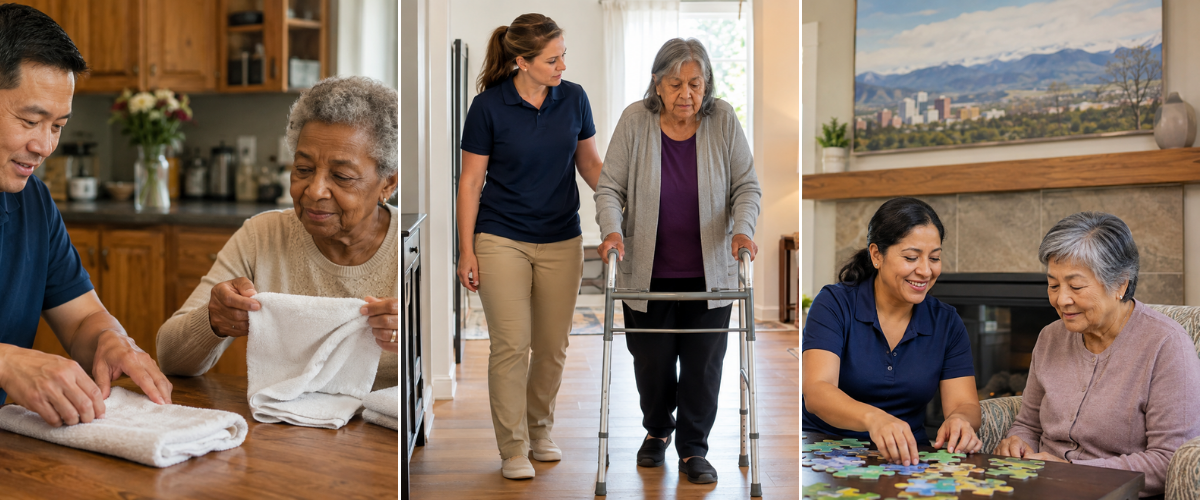
In-home respite care focuses on non-medical support. The specific tasks should always be written into the care plan, but services may include:
- Companionship, conversation, games, hobbies, and meaningful activities
- Assistance with bathing, dressing, grooming, toileting, and other personal routines
- Mobility and transfer support within the caregiver’s training and the care plan
- Meal preparation, hydration reminders, and support during meals
- Medication reminders, without administering medication or changing a dosage
- Light housekeeping, laundry, changing linens, and keeping frequently used areas organized
- Transportation or help with errands when offered by the provider and included in the plan
- Supervision and routine support for a person living with dementia or memory loss
- Updates to the family about the visit and any concerns that were observed
Home Halo’s daily living support services explain common personal-care tasks. Families supporting someone with memory loss can also review in-home dementia care.
Non-medical respite is different from skilled home health care. A person who needs injections, wound care, physical therapy, clinical assessment, or other medical services may need a licensed home health professional in addition to, or instead of, a non-medical caregiver. Families should discuss clinical needs with the person’s healthcare provider.

Types of Respite Care Available to Denver Families
Families can choose from several types of respite care in Denver depending on how much support their loved one needs and how long the family caregiver will be away. In-home respite care allows an older adult to remain in familiar surroundings while a professional caregiver provides companionship, meal preparation, personal care, mobility assistance, medication reminders, or light housekeeping. Visits may be scheduled for a few hours, on a recurring basis, or overnight, depending on the provider.
Other options include adult day programs, short-term residential respite, and emergency respite care. Adult day programs provide daytime supervision, activities, and social interaction, while residential respite may offer a temporary stay at a senior living community. Emergency respite may also be available when an unexpected situation prevents a family caregiver from providing care. The right option depends on the older adult’s needs, comfort level, schedule, and budget.
Why Denver Family Caregivers Consider Respite Care
Caregiving pressure often builds gradually. An adult child may travel between work and a parent’s home several times a week. A spouse may provide morning and evening help without uninterrupted sleep. Another relative may coordinate care from Lakewood, Aurora, Littleton, or elsewhere in the metro area while the older adult remains in Denver.
Respite care can make the overall plan more sustainable by giving family caregivers protected time to:
- Attend their own appointments or work without repeated interruptions
- Sleep, exercise, run errands, or spend time with family and friends
- Travel for an event or recover from an illness or procedure
- Return as a daughter, son, spouse, or friend rather than only the person completing tasks
In-home care can preserve familiar rooms, meals, pets, and routines for older adults who want to remain in longtime Denver neighborhoods such as Washington Park, Park Hill, Cherry Creek, Capitol Hill, Central Park, or the Highlands.
Families comparing broader support options can read Home Care for Seniors in Denver for an overview of non-medical home care in the city.
Signs It May Be Time to Arrange Respite
You do not need to wait until you feel completely depleted. Respite may be worth considering when:
- You are regularly exhausted, irritable, anxious, or unable to sleep
- You keep postponing your own healthcare or important responsibilities
- Work, parenting, relationships, or finances are being affected
- There is no reliable backup if you become sick or have an emergency
- Your loved one cannot be safely left alone for as long as you need to be away
- Personal care, mobility, meals, memory changes, or supervision have become difficult to manage alone
- A planned trip, procedure, event, or demanding season is approaching
These signs do not mean you have failed. They show that the current plan may need more support. If you are experiencing severe anxiety, depression, a medical emergency, or concerns about anyone’s immediate safety, contact an appropriate healthcare professional or emergency service rather than relying only on respite care.
Trusted Home Care Services
At The Home Halo®, we are a trusted home care agency dedicated to providing non medical home care, companion care, and caregiver services that support independence, dignity, and comfort at home.
How Much Does Respite Care Cost in Denver?
There is no single rate for respite care in Denver. Pricing can vary by provider, the number and length of visits, level of assistance, caregiver qualifications, scheduling minimums, nights, weekends, holidays, transportation, and whether the family needs short-notice coverage.
When requesting an estimate, ask for a written explanation of:
- Hourly, overnight, or daily rates
- Minimum visit length and minimum weekly hours
- Assessment, deposit, registration, or care-management fees
- Weekend and holiday pricing
- Mileage or transportation charges
- Cancellation policies
- Whether a higher rate applies to advanced needs or two-person assistance
- How billing works if a visit ends early or runs longer than planned
Price is important, but it is only one part of the decision. Caregiver screening, training, supervision, communication, consistency, and backup coverage can directly affect whether the family receives a genuine break.
Does Insurance or a Public Program Pay for Respite Care?
Many families pay privately for routine non-medical respite, but other resources may be available. Verify eligibility, funding, provider participation, and current program rules directly.
Denver Regional Council of Governments caregiver respite
The Denver Regional Council of Governments Area Agency on Aging offers caregiver information, referrals, counseling, training, and respite support. Its current program describes a one-time voucher for eligible caregivers for up to 32 hours of in-home care, used within 90 days of the award. Call Caregiver Services at 303-480-5656 or the Aging and Disability Resource Center at 303-480-6700.
Health First Colorado
Health First Colorado’s respite information lists respite under multiple Home and Community-Based Services waivers. Coverage depends on the waiver, eligibility, authorization, service plan, and provider requirements. Contact the member’s case manager for guidance.
Veterans benefits and caregiver programs
Caregivers supporting an eligible Veteran can contact the VA Eastern Colorado Caregiver Support Program at 720-723-3013 for information about support and respite options based on enrollment and eligibility.
Medicare hospice respite
Original Medicare generally does not pay for routine non-medical respite at home. Under the hospice benefit, a hospice team may arrange inpatient respite for an eligible patient. Medicare says the stay may last up to five days each time, with applicable cost sharing. This is not general coverage for private-duty home care.
Long-term care insurance and private benefits
Some long-term care insurance policies, employer caregiver benefits, or other private programs may help with eligible expenses. Ask about licensing, care-plan, invoice, and preauthorization requirements.
Funding disclaimer: This information is educational and is not a guarantee of coverage or eligibility. Program rules, funding, provider networks, and benefits can change. Confirm current requirements with the insurer, program administrator, case manager, VA, hospice team, or other responsible organization.
Denver-Area Resources for Family Caregivers
Families do not have to navigate every option alone. These official resources can help with referrals, benefits questions, and provider research:
- DRCOG Caregiver Services and Support: Local caregiver information, training, support, and respite resources. Phone: 303-480-5656.
- DRCOG Aging and Disability Resource Center: Options counseling, case management, benefits counseling, and referrals. Phone: 303-480-6700.
- Colorado Department of Human Services Caregiver Support: Statewide Area Agency on Aging and caregiver-service information.
- Health First Colorado Respite: Official information about respite benefits available through certain Medicaid Home and Community-Based Services waivers.
- VA Eastern Colorado Caregiver Support: Local caregiver support coordinators and information for families caring for Veterans.
- Colorado Department of Public Health and Environment facility search: A tool for reviewing information about licensed and regulated healthcare providers, including available inspection information.
Programs may have age, disability, caregiving relationship, residency, enrollment, or clinical requirements. A call can help clarify which options are worth pursuing.
How to Choose a Respite Care Provider in Denver
The right provider should make it possible for you to leave without spending the entire break worried about what is happening at home. Before signing an agreement, ask:
- Is the agency properly licensed in Colorado? Ask for the license number and verify it with the state.
- How are caregivers screened and trained? Discuss background checks, references, safe mobility, dementia support, and transportation.
- How is the care plan created? It should reflect routines, risks, emergency contacts, and task boundaries.
- Can the agency provide consistent caregivers and backup coverage? Ask what happens after a callout.
- Which schedules are available? Confirm visit minimums, nights, weekends, holidays, and notice requirements.
- How will the agency communicate with the family? Know whom to contact and which updates to expect.
- What does the price include? Request written rates, fees, mileage, and cancellation terms.
Be cautious if a provider will not explain pricing, licensing, screening, backup procedures, or service limitations in writing. Pressure to decide immediately without a needs review is another reason to pause.
For the first visit, involve your loved one as much as possible. Share preferred meals, hobbies, routines, emergency contacts, mobility instructions, pets, and building-access details. A shorter introduction can help before a long absence. For dementia care, consistency and fewer simultaneous changes may make the transition easier.
How Home Halo Supports Denver Families
Home Halo provides personalized, non-medical in-home respite care for family caregivers who need temporary or recurring support. Care plans may include companionship, personal care, meal preparation, medication reminders, light housekeeping, mobility support, and help maintaining familiar routines based on the individual’s needs.
The process begins with a consultation, followed by a personalized care plan, caregiver matching, and a schedule built around the family. Home Halo’s Colorado office serves Denver County and other communities across the Front Range. Families can learn more on the Home Halo Colorado location page or call the Colorado office at 303-414-2770 to discuss needs, scheduling, and local availability.
You do not have to know the perfect number of hours before reaching out. Start with the hardest part of the week and the tasks that need to continue while you are away.
Trusted Home Care Services for Seniors & Families
Finding the right home care services for seniors and elderly loved ones can be overwhelming. We make it simple by connecting families with compassionate and reliable in-home care solutions tailored to individual needs.
Building a More Sustainable Care Plan in Denver
Respite care in Denver can give a family caregiver time to rest, work, attend appointments, reconnect with other parts of life, or simply step out of the role for a few hours. For the person receiving care, it can provide companionship and dependable support without automatically leaving home or changing familiar routines.
The strongest respite plan is clear, personalized, and arranged before exhaustion becomes an emergency. Compare settings, verify provider qualifications, review funding options, and begin with a manageable schedule. Asking for help is one way to keep care safe, respectful, and sustainable.
Frequently Asked Questions About Respite Care in Denver
What is respite care in Denver?
Respite is temporary support so the usual family caregiver can take a break. It may be provided at home, through adult day care, in a short-stay setting, or through hospice-arranged inpatient care for an eligible patient.
How much does in-home respite care cost in Denver?
Rates vary by provider, visit length, assistance level, schedule, transportation, and minimum-hour requirements. Ask for a written estimate and fee explanation before care begins.
Does Medicare cover respite care at home?
Original Medicare generally does not cover routine non-medical respite at home. The hospice benefit may cover an occasional inpatient stay of up to five days when the hospice team arranges it for an eligible patient.
Can Health First Colorado pay for respite care?
Respite is included in certain Home and Community-Based Services waivers, but eligibility depends on the waiver and authorized care plan. Contact the member’s case manager or Health First Colorado.
Can respite care help a person with dementia?
Yes. A trained caregiver may support supervision, personal care, meals, familiar activities, redirection, and routines. Ask about dementia experience, consistency, and safety procedures.
Is overnight or weekend respite care available in Denver?
Some providers offer overnight, weekend, or extended respite. Ask about awake versus sleeping overnight care, holiday rates, backup coverage, visit minimums, and required notice.
Informational disclaimer: This article is for general educational purposes and is not medical, legal, insurance, or benefits advice. Verify current services, eligibility, and coverage directly with the responsible provider or program.