


Many families in Madison reach a point where they begin wondering whether an aging parent or loved one needs more support at home. Maybe daily routines are becoming harder to manage. Maybe family caregivers are feeling stretched thin. Or maybe a recent fall, illness, or hospital stay has made it clear that extra help would bring more peace of mind. For many older adults, home care for seniors in Madison provides a practical way to stay safe, comfortable, and independent at home while receiving support with everyday needs.
Whether your loved one lives in Madison, Middleton, Sun Prairie, Verona, Fitchburg, Monona, Waunakee, or another nearby Dane County community, understanding how home care works can help your family make a more confident decision.
Home care is not one-size-fits-all. Some seniors need a few hours of companionship each week, while others may need daily help with personal care, meals, transportation, or memory-related support. The goal is to provide the right level of assistance while helping older adults remain in the place they know best: home.
Signs Your Loved One May Need More Support at Home
Oftentimes, the need for senior care does not appear all at once. Families may begin noticing small changes that gradually become harder to ignore. A loved one may start missing meals, forgetting medications, having trouble keeping up with laundry, or avoiding activities they once enjoyed.
Common signs may include:
- Missed medications or appointments
- Difficulty preparing meals
- Changes in hygiene or grooming
- Increased forgetfulness or confusion
- Trouble walking safely around the home
- Recent falls or fear of falling
- Weight loss or skipped meals
- Loneliness or isolation
- Difficulty keeping up with housekeeping
- Family caregiver stress or burnout
Recognizing these signs early can help families explore support before daily challenges become larger safety concerns.
A helpful way to think about it
If your loved one can still live safely at home but needs help with certain tasks, non-medical home care may be a good fit. If they require skilled nursing, wound care, injections, or therapy ordered by a physician, they may also need home health care in addition to home care.
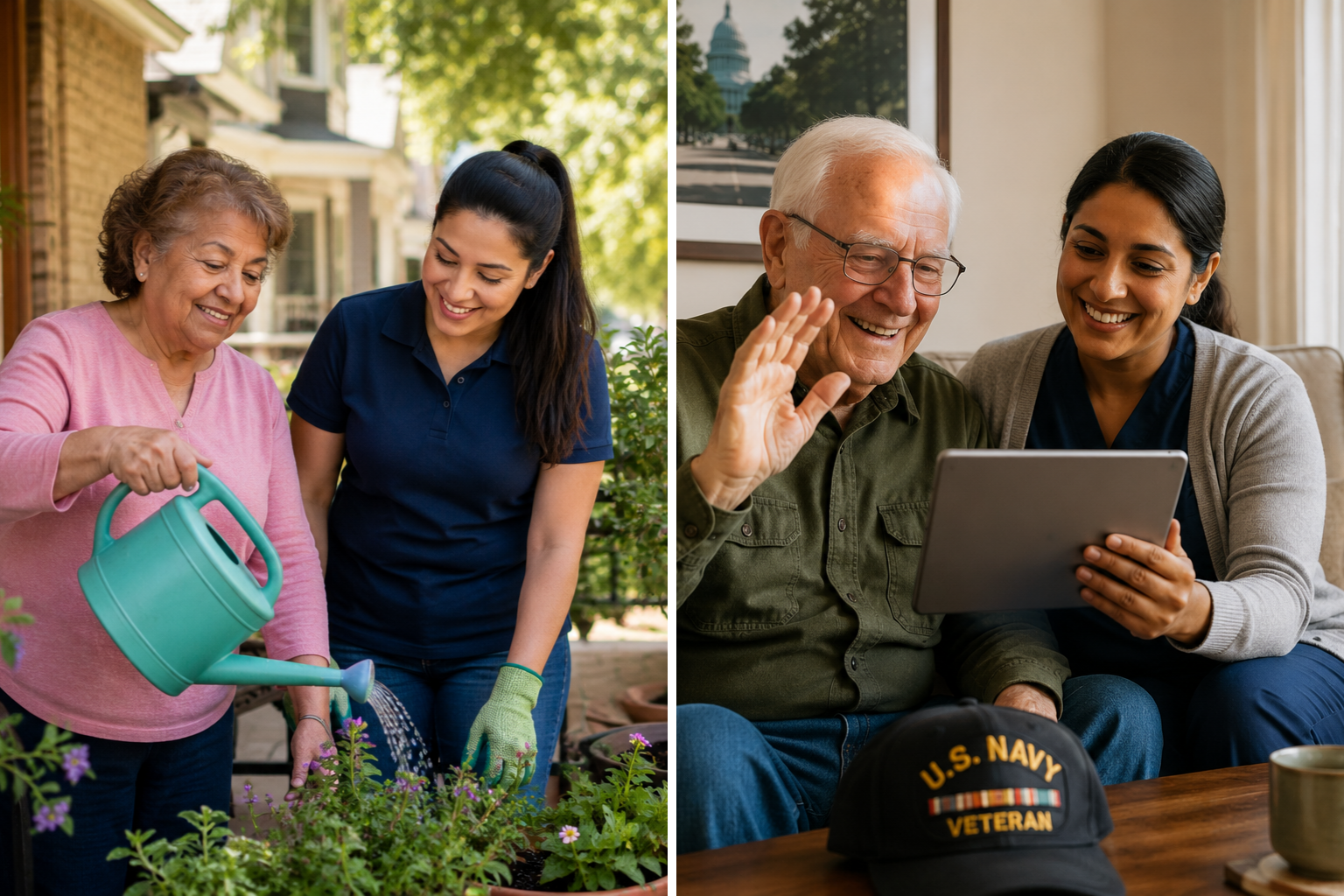
In-Home Care for Seniors & Veterans
Compassionate, personalized in-home care can help seniors and veterans remain safe, comfortable, and independent while continuing their familiar routines at home.
Home care may include help with daily activities, companionship, transportation, meal preparation, respite care, and specialized support for individuals living with dementia or memory-related conditions.
Why More Madison Families Are Considering Home Care
For many seniors, home is more than a place to live. It is where they have built routines, memories, relationships, and a sense of independence. Moving into a facility is not always the first or only option, especially when the right support can be brought directly into the home.
For older adults in Madison and surrounding Dane County communities, home care can help make aging in place more realistic.
Benefits of home care may include:
- Familiar surroundings: Seniors can remain in a home and neighborhood they know.
- Personalized support: Care is based on the individual’s needs, schedule, and preferences.
- Greater independence: Seniors receive help without giving up their daily routines.
- One-on-one care: Support is focused on one person, not a group setting.
- Flexible scheduling: Care can often begin with a few hours per week and increase as needs change.
- Peace of mind for families: Loved ones know someone is checking in and helping with daily needs.
- Support after a hospital stay: Caregivers can help with meals, mobility, errands, and fall prevention during recovery.
Even small amounts of support can make daily life feel more manageable for both seniors and their families.
Aging in Place in Madison, Wisconsin
Madison is home to many older adults who want to stay connected to familiar neighborhoods, local routines, and nearby family support as they age. For seniors living in Madison and surrounding Dane County communities, home care can make it easier to remain at home while still receiving help with daily activities, transportation, meals, companionship, and personal care.
This can be especially helpful for older adults who no longer drive, live alone, are recovering after a hospital stay, or need extra support during Wisconsin’s colder months when errands, appointments, and mobility can become more difficult.
What Does a Home Caregiver Actually Do?
A home caregiver provides non-medical support that helps seniors manage everyday routines more safely and comfortably. The exact services depend on the person’s needs, but support often falls into a few main categories.
1. Help with daily routines
This may include reminders, gentle encouragement, mobility support, and assistance moving through the day with more structure and confidence.
2. Personal care assistance
Caregivers may help with bathing, dressing, grooming, toileting, and hygiene while respecting the client’s dignity and independence.
3. Household support
Light housekeeping, laundry, meal preparation, grocery shopping, and changing linens can help seniors maintain a safer and more comfortable home environment.
4. Companionship
Conversation, games, hobbies, walks, meal companionship, and social engagement can help reduce loneliness and isolation.
5. Transportation and errands
Caregivers may help seniors get to appointments, pick up groceries, run errands, or stay connected to important activities.
6. Memory care support
For individuals living with Alzheimer’s disease or another form of dementia, caregivers can help support routine, safety, redirection, and meaningful engagement.
How Home Care Supports Family Caregivers
Family caregivers often carry more responsibility than they realize. Many adult children are balancing work, raising families, managing appointments, checking in on parents, handling household tasks, and worrying about safety when they are not there.
Over time, that pressure can become overwhelming.
Home care provides additional support so family caregivers do not have to manage everything alone. A professional caregiver can help with practical tasks while family members focus more on quality time, connection, and emotional support.
Many families begin with part-time respite care before increasing hours as their loved one’s needs change. This can be especially helpful when a senior is recovering from an illness, adjusting after a hospital stay, or beginning to need more consistent daily support.
Home Care vs. Assisted Living: How Do Families Decide?
One of the biggest questions families ask is whether a loved one should receive care at home or move into an assisted living community. There is no single right answer. The best choice depends on the person’s safety, care needs, preferences, home environment, family involvement, and long-term goals.
Home care may be a good fit if your loved one:
- Wants to remain in their own home
- Needs help with daily activities such as bathing, dressing, meals, mobility, or household tasks
- Benefits from one-on-one support
- Has familiar routines they want to maintain
- Needs flexible care that can increase over time
- Would benefit from companionship, reminders, transportation, or respite support
- Needs part-time, daily, overnight, or around-the-clock non-medical assistance
Assisted living may be considered if your loved one:
- Prefers moving into a residential senior living community
- Wants access to shared dining, group activities, and neighbors in the same setting
- Would benefit from a built-in social environment outside the home
- Feels more comfortable receiving support in a community-based setting rather than at home
- Would benefit from multiple staff members being available on-site throughout the day
- Wants the structure and routine that often comes with a senior living community
For many families, the decision comes down to where their loved one feels safest, most comfortable, and best supported. Home care can be a meaningful option for seniors who want to remain in familiar surroundings while receiving personalized help with daily routines. Assisted living may be a better fit for those who prefer a residential community setting with built-in social opportunities and multiple staff members available on-site. The right choice depends on your loved one’s needs, preferences, and what will help them maintain the best possible quality of life.
Choosing the Right Home Care for Seniors in Madison
Choosing a home care provider is a personal decision. Families are not just looking for help with tasks. They are looking for trust, consistency, communication, and reassurance that their loved one will be treated with kindness and respect.
Before choosing a home care agency in Madison, it may help to ask:
- Are caregivers background checked and trained?
- Is the care plan personalized to my loved one’s needs?
- Can the schedule change if care needs increase?
- How does the agency communicate with families?
- Does the agency provide dementia or memory care support?
- Can care begin after a hospital or rehabilitation stay?
- Are services available in surrounding Dane County communities?
The right provider should take time to understand your loved one’s routines, preferences, personality, and goals—not just their care needs.
Trusted Home Care Services
At The Home Halo®, we are a trusted home care agency dedicated to providing non medical home care, companion care, and caregiver services that support independence, dignity, and comfort at home.
Why Families in Madison Choose Home Halo
At Home Halo, care is designed to feel personal, supportive, and centered around the needs of both seniors and their families. Our goal is to help older adults remain safe and comfortable at home while giving families guidance and peace of mind throughout the care journey.
Home Halo provides Wisconsin home care services for seniors and families throughout Madison and surrounding Dane County communities., including Middleton, Sun Prairie, Verona, Fitchburg, Monona, Waunakee, and nearby areas throughout Dane County.
Every family’s situation is different. Some loved ones need companionship and help around the house. Others need personal care, respite care, dementia support, or more consistent daily assistance. Home Halo works with families to create care plans that can adjust as needs change over time.
Home Care for Seniors in Madison: Services and Support Options
Families throughout Madison and surrounding Wisconsin communities may need different types of support depending on their loved one’s health, routine, and level of independence.
Home Halo offers flexible senior home care services designed to support both older adults and family caregivers.
Companion Care
Providing conversation, companionship, hobbies, games, walks, and social connection to help seniors feel supported and engaged.
Transportation Assistance
Helping seniors get to appointments, run errands, attend activities, and remain connected to their everyday routines.
Meal Preparation
Assisting with meal planning, grocery shopping, and preparing regular meals to help seniors maintain better nutrition at home.
Respite Care
Offering temporary support so family caregivers can rest, recharge, attend appointments, travel, or manage personal responsibilities.
Dementia and Memory Care Support
Providing compassionate support for seniors living with Alzheimer’s disease, dementia, or memory-related conditions through routine, safety, and meaningful engagement.
Home Management Assistance
Helping with light housekeeping, laundry, changing linens, organizing, and other household tasks that support a clean and comfortable home.
Support with Everyday Routines
Assisting with daily activities such as bathing, dressing, grooming, mobility, toileting, and reminders to help seniors maintain dignity and independence.

Frequently Asked Questions
How do I know when my loved one needs home care?
Many families begin exploring home care when everyday routines become harder to manage safely or when caregiving responsibilities begin creating stress within the family.
Signs may include:
- Missed medications
- Difficulty preparing meals
- Increased forgetfulness
- Mobility concerns
- Isolation or loneliness
- Changes in hygiene
- Caregiver burnout
Early support can often help seniors maintain independence and quality of life longer.
Is home care the same as home health care?
No. Home care provides non-medical support with daily living activities, while home health care provides skilled medical services such as nursing, therapy, or wound care ordered by a physician.
Some families use both services depending on their loved one’s needs.
Can seniors receive part-time home care?
Yes. Many families begin with part-time home care, such as a few hours per week, and adjust the schedule as needs change. Part-time care can be helpful for companionship, errands, meal preparation, respite care, and help with weekly routines.
How much does home care cost?
The cost of home care varies depending on the number of care hours, the level of support needed, and the type of services provided.
Some families begin with flexible part-time care and increase support over time. During a consultation, a care provider can help determine what level of care may be appropriate for your loved one’s situation.
Can home care help seniors remain independent?
Yes. Home care is designed to support seniors while helping them remain comfortable, safe, and independent at home for as long as possible. Caregivers can assist with the tasks that have become difficult while encouraging seniors to continue doing what they can safely do on their own.
Can home care help after a hospital stay?
Yes. Many families arrange home care after a hospitalization, surgery, or rehabilitation stay. Caregivers can help with meals, mobility, transportation, light housekeeping, medication reminders, and fall prevention during the transition home.
Is home care available throughout the Madison area?
Yes. Home Halo provides home care support for seniors and families throughout Madison and surrounding communities, including Middleton, Sun Prairie, Verona, Fitchburg, Monona, Waunakee, and nearby Dane County areas.
Learn More About Home Care for Seniors in Madison
If your family is just beginning to explore home care for seniors, you do not have to navigate the process alone. Understanding what home care includes, when it may be helpful, and how to choose the right provider can make the decision feel less overwhelming.
Because home care is never one-size-fits-all, the best care plans are built around each person’s needs, routines, preferences, and goals.
Whether your loved one needs companionship, personal care, respite support, dementia care, or help after a hospital stay, the purpose of home care remains the same: helping seniors live safely, comfortably, and independently in the place they call home.
Trusted Home Care Services for Seniors & Families
For families comparing home care for seniors in Madison, understanding the available services, care options, and level of support can make the decision feel less overwhelming. We make it simple by connecting families with compassionate and reliable in-home care solutions tailored to individual needs.