

Learning how to care for someone with dementia at home often begins with small questions: How can you make mornings less confusing? What should you say when your loved one repeats a question? How do you balance safety with independence? There is no single routine that works for every family, but thoughtful structure, clear communication, and the right support can make daily life feel more manageable.
Dementia is an umbrella term for changes in memory, thinking, and behavior that interfere with everyday life. Alzheimer’s disease is the most common type, although dementia can have several causes. Because symptoms and abilities change over time, caregiving strategies may need to change as well. The Centers for Disease Control and Prevention provides a helpful overview of dementia, while the National Institute on Aging offers practical guidance for family caregivers.
The goal is not to control every part of the day. It is to create an environment where the person feels respected, supported, and as secure as possible. The ideas below can help families build that environment while also recognizing when caregiving responsibilities have grown too heavy to manage alone.
What Does Dementia Care at Home Involve?
Dementia care at home can include help with personal routines, meals, medication reminders, household tasks, companionship, mobility, supervision, and meaningful activities. It also involves adapting the way family members communicate and respond to confusion, frustration, or changes in behavior.
Some people need occasional check-ins during the early stages. Others need hands-on assistance or near-constant supervision as the condition progresses. A person’s medical needs, mobility, home environment, personality, and family support system all influence what safe care looks like.
Whenever possible, build care around the person rather than the diagnosis. Familiar music, preferred foods, long-held routines, cultural traditions, and personal history can all help the day feel more recognizable. Person-centered care preserves dignity by focusing on what the individual can still do and what matters to them.
In-Home Care for Seniors & Veterans
Compassionate, personalized in home care designed to help seniors live safely and independently in the comfort of home. Our trusted home care services provide daily support, companionship, and specialized senior home care giving families peace of mind every step of the way.
How to Care for Someone With Dementia at Home: 10 Practical Ways
1. Create a Predictable Daily Routine
A consistent routine can reduce the number of decisions a person must make and may make the day feel less confusing. Try to keep waking, meals, bathing, activities, and bedtime at similar times. The routine does not need to be rigid. It should provide a familiar rhythm while leaving room for rest, medical appointments, and changing energy levels.
Start by identifying the parts of the day that already go well. If your loved one is usually calmer in the morning, schedule bathing, errands, or appointments earlier. If late afternoons are more difficult, keep that time quiet and familiar. The National Institute on Aging recommends consistent routines and a calm environment when responding to agitation or sundowning.
Related guidance: Coping With Agitation, Aggression, and Sundowning
- Use a visible calendar or simple written schedule if it is helpful rather than confusing.
- Prepare clothing, meals, and supplies before beginning a task.
- Limit rushed transitions between activities.
- Build in quiet time after busy or stimulating events.
2. Communicate Simply, Calmly, and Respectfully
Dementia can make it harder to find words, follow long explanations, process several choices, or remember what was just said. A calmer communication style can reduce frustration for everyone.
- Approach from the front, make eye contact, and use the person’s name.
- Speak slowly in a warm, adult tone. Avoid talking to the person as though they are a child.
- Ask one question at a time and allow extra time for an answer.
- Offer two clear choices, such as “Would you like the blue shirt or the green shirt?”
- Break tasks into one-step directions instead of explaining the full sequence at once.
- Pay attention to facial expressions, gestures, and tone when words are difficult.
When a detail is harmless, correcting the person may create more distress than clarity. Instead of arguing about the date or insisting that a memory is wrong, acknowledge the feeling underneath the statement. For example, “You miss your mother” may be more comforting than repeatedly explaining that she died many years ago. The Alzheimer’s Association communication guide offers additional ways to support respectful conversation.
3. Make the Home Easier and Safer to Navigate
A home that once felt easy to navigate can become confusing as vision, judgment, balance, and memory change. Walk through the home with safety in mind, then make gradual changes that reduce hazards without making the space feel unfamiliar or institutional.
- Remove loose rugs, electrical cords, and clutter from walking paths.
- Improve lighting in hallways, bathrooms, stairways, and entrances.
- Install grab bars, handrails, nonslip surfaces, or a shower chair when appropriate.
- Lock away firearms, medications, cleaning products, sharp tools, and other dangerous items.
- Use labels, pictures, or contrasting colors to make important rooms and objects easier to identify.
- Check smoke alarms, carbon monoxide alarms, water temperature, and appliance safety.
The Alzheimer’s Association home safety guide and the CDC fall-prevention resources can help families identify additional risks. An occupational therapist may also recommend home modifications based on the person’s abilities.
4. Support Personal Care Without Taking Over
Bathing, dressing, grooming, and toileting can become stressful when a person feels rushed, exposed, cold, confused, or unsure what is expected. Preserve independence by providing only the amount of help that is needed.
- Gather towels, clothing, toiletries, and safety equipment before starting.
- Explain each step before touching or moving the person.
- Offer simple choices and allow extra time.
- Keep the room warm and protect privacy with towels, robes, or blankets.
- Choose comfortable clothing with simple fasteners and organize items in the order they are put on.
- If a full shower causes distress, ask the care team about safe alternatives for hygiene.
Resistance is often a form of communication. Pause and consider whether the person is afraid, tired, in pain, embarrassed, or uncomfortable. The National Institute on Aging’s bathing, dressing, and grooming guide provides step-by-step suggestions. Families who need hands-on support can also learn more about personal care assistance at home.
5. Simplify Meals and Encourage Hydration
People living with dementia may forget to eat, have trouble recognizing foods, become distracted, struggle with utensils, or lose interest in meals. A quiet, simple setup can make eating easier.
- Serve meals at consistent times in a calm space with limited background noise.
- Offer one or two foods at a time instead of crowding the plate.
- Use dishes that contrast with the food and table surface.
- Provide easy-to-hold foods when utensils become frustrating.
- Offer water and other appropriate fluids regularly rather than waiting for the person to ask.
- Watch for coughing, choking, pocketing food, weight loss, or new difficulty chewing or swallowing.
Food preferences and abilities may change, so flexibility matters. Contact the person’s healthcare provider about significant weight loss, dehydration concerns, or swallowing problems. The National Institute on Aging offers additional tips for helping a person with Alzheimer’s eat well.
6. Build a Clear Medication and Health Routine
Medication routines can become risky when memory or judgment changes. Keep an updated medication list, including prescriptions, over-the-counter products, allergies, prescribing providers, and pharmacy information. Store medications securely and follow the care team’s instructions for organization and administration.
Non-medical caregivers may provide reminders, but they do not replace a nurse, pharmacist, or physician. Families should clarify exactly who is responsible for setting up medications, giving them, tracking refills, and reporting concerns. Home Halo’s guide to medication reminders for seniors explains how reminder support can fit into a daily routine.
Do not assume every new behavior is simply part of dementia. Sudden confusion, sleepiness, agitation, reduced appetite, or functional decline may be connected to pain, illness, dehydration, constipation, or medication effects. Contact the healthcare team promptly when there is a sudden or significant change. The National Institute on Aging describes common medical problems caregivers should watch for.
7. Choose Meaningful Activities Based on Current Abilities
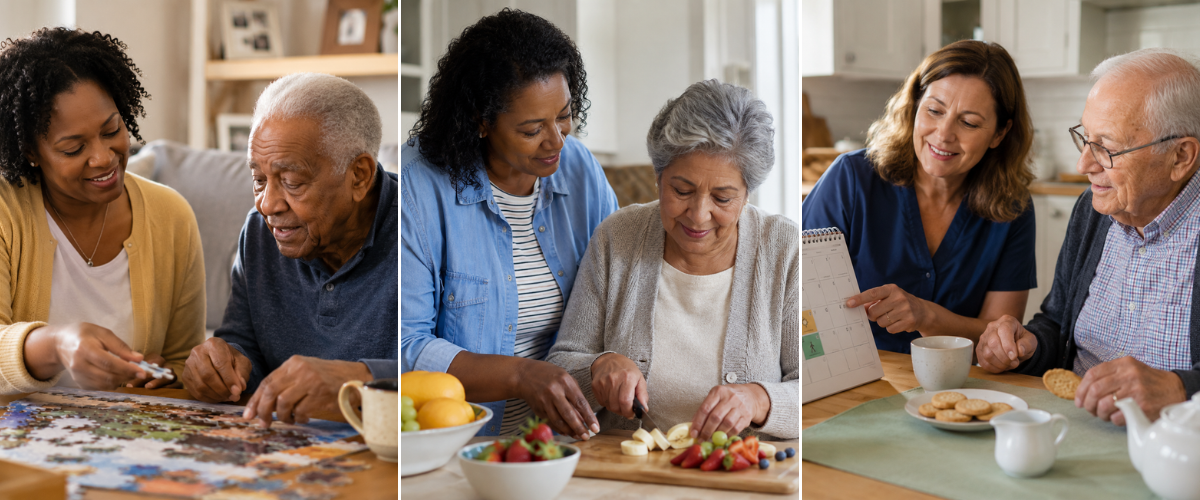
Activities do not need to be complicated to be worthwhile. The best choices connect to the person’s interests, identity, and remaining abilities. Success matters more than completing the activity perfectly.
- Listen to familiar music or sing favorite songs.
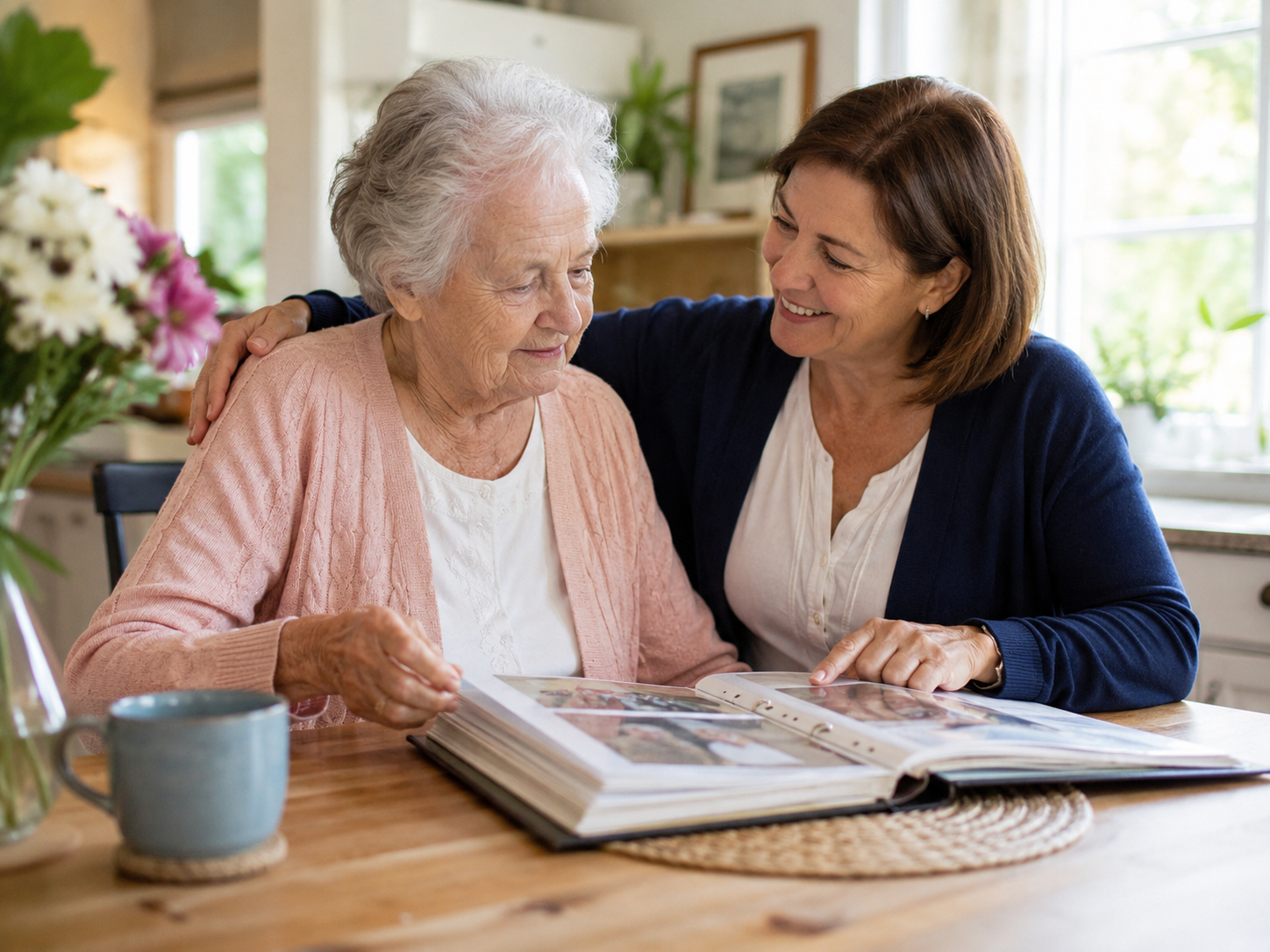
- Look through family photographs and talk about the people or places pictured.
- Fold towels, sort safe household items, water plants, or help prepare a simple recipe.
- Take a supervised walk, stretch, garden, or complete another activity approved by the healthcare team.
- Try art, puzzles, cards, or spiritual practices at a level that feels enjoyable rather than testing.
Watch for signs of fatigue or frustration and end on a positive note. The National Institute on Aging activity guide recommends matching activities to what the person can do and adapting them over time.
8. Respond to Distress by Looking for the Cause
Agitation, pacing, repeated questions, resistance, suspicion, or calling out may be difficult for families, but these behaviors often communicate an unmet need. Before reacting to the behavior itself, look for possible causes.
- Is the person in pain, hungry, thirsty, tired, too hot, too cold, or in need of the bathroom?
- Is the environment noisy, crowded, unfamiliar, or overstimulating?
- Did a schedule change or unfamiliar visitor create confusion?
- Is the task too difficult, rushed, or embarrassing?
- Could a new health issue or medication change be contributing?
Keep your voice low, give the person space, reduce stimulation, and offer reassurance. Redirecting to music, a snack, a walk, or another familiar activity may help. Avoid arguing, cornering, or physically forcing the person unless immediate safety requires intervention. If behavior is new, severe, or dangerous, contact the healthcare provider for guidance.
9. Plan Ahead for Wandering and Getting Lost
A person with dementia may walk with purpose but become unable to find the way back. Wandering can happen even when someone has not previously left home. Planning ahead is safer than waiting for an incident.
- Supervise closely in unfamiliar places and during times when the person is likely to be restless.
- Use door alerts, motion sensors, or other safety tools that fit the home and care plan.
- Keep a recent photo, current description, and list of familiar destinations available.
- Consider identification jewelry or another identification plan.
- Tell trusted neighbors or nearby relatives how to contact the family if they see the person alone.
- Keep car keys secured if driving is no longer safe.
If a person with dementia is missing, begin searching immediately and contact local emergency services. The Alzheimer’s Association wandering resource includes warning signs and prevention ideas.
10. Create a Written Care Plan and Share the Work
Dementia caregiving becomes harder when important information lives only in one person’s memory. A written care plan helps relatives, professional caregivers, and healthcare providers stay consistent.
- Daily routines, preferences, calming strategies, and activities the person enjoys
- Medication list, medical contacts, allergies, and upcoming appointments
- Mobility needs, fall risks, dietary needs, and personal care instructions
- Changes in sleep, appetite, behavior, continence, or function
- Emergency contacts and a plan for urgent situations
- Which family member handles medical, financial, scheduling, and household responsibilities
Schedule regular family check-ins before a crisis develops. Be specific when asking for help: “Can you stay with Dad on Tuesday from 2 to 5?” is easier to act on than “I need more support.” If relatives cannot provide hands-on care, they may be able to coordinate appointments, order groceries, manage paperwork, or contribute financially.
Caring for the Family Caregiver Matters, Too
Family caregivers often focus so completely on the person with dementia that their own sleep, health, work, and relationships begin to suffer. Exhaustion can affect patience, judgment, and the ability to provide safe care. Taking a break is not a failure. It is part of maintaining a sustainable care plan.
Build support before you are completely depleted. Ask relatives to take regular shifts, join a caregiver support group, talk with a counselor, use adult day programs, or arrange professional respite care. Even a dependable few hours each week can give a caregiver time for appointments, exercise, errands, or uninterrupted rest. The National Institute on Aging offers guidance on caring for yourself as an Alzheimer’s caregiver and getting help with caregiving.
Home Halo’s respite care services can help family caregivers step away while their loved one receives support with routines, companionship, personal needs, and safety at home.

When Professional Dementia Care at Home May Help
Many families begin exploring professional care when one person can no longer safely manage every responsibility or when the person with dementia needs more consistency throughout the day. Added support may be helpful when:
- A family caregiver is losing sleep, missing work, or experiencing ongoing burnout.
- Bathing, dressing, toileting, meals, or mobility require more hands-on assistance.
- The person is frequently alone despite increasing safety concerns.
- There have been falls, wandering incidents, missed meals, or repeated medication problems.
- The person responds better to a consistent routine and a familiar caregiver.
- Family members need help coordinating care across several households or schedules.
Professional non-medical home care can complement family involvement rather than replace it. A caregiver may provide companionship, meal preparation, personal care, medication reminders, light household support, supervision, and respite. Care can often begin with a few scheduled visits and increase as needs change.
Home Halo provides dementia care at home that is built around the person’s history, preferences, routines, and current abilities. Families can also review dementia care versus memory care when comparing in-home support with residential options.
How to Know When the Current Care Plan Is No Longer Enough
A care plan that worked six months ago may no longer provide enough support. Reassess after falls, wandering, hospital visits, major behavior changes, new nighttime needs, or a decline in the caregiver’s health.
Ask whether the person can be safely supported at home with additional family help, environmental changes, in-home care, home health, hospice, or other services. In-home caregivers provide non-medical support; skilled medical needs require licensed healthcare professionals. Some families use several services at the same time.
Consider a higher level of care when the person requires continuous supervision that the household cannot reliably provide, medical needs exceed what can be managed at home, dangerous behaviors continue despite professional guidance, or caregiving is placing another person’s health or safety at serious risk. A physician, social worker, care manager, or dementia specialist can help the family evaluate options.
When to Contact a Healthcare Professional
Call the person’s healthcare provider when you notice a sudden or significant change in confusion, alertness, behavior, movement, appetite, sleep, continence, or ability to complete familiar tasks. Also report pain, fever, repeated falls, signs of dehydration, new trouble swallowing, or possible medication side effects. Sudden changes should not automatically be attributed to dementia.
Call 911 or local emergency services for immediate danger, a serious injury, trouble breathing, signs of stroke, loss of consciousness, or another medical emergency. If the person is missing, contact law enforcement right away and explain that the individual has dementia.
Frequently Asked Questions About Caring for Someone With Dementia at Home
Can someone with dementia continue living at home?
Many people with dementia can remain at home when the environment, supervision, medical care, and daily support match their needs. The plan should be reviewed regularly because abilities and safety risks can change over time.
What is the most important part of dementia care at home?
There is no single most important task, but a person-centered approach is essential. Consistent routines, respectful communication, a safer environment, and support that preserves as much independence as possible form the foundation of good care.
How do you calm someone with dementia who is upset?
Stay calm, lower noise and stimulation, offer reassurance, and look for an unmet need such as pain, hunger, fear, fatigue, or needing the bathroom. Avoid arguing. If the distress is sudden, severe, or unsafe, contact the healthcare provider.
Should you correct a person with dementia when they are confused?
Correct information when safety requires it, but avoid repeated arguments over harmless details. Acknowledging the person’s feelings and gently redirecting the conversation is often more supportive than insisting they accept a fact they cannot process or remember.
How can families prevent caregiver burnout?
Share responsibilities, schedule regular breaks, protect sleep and healthcare appointments, use support groups, and arrange respite care before exhaustion becomes a crisis. Caregiver well-being is part of the overall safety plan.
What can an in-home dementia caregiver help with?
A non-medical caregiver may assist with personal routines, meals, companionship, mobility, light housekeeping, medication reminders, safety supervision, meaningful activities, and respite for family members. Services depend on the provider, care plan, and state regulations.
When should a family consider memory care?
Memory care may be considered when the person needs secure, continuous supervision or a level of behavioral and daily support that cannot be safely or sustainably provided at home. Families should compare the person’s needs, preferences, medical requirements, finances, and available support.
Practical Support Can Make Dementia Care at Home More Manageable
Caring for someone with dementia at home is rarely simple, but families do not need to solve every challenge at once. Start with the areas creating the most stress or risk. A steadier routine, a clearer way of communicating, one home-safety change, or a few hours of dependable help can improve daily life for both the person receiving care and the family providing it.
Home Halo provides compassionate, relationship-driven, non-medical home care for seniors and families. Our caregivers can support daily routines, personal care, meals, companionship, medication reminders, safety, and family respite while taking time to understand the person behind the diagnosis.
If your family is exploring dementia care at home, find your local Home Halo office to discuss the support your loved one needs now and how that care may evolve over time.
Editorial note: This article is for general educational purposes and is not a substitute for medical advice, diagnosis, or treatment. Families should consult qualified healthcare professionals about individual medical and safety needs.
Trusted Home Care Services for Seniors & Families
Finding the right home care services for seniors and elderly loved ones can be overwhelming. We make it simple by connecting families with compassionate and reliable in-home care solutions tailored to individual needs.