

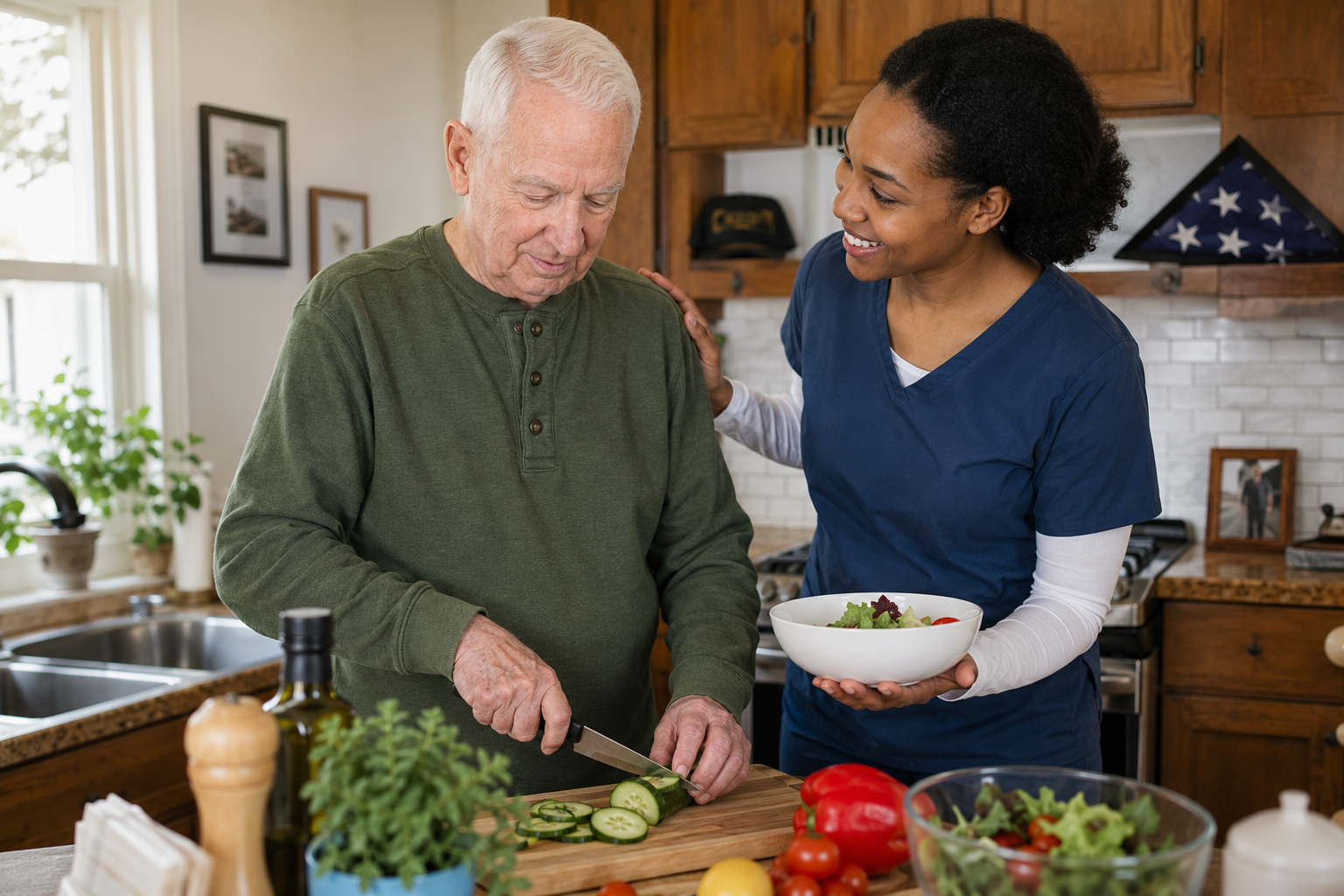
For many veterans, home is more than a place to live. It is where memories are kept, routines feel familiar and independence can be protected. In-home care for veterans can help provide the right level of daily support while allowing them to remain in the place they know best.
As veterans age or experience changes in mobility, memory, energy or daily routines, families may begin to wonder how to provide help without taking away their loved one’s sense of control. With compassionate, non-medical support at home, veterans can receive assistance with everyday tasks while continuing to feel respected, comfortable and independent.
The goal is not to take over. The goal is to support safety, comfort, routine and dignity.
What is in-home care for veterans?
In-home care for veterans is non-medical support provided in a veteran’s home. It can help with daily routines, personal care, companionship, light housekeeping, transportation, meal preparation and family caregiver relief.
This type of care is especially helpful for veterans who want to remain at home but could benefit from extra support throughout the week.
In-home care may be a good fit for veterans who need help with:
- Bathing, dressing or grooming
- Moving safely around the home
- Preparing meals
- Remembering daily routines
- Keeping the home clean and organized
- Getting to appointments or errands
- Staying socially connected
- Reducing strain on a spouse, adult child or family caregiver
At Home Halo, veteran home care is built around respect, consistency and personalized support. Every veteran’s needs, preferences and routines are different, so care should never feel one-size-fits-all.
In-Home Care for Seniors & Veterans
Compassionate, personalized in home care designed to help seniors live safely and independently in the comfort of home. Our trusted home care services provide daily support, companionship, and specialized senior home care giving families peace of mind every step of the way.
Why veterans may benefit from care at home
Many veterans value independence deeply. Accepting help can feel difficult at first, especially for someone who has spent much of their life being self-reliant.
That is why the way care is introduced matters.
In-home care for veterans should feel supportive, not controlling. A caregiver can step in where help is needed while still encouraging the veteran to do what they can safely do on their own.
Veterans may benefit from home care when they are:
- Having trouble keeping up with household tasks
- Becoming isolated or spending more time alone
- Struggling with bathing, dressing or grooming
- Missing meals or eating less than usual
- Forgetting appointments or daily routines
- Recovering after a hospital stay or illness
- Experiencing mobility challenges or fall concerns
- Depending heavily on one family caregiver
- Living with Alzheimer’s disease, dementia or memory changes
- Feeling less confident completing daily tasks alone
Support at home can help veterans maintain structure, comfort and connection while giving families added peace of mind.
How home care supports independence
One of the biggest misconceptions about home care is that it means a person is losing independence.
In reality, the right care can help protect independence.
For example, a veteran may still want to make breakfast, choose their clothing, visit favorite places or stay involved in family routines. A caregiver can provide the right amount of support so those activities remain possible and safe.
Home care can support independence by helping veterans:
- Keep familiar routines
- Stay in their preferred home environment
- Complete daily tasks with less stress
- Reduce avoidable safety risks
- Stay connected to family and community
- Receive support without moving into a facility
- Preserve dignity during personal care tasks
The goal is to help veterans continue living with as much choice and comfort as possible.
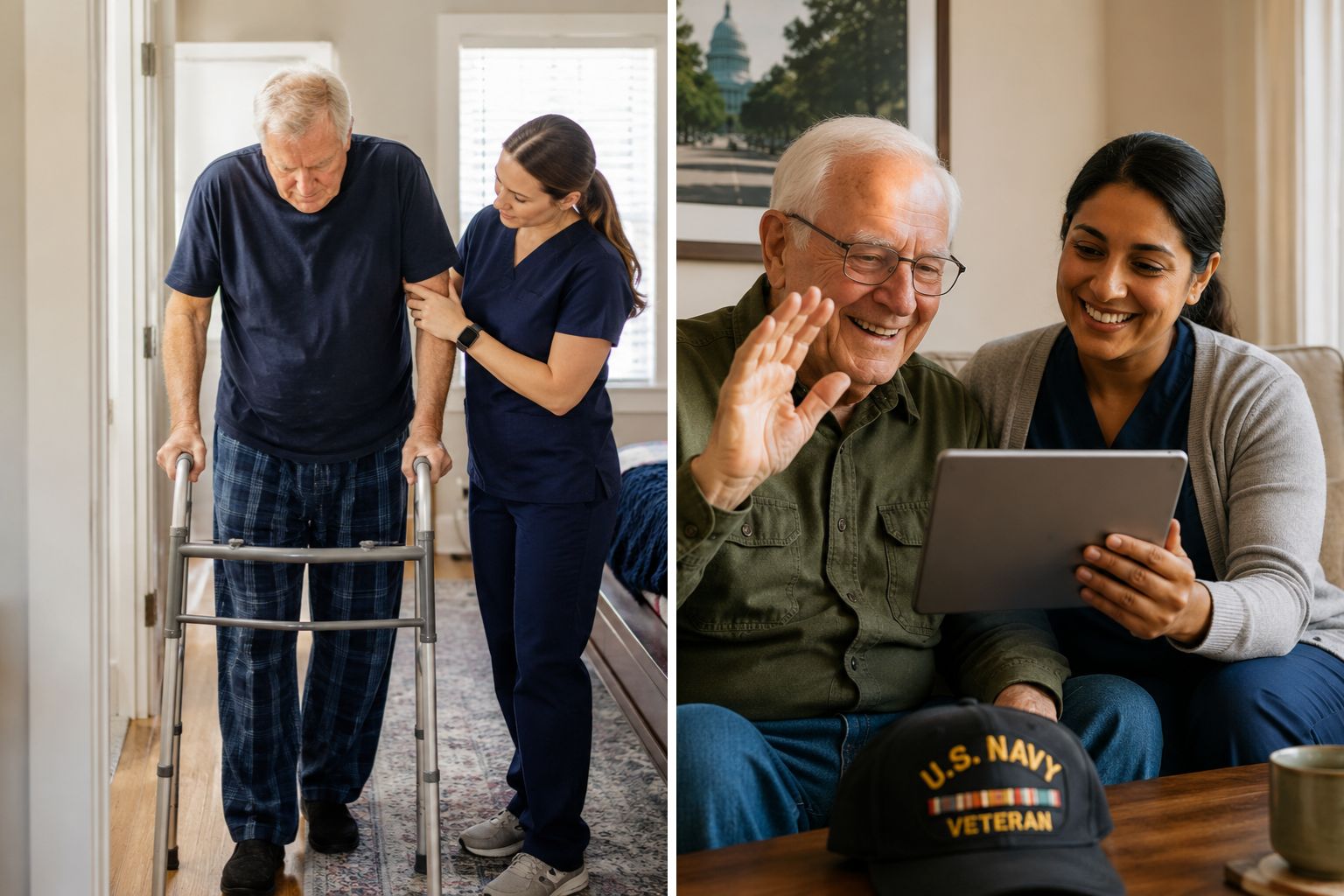
Daily routines caregivers can help with
In-home caregivers can support veterans in many practical ways. These services may look simple from the outside, but they can make daily life safer, easier and more manageable.
Personal care assistance
Personal care assistance includes help with bathing, dressing, grooming, toileting and mobility. For veterans who feel uncomfortable asking family members for help with private tasks, a trained caregiver can provide respectful support while protecting dignity.
This type of care can be especially helpful when a veteran is at risk of falls, has difficulty standing for long periods or needs assistance getting ready for the day.
Companion care
Companion care provides conversation, encouragement and social connection. For veterans who live alone, have lost a spouse or are spending more time isolated at home, regular companionship can be deeply meaningful.
A caregiver may join the veteran for coffee, take a walk, play cards, talk through old memories, help with hobbies or simply provide a friendly presence throughout the day.
Home management assistance
Home management assistance can help veterans keep their living space clean, safe and comfortable. This may include light housekeeping, laundry, dishes, changing linens, meal preparation, organizing common areas and helping reduce clutter that could increase fall risk.
A clean and manageable home can make aging in place feel more realistic for both the veteran and their family.
Medication reminders
Many veterans take multiple medications or follow daily wellness routines. Non-medical caregivers do not administer medication, but they can provide reminders and routine support.
Medication reminders may help veterans stay more consistent with their schedule and give families added reassurance.
Transportation and errands
Transportation support can help veterans stay connected to the people, places and appointments that matter.
Caregivers may assist with:
- Grocery shopping
- Pharmacy trips
- Doctor appointments
- Community outings
- Family visits
- Errands
- Veteran service organization meetings or local activities
Transportation is about more than getting from one place to another. It helps veterans stay engaged in daily life.
Respite care for family caregivers
Many veterans are supported by spouses, adult children or other family members. Over time, caregiving can become physically and emotionally demanding.
Respite care gives family caregivers time to rest, work, attend appointments, run errands or simply take a break while knowing their loved one is supported.
This can help families continue caring from a healthier, more sustainable place.
Supporting veterans with memory changes or dementia
Some veterans may experience Alzheimer’s disease, dementia or other memory-related changes as they age. This can make routines, safety and communication more challenging for families.
In-home care may help by providing:
- Familiar routines
- Gentle reminders
- Meal and hydration support
- Companionship
- Supervision during daily activities
- Help reducing confusion around tasks
- Support for family caregivers
For veterans with memory changes, consistency matters. Seeing a familiar caregiver and following a predictable routine can help the day feel calmer and more manageable.
Supporting veterans after a hospital stay
After a hospital stay, illness or rehab discharge, many veterans need extra support at home. Even when the medical crisis has passed, daily tasks may still feel tiring or unsafe.
In-home care can help during the transition home by supporting:
- Safe movement around the house
- Meal preparation
- Light housekeeping
- Medication reminders
- Bathing and dressing routines
- Transportation to follow-up appointments
- Rest and recovery routines
- Family caregiver relief
This type of support can be temporary or ongoing, depending on the veteran’s needs.
Trusted Home Care Services for Seniors & Families
Finding the right home care services for seniors and elderly loved ones can be overwhelming. We make it simple by connecting families with compassionate and reliable in-home care solutions tailored to individual needs.
How in-home care helps families feel more confident
Families often notice small changes before a veteran asks for help.
The house may not be as tidy as it used to be. Meals might be skipped more often. A spouse may feel exhausted from trying to manage everything alone. An adult child may find themselves checking in multiple times a day because they are worried.
In-home care gives families another layer of support.
It can help families feel more confident that their loved one is:
- Eating regularly
- Following a safer routine
- Getting help with personal care
- Staying socially connected
- Keeping the home more manageable
- Receiving support when family cannot be there
- Maintaining dignity and independence
For many families, care at home also helps reduce the pressure of trying to do everything alone.
Choosing the right home care provider for a veteran
Choosing care for a veteran is personal. Families should look for a provider that understands the importance of respect, communication and trust.
When comparing home care providers, consider asking:
- Do you provide non-medical care for veterans?
- Can care be customized around the veteran’s routines and preferences?
- Do caregivers help with personal care, companionship and home management?
- How do you communicate with families?
- Can care schedules change as needs change?
- Do you offer respite care for family caregivers?
- How do you match caregivers with clients?
- Are services available in my area?
- Can you help families understand veteran care options?
- How do you protect dignity during personal care?
The best care should feel compassionate, reliable and personal.
Home Halo’s approach to veteran home care
Home Halo serves families in multiple communities across the country, helping seniors and veterans receive compassionate care at home.
Our locations include service areas in Iowa, Wisconsin, New Mexico, Northeast Florida, Colorado, Massachusetts, Idaho and the Plano area of Texas.
Whether your family is searching for in-home care for veterans in Iowa, veteran home care in Wisconsin, home care for veterans in Northeast Florida, senior care for veterans in Colorado or support near one of our other Home Halo locations, our goal remains the same: to help veterans live with dignity, safety and independence at home.
If you are unsure what type of care your loved one needs, starting with a conversation can help. A care consultation can help your family talk through routines, concerns, goals and the level of support that may be most helpful.
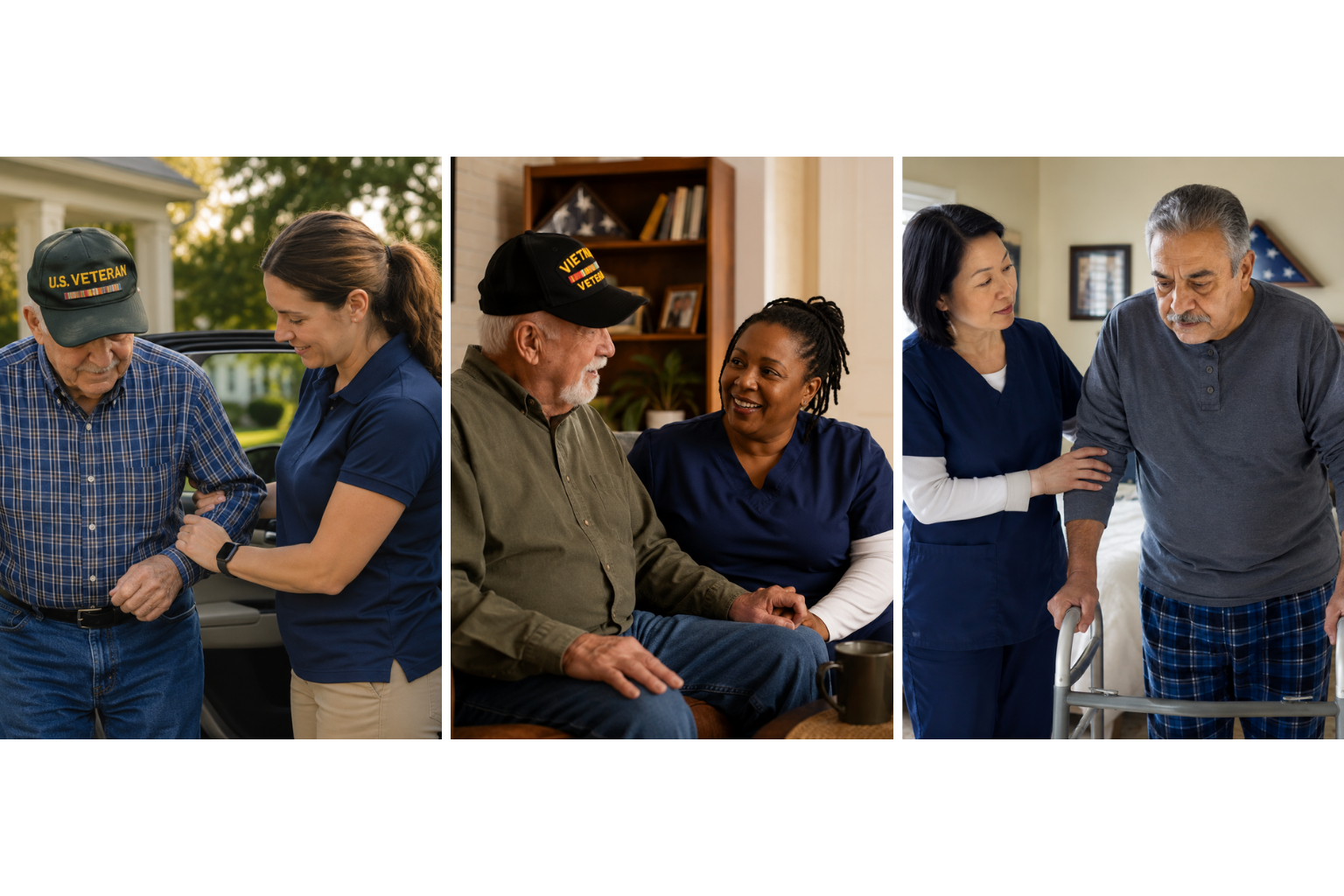
When to consider in-home care for a veteran
It may be time to consider in-home care if your loved one:
- Needs help with bathing, dressing or grooming
- Has had a recent fall or near-fall
- Is becoming isolated
- Has trouble preparing meals
- Needs transportation support
- Is forgetting routines or appointments
- Has a family caregiver who feels overwhelmed
- Has difficulty keeping up with housekeeping
- Is returning home after a hospital or rehab stay
- Wants to stay home but needs extra support to do so safely
Families do not have to wait for a crisis to ask for help. Starting with a few hours of care each week can make the transition easier and help everyone adjust.
Final thoughts on in-home care for veterans
In-home care for veterans is about more than assistance with daily tasks. It is about honoring independence, preserving dignity and helping veterans feel supported in the place they call home.
With the right care, veterans can continue familiar routines, receive respectful help, stay connected and give family caregivers the support they need.
If your family is exploring veteran home care, Home Halo is here to help. Contact Home Halo today to learn more about compassionate in-home care for veterans and personalized support near you.
Frequently Asked Questions About In-Home Care for Veterans
What is in-home care for veterans?
In-home care for veterans is non-medical support provided in a veteran’s home. It may include help with personal care, companionship, meal preparation, medication reminders, light housekeeping, transportation and respite care for family caregivers.
Is in-home care for veterans medical care?
Home Halo provides non-medical in-home care. This means caregivers can help with daily routines, companionship, personal care and household support, but they do not provide skilled nursing or medical treatment.
When should a veteran consider home care?
A veteran may benefit from home care when daily tasks become harder, family caregivers are overwhelmed, the home feels less manageable, or the veteran wants to remain at home with extra support.
Can home care help veterans stay independent?
Yes. In many cases, home care can support independence by helping veterans continue familiar routines, reduce safety risks and receive help only where they need it.
What services can caregivers provide for veterans?
Caregivers may help with bathing, dressing, grooming, meal preparation, light housekeeping, laundry, errands, transportation, companionship, medication reminders and respite care.
Does Home Halo provide care for veterans?
Yes. Home Halo provides compassionate, non-medical in-home care for veterans, including personal care assistance, home management assistance, companion care, medication reminders, transportation and respite support for family caregivers.
Does Home Halo offer veteran home care near me?
Home Halo serves multiple regions, including Iowa, Wisconsin, New Mexico, Northeast Florida, Colorado, Massachusetts, Idaho and the Plano area of Texas. Families can use the Home Halo locations page to find care near them.
Trusted Home Care Services
At The Home Halo®, we are a trusted home care agency dedicated to providing non medical home care, companion care, and caregiver services that support independence, dignity, and comfort at home.