

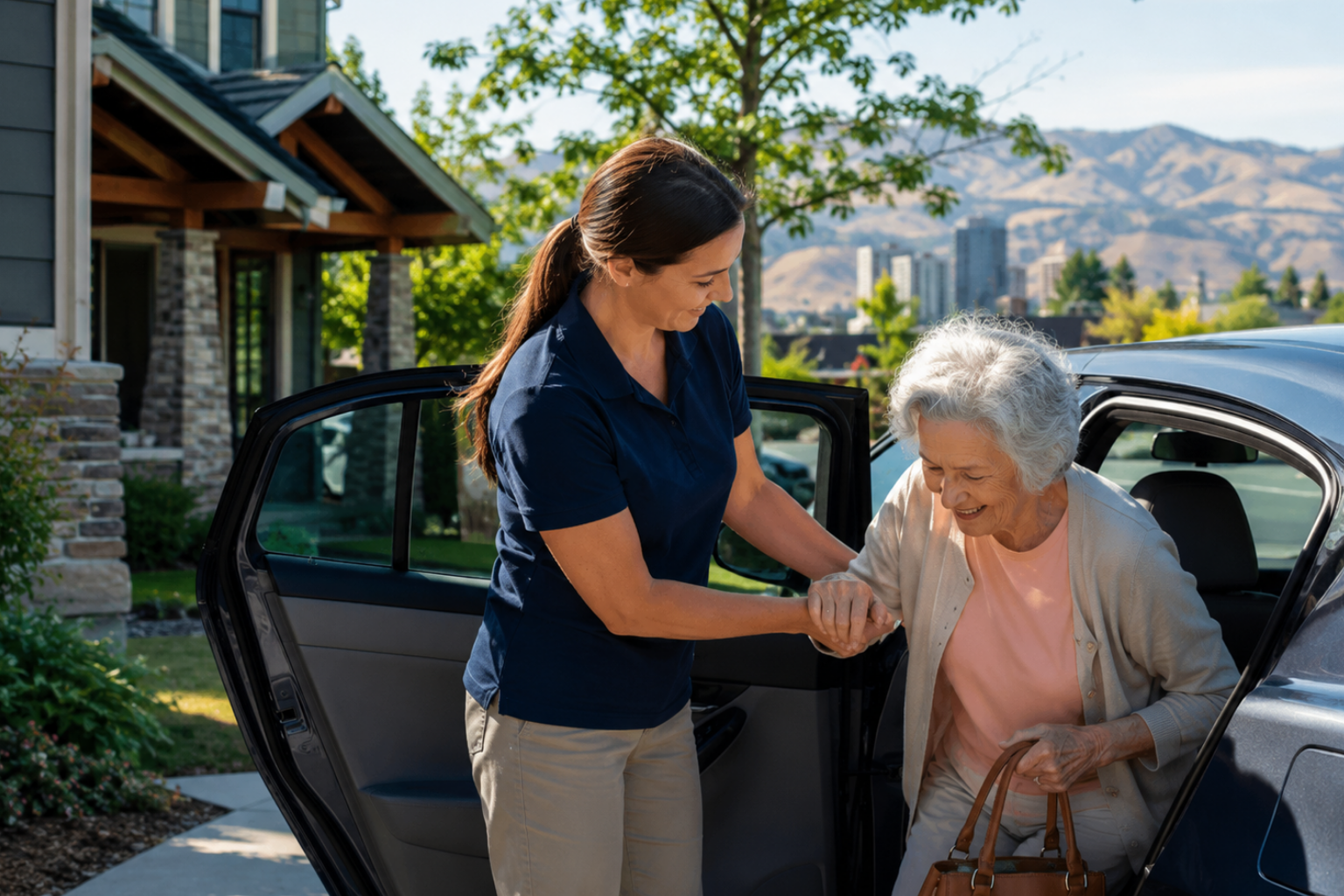
Reliable senior transportation services can help older adults reach medical appointments, run errands, visit family, attend community activities, and continue the routines that make everyday life feel familiar. When driving becomes difficult or family members cannot provide every ride, dependable transportation can protect more than mobility. It can support independence, health, confidence, and social connection.
Transportation needs vary from one person to another. Some seniors simply need a safe ride to the grocery store. Others need a caregiver who can help them get ready, walk to the vehicle, manage a mobility device, accompany them inside, wait during an appointment, and help them settle back in at home. Understanding the available options can help families choose support that matches the older adult rather than focusing only on the ride itself.
This guide explains how transportation assistance for seniors works, why it matters, how caregiver-supported rides differ from other options, and what families should ask before choosing a service.
What Are Senior Transportation Services?
Senior transportation services are ride, accompaniment, and mobility-support options designed to help older adults travel safely to essential and meaningful destinations. Depending on the service, support may be curb-to-curb, door-to-door, or more hands-on. A transportation plan may include help preparing for the trip, entering and exiting a vehicle, carrying items, checking in at an appointment, running errands, or returning home safely.
The National Institute on Aging includes transportation among the services that can help older adults continue living safely and independently at home. Transportation is also considered an instrumental activity of daily living, or IADL, because it supports a person’s ability to manage appointments, shopping, community involvement, and other parts of independent life. Families can learn more in Home Halo’s guide to ADLs and IADLs.
Senior transportation is not one single type of service. The right option depends on the destination, the person’s mobility, cognitive needs, schedule, budget, local availability, and whether assistance is needed before or after the ride.
In-Home Care for Seniors & Veterans
Compassionate, personalized in home care designed to help seniors live safely and independently in the comfort of home. Our trusted home care services provide daily support, companionship, and specialized senior home care giving families peace of mind every step of the way.
Why Reliable Transportation Matters for Older Adults
Giving up driving or reducing time behind the wheel can affect nearly every part of an older adult’s routine. A person may still be able to live independently at home but struggle to reach the places that make that independence possible. Reliable transportation helps close that gap.
Access to Medical Appointments and Follow-Up Care
Regular access to primary care, specialists, therapy, dental care, vision appointments, and other services becomes more important as health needs change. Transportation challenges may lead a senior to postpone visits, rely on an overwhelmed family member, or feel anxious about navigating a large medical campus alone.
A caregiver-supported ride can provide more than transportation. Depending on the care plan, the caregiver may help the senior gather needed items, arrive on time, walk into the office, locate the correct suite, and return home without feeling rushed. Caregivers do not replace clinical staff or interpret medical instructions, but their practical support can make the day more manageable.
Access to Food, Prescriptions, and Everyday Essentials
Transportation affects whether a senior can shop for groceries, pick up prescriptions, visit the bank, attend a hair appointment, or complete other errands. When transportation becomes unreliable, older adults may depend heavily on delivery services or postpone tasks that contribute to a safe and comfortable home.
Home Halo’s home management assistance can include transportation, grocery shopping, errands, meal support, light housekeeping, and other IADLs that help an older adult remain independent at home.
Social Connection and Emotional Well-Being
Transportation is also a connection to people and purpose. A ride may allow a senior to attend religious services, visit a spouse or friend, participate in a class, volunteer, celebrate a family event, or simply enjoy lunch outside the home.
The Centers for Disease Control and Prevention explains that meaningful social connection is associated with healthier and longer lives. The National Institute on Aging also notes that older adults may be more vulnerable to loneliness and social isolation when life changes reduce opportunities for connection. Reliable transportation and companion care for seniors can work together to help older adults stay engaged with the people and activities they value.
Choice, Control, and Confidence
Independence does not mean doing everything without help. It means having choices and remaining involved in decisions. When an older adult can request a ride, keep an appointment, choose groceries, or attend a favorite activity, transportation support can preserve a sense of control.
The goal is not simply to move someone from one address to another. It is to help the person continue participating in their own life.
Signs a Senior May Need Transportation Support
Driving ability changes differently for every person, and there is no single age when someone should stop driving. The National Institute on Aging provides safe-driving guidance for older adults and encourages families to consider health, vision, reaction time, medications, confidence, and recent driving experiences rather than age alone.
The following signs may indicate that a senior would benefit from additional transportation options or a conversation about driving safety:
-
- New dents, scrapes, traffic tickets, near misses, or unexplained vehicle damage
- Getting lost on familiar routes or becoming confused in traffic
- Difficulty seeing at night, in bad weather, or in bright glare
- Slower reaction time, difficulty turning the head, or trouble moving between pedals
- Anxiety about highways, intersections, parking, or unfamiliar destinations
- Avoiding appointments, errands, or social activities because driving feels difficult
- Family members repeatedly rearranging work or childcare to provide rides
- A recent hospitalization, surgery, injury, medication change, or decline in mobility
- Difficulty walking from a parking area to the destination without support
Transportation support does not always mean a person must stop driving completely. Some older adults continue driving short, familiar daytime routes while using transportation services for medical appointments, winter weather, night outings, congested areas, or longer distances. A gradual plan may feel more respectful and sustainable than an abrupt loss of driving privileges.

Types of Senior Transportation Services
Families may need more than one option. A senior might use public transit for a familiar daytime trip, a caregiver for an appointment that requires accompaniment, and a family member for a weekend event. Building a small transportation network can reduce dependence on a single person or program.
Caregiver-Assisted Transportation
Caregiver-assisted transportation combines a ride with non-medical support. Depending on provider policy, the care plan, and the senior’s needs, a caregiver may help the person get ready, walk to the vehicle, enter and exit safely, carry a purse or groceries, accompany the senior inside, wait during the appointment, and help with the transition home.
This can be especially helpful for seniors who use a cane or walker, feel anxious in unfamiliar settings, have mild memory changes, or need support with several errands during one visit. Home Halo caregivers may provide transportation assistance as part of a personalized home care plan, subject to local office policies and the individual’s needs.
Public Transit and Fixed-Route Services
Buses, trains, and other fixed-route services can be affordable and practical for older adults who can safely navigate stops, schedules, transfers, payment systems, and the distance between the stop and destination. Some local transit agencies offer reduced fares, travel training, or accessibility features, but programs differ by community.
Families should consider the full trip, not only the time spent on the vehicle. A route may appear convenient but still require a long walk, stairs, waiting outdoors, or multiple transfers.
ADA Complementary Paratransit
Public transit agencies that operate fixed-route service generally provide ADA complementary paratransit for eligible riders whose disability prevents them from using the fixed-route system for some or all trips. Eligibility is based on functional ability rather than age or diagnosis alone. The Federal Transit Administration’s paratransit guidance can help families understand the general rules, but application processes and service details are managed locally.
Paratransit can be valuable, but it may require advance scheduling, eligibility approval, pickup windows, and travel within a defined service area. Families should confirm whether the service is curb-to-curb or can provide another level of assistance.
Non-Emergency Medical Transportation
Non-emergency medical transportation is designed for healthcare-related trips that do not require emergency care. Services range from standard vehicles to wheelchair-accessible or medically supported transportation. A senior who needs a wheelchair lift, stretcher transport, monitoring, or specialized transfer assistance may require a provider equipped and authorized for that level of service rather than a companion caregiver or standard ride.
Families should describe the person’s mobility and medical needs clearly when scheduling. A non-medical home care provider should never be assumed to offer wheelchair, stretcher, or clinical transportation unless the local provider specifically confirms it.
Community and Volunteer Transportation Programs
Area Agencies on Aging, senior centers, faith communities, nonprofit organizations, hospitals, and local volunteer programs may offer rides for medical appointments, grocery shopping, or other essential trips. Availability, eligibility, trip purpose, service area, and scheduling requirements vary.
The federal Eldercare Locator helps families connect with local aging services, while the National Aging and Disability Transportation Center provides information about accessible transportation and mobility resources for older adults, people with disabilities, and caregivers.
Taxis, Rideshare Services, and Private Car Services
On-demand rides may work well for seniors who can independently enter and exit the vehicle, confirm the correct driver, manage the app or payment process, communicate the destination, and navigate from the curb to the final location. Some services offer features intended for older riders, but availability and assistance levels vary.
A basic driver may not be able to wait, provide hands-on mobility assistance, accompany a rider into a medical office, manage a cognitive concern, or ensure the senior is safely settled inside the destination. Families should not assume door-through-door support is included.
Family and Friends
Family transportation can feel familiar and reassuring, but relying on one adult child, spouse, neighbor, or friend for every ride can become difficult. Work schedules, children, distance, health needs, and last-minute appointments may make the arrangement unreliable over time.
Professional transportation assistance does not replace family involvement. It can protect family time by allowing visits to focus more on connection and less on logistics. Respite care and scheduled transportation can also reduce the pressure placed on a primary family caregiver.
How Caregiver-Assisted Transportation Differs From a Basic Ride
The most important question is often not, “Can someone drive my parent?” but, “What help does my parent need from the time they prepare to leave until they are safely home again?”
Transportation providers use different terms, so families should confirm exactly what is included. Common service levels may include:
-
- Curb-to-curb: The rider is picked up and dropped off at the curb and manages the remaining distance independently.
- Door-to-door: The driver may approach the entrance and help the rider reach the vehicle or destination door.
- Door-through-door: A caregiver or trained provider may accompany the person inside and help with transitions, according to policy and care needs.
- Accompanied transportation: The caregiver stays with the senior during an appointment, errand, activity, or meal.
- Wait-and-return service: The caregiver or driver remains available and provides the return trip.
For a senior with limited stamina, memory changes, hearing loss, anxiety, or balance concerns, the support surrounding the ride may be as important as the vehicle itself.
Common Destinations for Senior Transportation
Transportation should support both essential needs and quality of life. Common destinations include:
-
- Primary care, specialist, dental, vision, therapy, dialysis, and rehabilitation appointments
- Pharmacies, grocery stores, banks, post offices, and other errands
- Senior centers, libraries, classes, exercise programs, and volunteer activities
- Religious services and community gatherings
- Visits with family, friends, or a spouse living in another care setting
- Hair appointments, restaurants, parks, and favorite local businesses
- Airport, train, or bus stations when appropriate assistance is available
- Adult day programs and caregiver-support services
A well-designed care plan makes room for the outings that give life meaning, not only the trips that appear medically necessary.
Trusted Home Care Services
At The Home Halo®, we are a trusted home care agency dedicated to providing non medical home care, companion care, and caregiver services that support independence, dignity, and comfort at home.
Building Transportation Into a Home Care Plan
Transportation often works best when it is combined with other daily support. A four-hour care visit, for example, might include helping the senior dress, preparing a light meal, driving to an appointment, stopping for groceries, returning home, and putting food away. This creates continuity and reduces the number of separate services a family must coordinate.
Transportation can be paired with personal care assistance for seniors, companionship, home management, medication reminders, meal preparation, mobility support, or post-hospital care. Families can also review Home Halo’s guide to home care for seniors to understand how these services fit together.
When creating a plan, consider the entire outing:
-
- What time does the senior need to be ready, and how much help is needed before leaving?
- Can the senior enter and exit a standard vehicle safely?
- Does the person use a cane, walker, wheelchair, oxygen, or another device?
- Will the caregiver need to stay during the appointment or activity?
- Are there stairs, long hallways, large parking areas, or complex check-in procedures?
- Will the senior need a meal, medication reminder, restroom assistance, or rest break during the outing?
- What support will be needed after returning home?
Planning around these details helps prevent a ride from becoming stressful or unsafe.
Helping a Loved One Adjust to Driving Less
Driving is closely connected to identity, privacy, spontaneity, and adulthood. A conversation about transportation may feel threatening even when family members are motivated by concern. Approaching the topic with respect can protect the relationship and lead to a more workable plan.
- Begin with the senior’s goals, such as staying at home, continuing favorite activities, or keeping medical appointments.
- Use specific observations rather than labels or criticism.
- Offer alternatives before asking the person to give something up.
- Invite the older adult to compare services and choose preferred drivers, days, and destinations.
- Consider a trial ride for a pleasant outing rather than introducing the service during a stressful medical appointment.
- The strongest plan replaces uncertainty with dependable options. A senior is more likely to accept transportation support when it helps preserve valued routines rather than simply limiting driving.
The strongest plan replaces uncertainty with dependable options. A senior is more likely to accept transportation support when it helps preserve valued routines rather than simply limiting driving.
Transportation Considerations for Mobility or Memory Changes
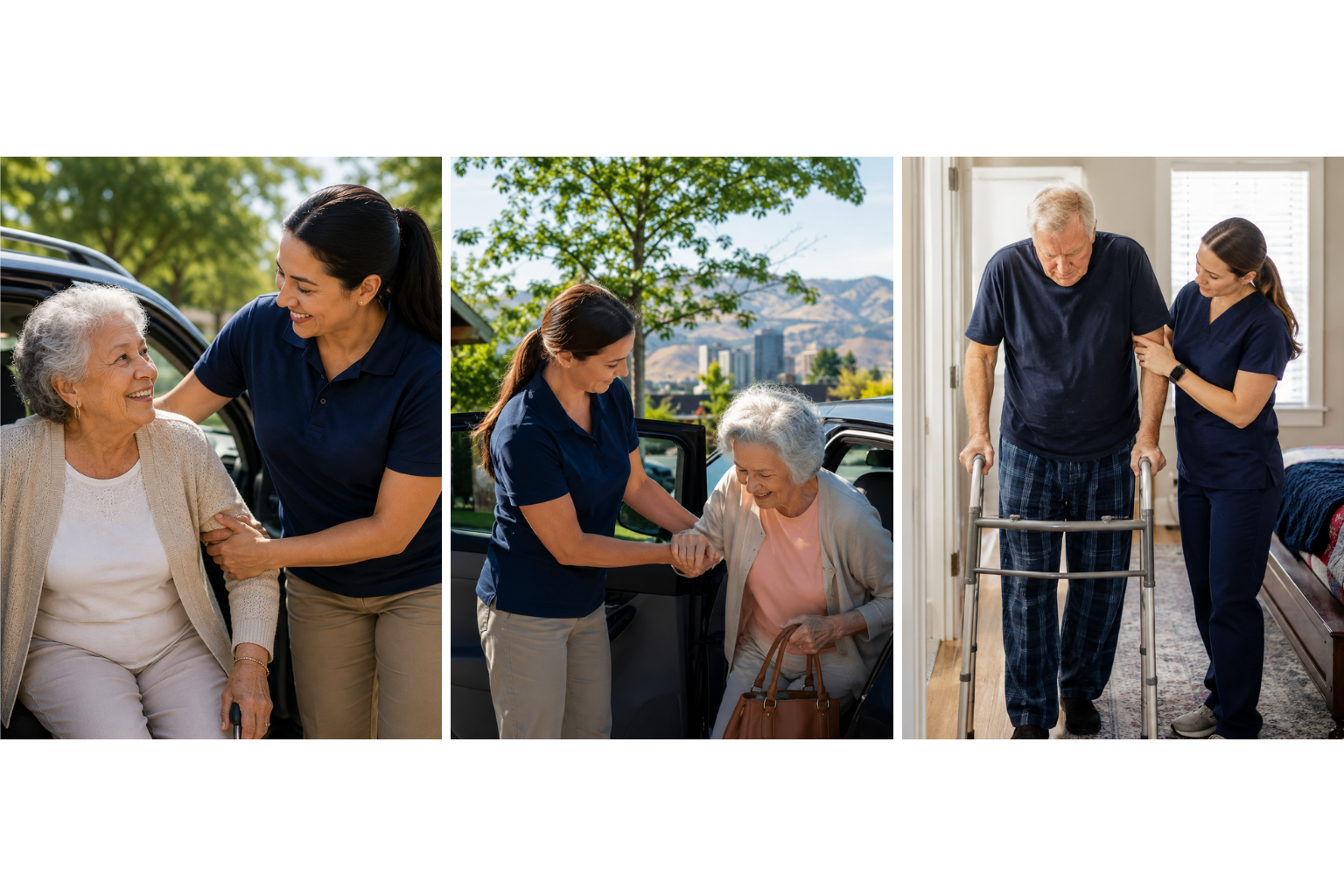
Some older adults need additional preparation or supervision because of arthritis, weakness, balance changes, Parkinson’s disease, dementia, vision changes, or recovery from surgery. Families should be direct about these needs when choosing a provider.
Important questions include whether the person can transfer into the vehicle, whether a mobility device can be stored safely, whether hands-on assistance is permitted, and whether the provider can manage confusion, wandering risk, repeated questions, or difficulty recognizing the destination.
For seniors living with dementia, consistency can make transportation less confusing. The same caregiver, familiar route, simple explanations, extra time, and a predictable sequence may reduce anxiety. Transportation may be incorporated into a broader dementia care at home plan focused on routine, safety, and meaningful engagement.
Questions to Ask a Senior Transportation Provider
Transportation is a trust-based service. Families should understand who will arrive, what assistance is included, and how the provider handles delays or changes.
-
- Is the service curb-to-curb, door-to-door, or door-through-door?
- Will the driver or caregiver accompany the senior inside and stay during the appointment?
- How are caregivers or drivers screened, trained, insured, and supervised?
- Can the same caregiver provide recurring rides?
- Which mobility devices can the vehicle safely accommodate?
- Does the provider offer hands-on transfer or walking assistance?
- How far in advance should rides be scheduled?
- Is there a minimum visit length, mileage charge, wait-time fee, or cancellation policy?
- How are late pickups, caregiver call-outs, or schedule changes handled?
- Who should the family contact during the ride if a concern arises?
- Can transportation be combined with errands, meals, personal care, or companionship?
Home care agencies should also be clear about the boundaries of non-medical transportation. Families should never hesitate to ask whether a need requires a specialized medical transportation provider instead.
How Much Do Senior Transportation Services Cost?
Costs depend on the type of transportation, location, mileage, duration, level of assistance, vehicle requirements, scheduling, and whether the provider waits or accompanies the senior. A volunteer program may be free or donation-based, while private transportation and caregiver-supported services may charge per trip, per mile, per hour, or through a minimum visit.
Insurance coverage also varies. Original Medicare’s transportation coverage is generally focused on ambulance services when specific medical-necessity requirements are met, as explained in Medicare’s official ambulance coverage guidance. Other health plans, Medicaid programs, PACE organizations, veterans’ benefits, or local aging programs may offer transportation benefits for eligible participants, but families should verify current coverage directly with the program or plan.
When comparing prices, consider the full level of support. A lower-cost ride may not meet the needs of someone who requires help dressing, walking, checking in, waiting, carrying groceries, or returning safely inside the home.
Trusted Home Care Services for Seniors & Families
Finding the right home care services for seniors and elderly loved ones can be overwhelming. We make it simple by connecting families with compassionate and reliable in-home care solutions tailored to individual needs.
Why Families Choose Home Halo for Transportation Assistance
Home Halo provides compassionate, relationship-driven, non-medical home care designed to help seniors remain independent and connected. Transportation assistance can be included within a personalized care plan alongside companionship, personal care, meal preparation, home management, medication reminders, respite support, and other everyday services.
Because transportation is part of a broader caregiving relationship, the support can begin before the senior leaves home and continue after the outing ends. A caregiver may help prepare for the day, provide reassurance during the trip, accompany the senior, assist with errands, and help the person return comfortably to their routine.
Availability, vehicle arrangements, mileage, mobility-device accommodations, and transportation policies vary by location. Families can find a Home Halo location and speak with the local team about the senior’s needs, preferred destinations, and the level of assistance required.
Families who are comparing home care providers can also use our complete guide to hiring in-home help to prepare questions about screening, scheduling, caregiver matching, communication, and changes in care needs.
Frequently Asked Questions About Senior Transportation Services
What are senior transportation services?
Senior transportation services help older adults travel to medical appointments, errands, social activities, family visits, and other destinations. Depending on the provider, support may include a basic ride, door-to-door assistance, caregiver accompaniment, waiting during appointments, mobility support, and help before or after the outing.
Can a caregiver take a senior to medical appointments?
Often, yes. Depending on the agency’s policies and the care plan, a non-medical caregiver may drive or accompany a senior to an appointment, help with navigation and check-in, wait during the visit, and provide the return trip. Caregivers do not replace medical staff or make clinical decisions.
Can transportation include grocery shopping and errands?
Yes. Transportation assistance may include grocery stores, pharmacies, banks, post offices, hair appointments, religious services, social events, and other everyday destinations. A caregiver may also help carry items, shop alongside the senior, or put groceries away after returning home.
What is the difference between senior transportation and non-emergency medical transportation?
General senior transportation supports routine medical and non-medical outings. Non-emergency medical transportation is specifically intended for healthcare-related trips and may offer specialized vehicles or assistance for people with greater mobility or medical needs. A senior who needs a wheelchair lift, stretcher, or medical monitoring may require a specialized provider.
Does Medicare cover rides to doctor appointments?
Original Medicare generally covers ambulance transportation only when applicable medical-necessity requirements are met. It does not broadly cover routine rides in a standard vehicle. Benefits may differ through other programs or plans, so families should confirm current coverage directly with Medicare, the health plan, Medicaid, PACE, the VA, or a local aging agency.
What is paratransit, and who qualifies?
ADA complementary paratransit is a service connected to public fixed-route transit for eligible people whose disability prevents them from using the regular system for some or all trips. Eligibility is based on functional ability, and riders generally must apply through the local transit agency.
Can senior transportation services help someone with dementia?
They can, but the service must match the person’s needs. Someone with memory changes may benefit from a familiar caregiver who provides reminders, reassurance, accompaniment, and a consistent routine. Families should explain any wandering risk, confusion, communication needs, or transfer concerns before care begins.
How can I find transportation options near my loved one?
Start with the local Area Agency on Aging, senior center, public transit agency, healthcare system, or Eldercare Locator. Families can also contact a local home care agency to ask whether caregiver-supported transportation is available and what level of assistance is included.
Helping Older Adults Stay Connected to Everyday Life
Senior transportation services are about more than getting from one place to another. They help older adults keep appointments, manage errands, maintain relationships, participate in their communities, and continue making choices about how they spend their time.
The right transportation plan should reflect the whole person. For one senior, that may mean a weekly grocery trip. For another, it may mean hands-on support before a medical appointment and companionship afterward. Flexible, respectful assistance can reduce family stress while helping the older adult remain active and confident.
Ready to explore transportation and in-home support for your loved one?
Find your local Home Halo office to discuss a personalized care plan that supports safety, independence, and connection at home and throughout the community.