

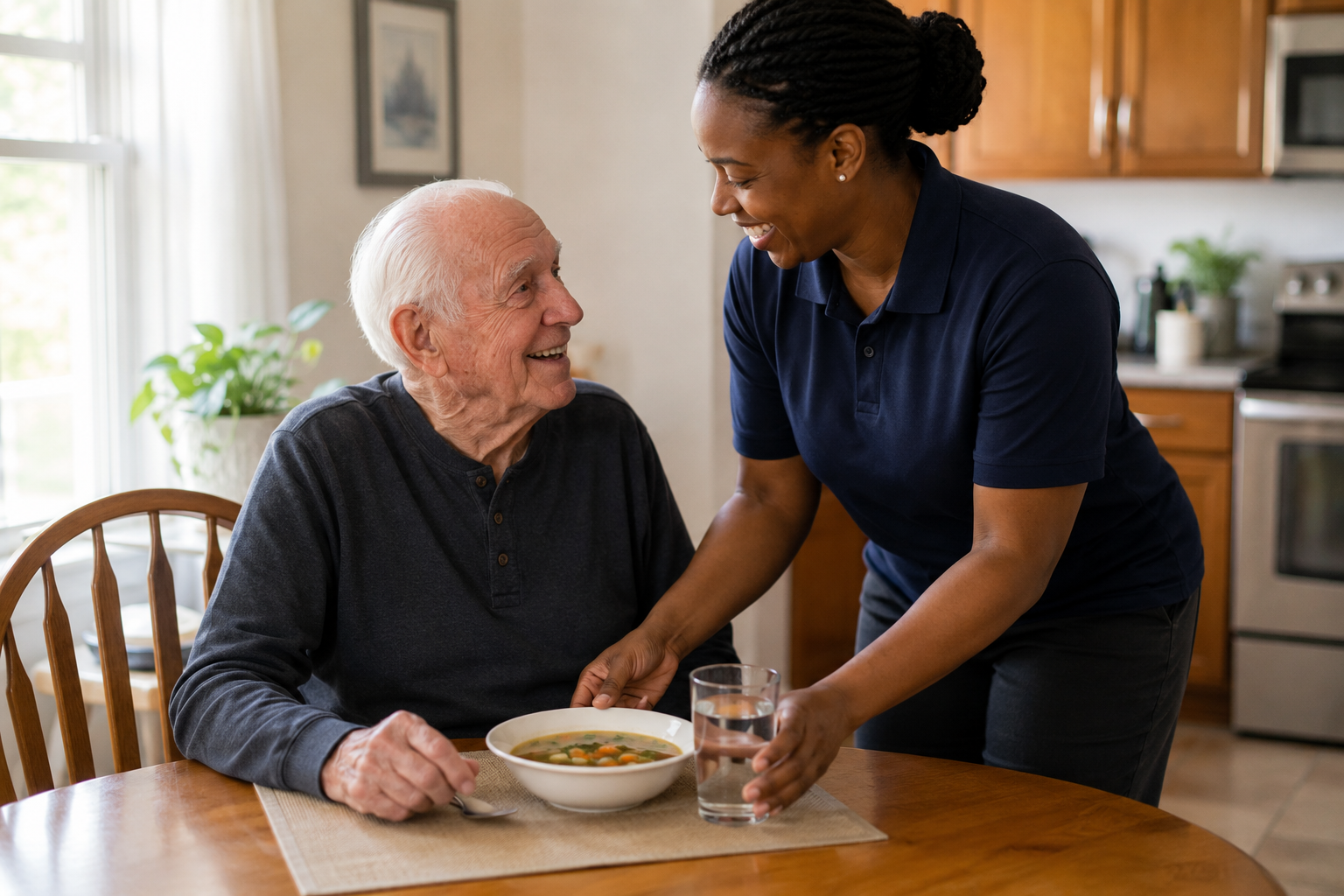
Many Veterans want to stay in the homes and communities they know. However, bathing, dressing, preparing meals, moving safely, or keeping up with household routines may become harder over time. Family caregivers may also reach a point when they need dependable help.
VA home care services may help eligible Veterans receive support without moving into a facility. Depending on the program, that support may include personal care, homemaker assistance, respite care, participant-directed services, or clinical care delivered at home. The right path depends on the Veteran’s enrollment, assessed needs, local availability, and VA authorization.
However, the process can feel confusing because “VA home care” is not one single benefit. This guide explains the main programs, how they differ from private-pay care, and which steps families can take to request support.
What Are VA Home Care Services?
|
Quick answer: VA home care services are health care and supportive programs that may help eligible Veterans live safely at home. Options can include help with activities of daily living, relief for family caregivers, participant-directed care, skilled home health, and home-based medical care. Not every program is available in every area. |
The U.S. Department of Veterans Affairs groups several options under home and community-based services. Some focus on everyday non-medical assistance. Others provide medical care from nurses, therapists, physicians, or other licensed clinicians. A Veteran may use more than one service when the VA care team determines that the combination is appropriate.
Importantly, VA eligibility does not mean the VA will automatically pay any home care company a family chooses. Community care generally requires VA approval, an authorization, and a participating provider. Services that begin outside that process may become the family’s financial responsibility.
In-Home Care for Seniors & Veterans
Compassionate, personalized in home care designed to help seniors live safely and independently in the comfort of home. Our trusted home care services provide daily support, companionship, and specialized senior home care giving families peace of mind every step of the way.
Types of In-Home Support Available Through VA
Homemaker and Home Health Aide Care
The VA Homemaker and Home Health Aide program supports Veterans who need personal care or help with daily activities. A trained aide from an organization that contracts with VA may visit the Veteran’s home. These aides are not nurses, although a registered nurse supervises the service and helps assess daily living needs.
For example, an approved care plan may include help with eating, dressing, grooming, bathing, toileting, moving from one place to another, or grocery shopping. Visit frequency depends on the assessed need and the authorization. Some Veterans receive recurring help, while others need occasional support.
Respite Care for Veteran Caregivers
VA Respite Care gives a family caregiver time away from caregiving responsibilities. Depending on local options, a paid aide may come to the home, the Veteran may attend an adult day health program, or the Veteran may receive short-term care in an approved facility.
In-home respite can be useful when a spouse or adult child needs to work, attend appointments, run errands, rest, or manage other responsibilities. The Veteran must meet the program’s clinical criteria, and community-based respite also requires community care eligibility. Availability and possible copays vary.
Veteran-Directed Care
The Veteran-Directed Care program offers a more consumer-directed approach for eligible Veterans who need help with personal care or activities of daily living. The Veteran or a representative manages a service budget with support from a counselor and develops a spending plan.
In addition, the program may allow the Veteran to hire workers who fit the approved plan. In some situations, that worker can be a family member or neighbor. The Veteran must be enrolled in VA health care, meet clinical and community care criteria, and live in an area where the program is available.
Home-Based Medical and Skilled Services
VA also offers clinical programs. Home Based Primary Care brings an interdisciplinary medical team to eligible Veterans with complex health needs. Skilled Home Health Care may provide short-term nursing, therapy, or other clinical services when medically necessary.
However, these clinical services are different from the non-medical assistance that a private-duty home care agency provides. A family may use both types of support, but each service must follow its own assessment, provider, and authorization requirements.
VA Caregiver Support Programs
The VA Caregiver Support Program offers education, coaching, peer support, referrals, and other resources for people who care for Veterans. Certain families may qualify for additional benefits through a separate caregiver program. These resources can complement home care, but they do not replace a VA referral or authorization for paid services.
What Non-Medical Support Can Include
Non-medical home care focuses on everyday safety, comfort, routine, and independence. The exact tasks must match the Veteran’s assessed needs and approved care plan. Support may include:
- Bathing, dressing, grooming, toileting, and other personal care
- Mobility, transfers, positioning, and safer movement through the home
- Meal preparation, grocery support, hydration reminders, and help with eating
- Light housekeeping, laundry, linen changes, and household organization
- Companionship, conversation, and support with familiar routines
- Medication reminders that do not involve administering or managing medication
- Respite and relief for a spouse, adult child, or other family caregiver
- Transportation or errands when allowed by the care plan and provider
Families can learn more about Home Halo’s daily living support, home management assistance, and in-home respite care. These pages describe non-medical services and do not determine what the VA will authorize for a specific Veteran.

Who May Qualify for VA Home Care Services?
There is no single eligibility checklist for every program. Still, several factors commonly shape access to VA home care services:
- VA health care enrollment. Many home and community-based services require the Veteran to be enrolled in VA health care.
- Clinical need. A VA clinician, social worker, or care team must determine that the Veteran meets the program’s clinical criteria.
- Community care eligibility. Programs delivered by community agencies may require eligibility for VA community care.
- Local availability. A program or participating provider must be available through the Veteran’s VA medical center and service area.
- Service-connected disability and financial information. These factors may affect copays, but a 100% disability rating is not a universal requirement for VA home care.
Importantly, veterans do not have to be elderly to qualify for every program. VA states that Homemaker and Home Health Aide Care, Respite Care, and Veteran-Directed Care can serve Veterans of different ages when they meet the relevant requirements.
VA Health Care Benefits vs. Aid and Attendance
Families often use these terms interchangeably, but they describe different routes to support.
VA health care route. Programs such as Homemaker and Home Health Aide Care or Respite Care begin through the Veteran’s VA care team. The VA assesses need, confirms eligibility, and authorizes care through VA staff or an approved community provider. A copay may apply.
Aid and Attendance route. VA Aid and Attendance adds monthly payments to a VA pension for qualifying Veterans and survivors. A person must receive a VA pension and meet at least one listed care, health, nursing-home, or vision requirement. It is not the same as a community care authorization.
Because the programs have different eligibility rules and application paths, a denial or approval under one route does not automatically decide the other. An accredited Veterans Service Officer can help a family review pension-related benefits. A VA social worker or care manager can help with health care-based home services.
How to Request VA In-Home Support
Families can make the conversation more productive by following a clear sequence:
- Confirm VA health care enrollment. If the Veteran is not enrolled, review how to apply for VA health care. Enrollment in disability compensation alone does not automatically mean the Veteran is enrolled in VA health care.
- Write down the current needs. List the tasks that are difficult, how often help is needed, recent falls or hospital stays, memory concerns, and the amount of care a family member currently provides.
- Contact the VA care team. Ask the Veteran’s primary care team, social worker, or case manager for an assessment of home and community-based services.
- Ask about specific programs. Use the official names: Homemaker and Home Health Aide Care, Respite Care, Veteran-Directed Care, Home Based Primary Care, or Skilled Home Health Care.
- Complete the required assessment and forms. For some extended-care services, a VA social worker or case manager may use VA Form 10-10EC to review possible copays.
- Confirm authorization before care starts. If VA refers the Veteran to a community provider, review the authorization, approved service, dates, frequency, and provider information. VA explains that the care team must approve community care referrals.
- Reassess as needs change. Tell the VA team when the Veteran’s abilities, safety, health, or caregiver situation changes. The care plan may need a new assessment or authorization.
Trusted Home Care Services
At The Home Halo®, we are a trusted home care agency dedicated to providing non medical home care, companion care, and caregiver services that support independence, dignity, and comfort at home.
How Much Care Will VA Cover?
There is no universal number of VA-funded home care hours. The approved amount may depend on the program, clinical assessment, service availability, authorization, service-connected disability status, and financial information. In addition, some programs may involve a copay.
Families should ask for the authorization details in writing and clarify which tasks, dates, and hours the VA approved. If the Veteran needs support outside the authorization, the family can ask whether another VA program applies or discuss private-pay options. Private care should be scheduled and billed separately from VA-authorized services.
How to Choose a Home Care Provider for a Veteran
The best provider should understand both the Veteran’s daily needs and the administrative requirements tied to the payment source. Ask these questions before care begins:
- Does the provider accept the Veteran’s VA authorization for this exact service and location?
- Which tasks are included, and which tasks require a nurse or another licensed clinician?
- How are caregivers screened, trained, matched, and supervised?
- Can the provider support routines related to mobility changes, dementia, PTSD, or a recent hospital discharge?
- How will the office communicate schedule changes, concerns, or changes in condition?
- What happens if VA authorizes fewer hours than the family believes the Veteran needs?
- Can the care plan change after the VA completes a new assessment or authorization?
Care should feel respectful, consistent, and personal. Veterans should remain involved in decisions whenever possible, including caregiver preferences, routines, meal choices, schedules, and the level of assistance they want with private tasks.
How Home Halo Supports Veterans at Home
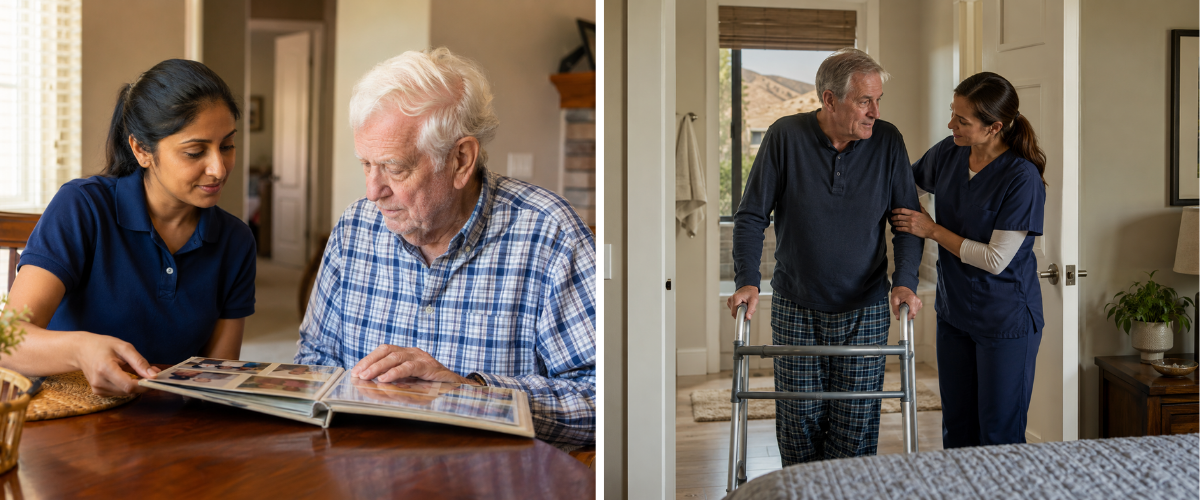
Home Halo provides relationship-driven, non-medical home care for Veterans and older adults. Depending on the local office and care plan, support may include personal care, companion care, home management assistance, medication reminders, mobility support, and caregiver respite. Learn more about Home Halo’s services for Veterans.
Home Halo does not provide skilled nursing, make VA eligibility decisions, or guarantee that the VA will pay for care. VA coverage depends on the Veteran’s eligibility, clinical assessment, written authorization, service availability, and provider participation in the applicable region.
Home Halo currently serves families through locations in Iowa, Wisconsin, New Mexico, Northeast Florida, Colorado, Massachusetts, Idaho, and the Plano area of Texas. Use the Home Halo locations page to find a nearby office and ask about current services and VA participation. For a broader overview of everyday support, read In-Home Care for Veterans.
Frequently Asked Questions About VA Home Care Services
Does the VA pay for in-home care?
The VA may pay for approved in-home or community-based services when a Veteran meets the program’s requirements. Coverage is not automatic. The VA may need to assess the Veteran, confirm community care eligibility, issue an authorization, and use an approved provider. A copay may apply.
Do Veterans need a 100% disability rating to receive home care?
No universal 100% rating rule applies to all VA home care programs. For several services, the main requirements include VA health care enrollment, clinical need, community care eligibility when applicable, and local availability. A service-connected disability rating can affect copays or eligibility for certain separate benefits.
Are VA home care services only for older Veterans?
No. The VA states that several home and community-based programs can serve Veterans of different ages. Eligibility depends on the specific program, the Veteran’s assessed needs, and local availability rather than age alone.
Can a family member be paid to care for a Veteran?
Sometimes. Veteran-Directed Care may allow an eligible Veteran or representative to hire a family member or neighbor as a worker under an approved spending plan. The VA’s caregiver programs are separate and have their own eligibility rules. Families should ask a VA social worker which option applies.
Is a VA home health aide the same as a nurse?
No. Under the Homemaker and Home Health Aide program, aides help with personal care and daily activities. They are not nurses, although a registered nurse supervises the service. Skilled nursing and therapy fall under different clinical home health services.
How long does approval take?
Timelines vary by VA medical center, required assessments, program availability, and community provider capacity. Ask the VA team what happens next, who owns each step, and when the family should follow up. If care is urgent, explain the safety concern clearly.
Can private-pay care be used with VA-authorized care?
Some families purchase additional non-medical care when they want support beyond the VA authorization. The provider should separate the schedules and billing so the same care is not charged to both the VA and the family. Ask for a clear written plan before services begin.
Where should a family start?
Start with the Veteran’s VA primary care team, social worker, or case manager. Describe the daily tasks that are difficult and the strain on the family caregiver. Then ask for an assessment of home and community-based services and the programs available through that VA medical center.
Take the Next Step
VA home care services can make it easier for some Veterans to remain at home with greater safety, routine, and dignity. The first step is not choosing a schedule or guessing which benefit applies. It is documenting the need and asking the VA care team for an assessment.
Once the VA confirms the program and authorization, families can compare qualified providers and build a care plan around the Veteran’s goals. If your family is exploring non-medical support, contact your local Home Halo office to discuss available services, current VA participation, and options for care at home.
Editorial note: VA programs, eligibility rules, copays, provider networks, and local availability can change. This article provides general educational information and is not legal, financial, medical, or benefits advice. Verify current requirements with the U.S. Department of Veterans Affairs or an accredited representative.
Trusted Home Care Services for Seniors & Families
Finding the right home care services for seniors and elderly loved ones can be overwhelming. We make it simple by connecting families with compassionate and reliable in-home care solutions tailored to individual needs.