

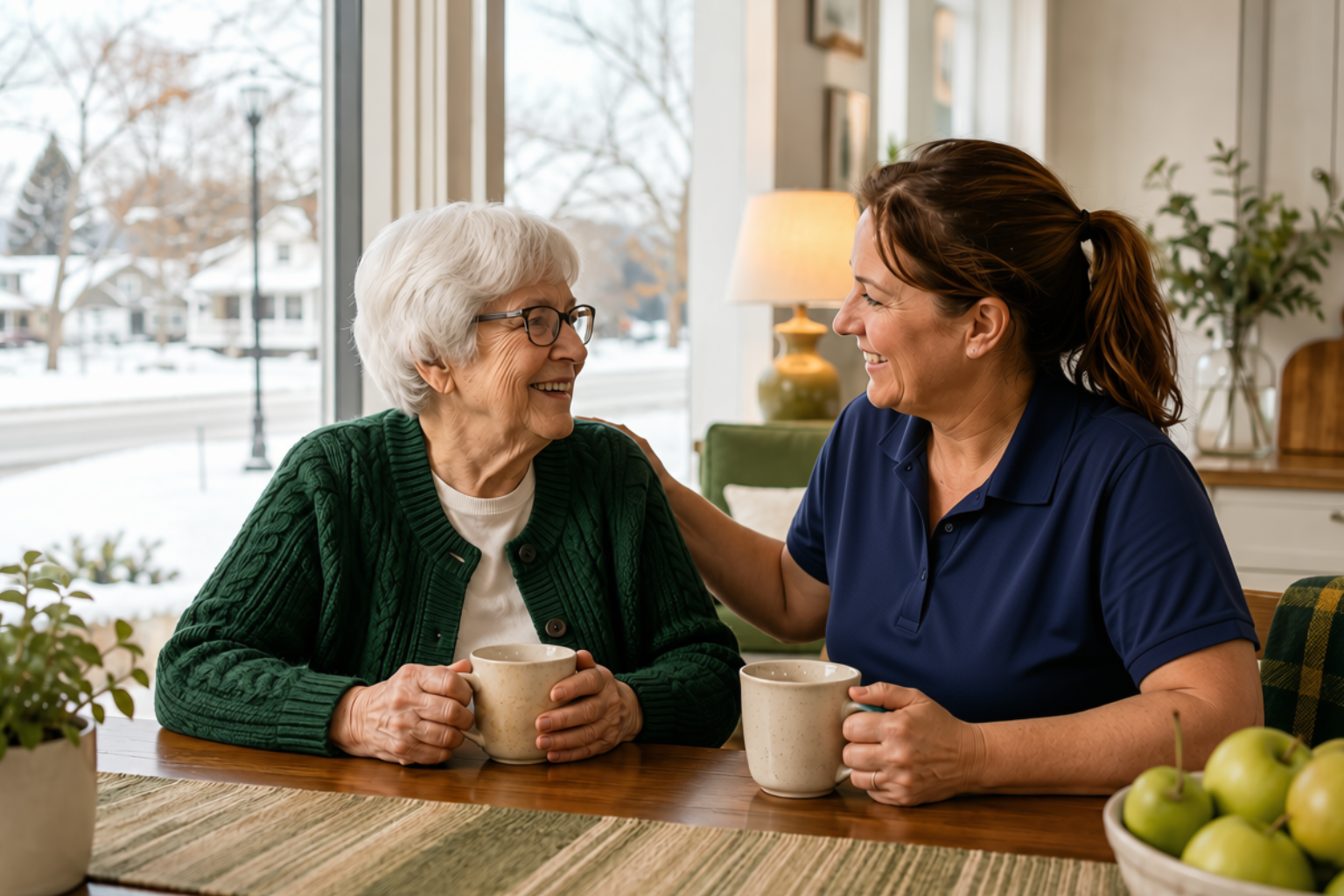
Many families begin looking for home care for seniors in Green Bay after noticing small but meaningful changes in a loved one’s daily life. A parent may be skipping meals, struggling to keep up with laundry, becoming less confident behind the wheel, or needing more help getting dressed and moving safely around the house. These changes do not always mean a senior must leave home. Often, they mean the family needs a more dependable support system.
Non-medical home care brings personalized assistance into the place where an older adult already feels most comfortable. A caregiver can help with personal routines, meals, light housekeeping, transportation, companionship, medication reminders, respite care, and other everyday needs. Care can begin with a few hours each week and adjust over time as circumstances change.
For Green Bay families, the goal is not simply to complete a list of tasks. The stronger goal is to help an older adult remain connected to familiar routines, relationships, neighborhoods, and community life while receiving the right amount of help. Understanding what home care includes, when it may be useful, and how to choose a provider can make the decision feel more manageable.
Why Aging at Home Matters to Green Bay Families
Green Bay is home to families with deep community roots, multigenerational connections, and older adults who want to remain close to the people and places they know. According to U.S. Census Bureau QuickFacts, Green Bay had an estimated population of 106,675 in 2025, and 14.1% of residents were age 65 or older. The same source reports 4,746 veterans living in the city during the 2020–2024 period. These numbers reflect a significant local need for services that help older adults and veterans remain safe and independent.
Aging in place can allow a senior to keep the routines that make daily life feel familiar: drinking coffee in the same kitchen, attending appointments with trusted providers, visiting family nearby, following favorite sports and community traditions, or spending time in a long-time neighborhood. Familiar surroundings can also make it easier to maintain a sense of identity and control.
The National Institute on Aging encourages older adults and families to plan for the services, home-safety changes, and community supports that may be needed to age in place. Starting that planning before an emergency gives the senior a stronger voice in decisions and gives the family more time to build a dependable care network.
At the same time, staying at home requires planning. Green Bay’s winter weather can make driving, errands, snow-covered walkways, and mobility more difficult. Family members may live in De Pere, Allouez, Ashwaubenon, Bellevue, Howard, Suamico, or farther away and may not be able to help every day. Home care can fill practical gaps without requiring the senior to give up the home and routines they value.
In-Home Care for Seniors & Veterans
Compassionate, personalized in home care designed to help seniors live safely and independently in the comfort of home. Our trusted home care services provide daily support, companionship, and specialized senior home care giving families peace of mind every step of the way.
What Is Home Care for Seniors in Green Bay?
Professional caregivers provide non-medical support in a person’s home. Home care helps older adults who need assistance with daily activities but do not require a nurse or therapist during every visit. The care plan is built around the individual rather than around a facility schedule.
Some seniors use home care for companionship and help around the house. Others need hands-on assistance with bathing, dressing, grooming, toileting, or mobility. A family may arrange short-term care after a hospital stay, recurring respite for a spouse caregiver, or more consistent support for a loved one living with dementia.
Home care is different from home health care. A healthcare provider generally orders home health care when someone needs skilled medical services. It may include skilled nursing, wound care, physical therapy, occupational therapy, or other clinical services. Non-medical home care focuses on everyday safety, comfort, routine, and quality of life. In many situations, the two types of care can work together.
Home Care Services That Can Support Daily Life
The right care plan depends on what a senior can do independently, where support would reduce risk or stress, and what matters most to the person and family. Common services may include the following.
Companion Care and Meaningful Connection
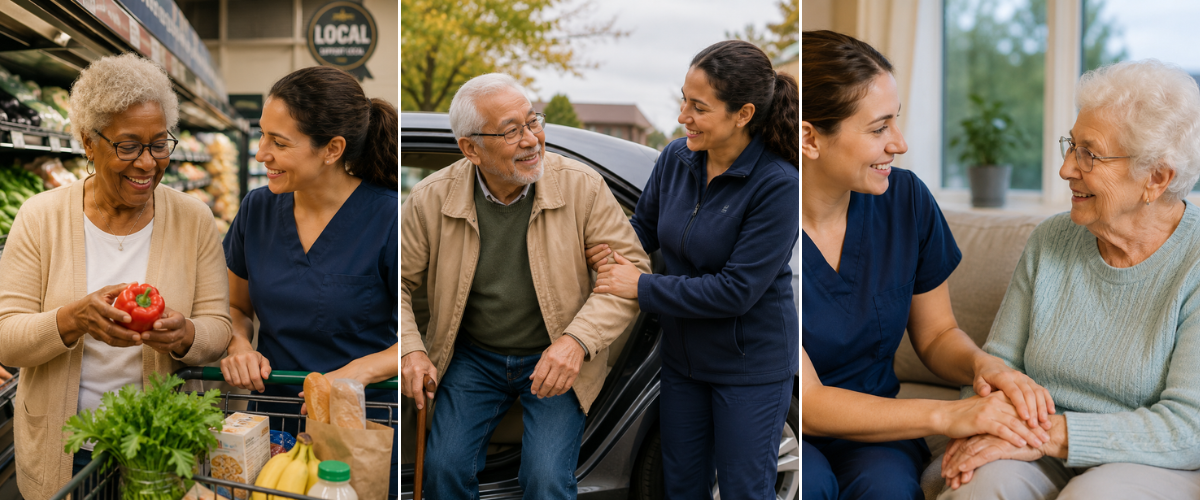
Companion care provides conversation, social interaction, encouragement, and shared activities. A caregiver might play cards, take a walk, prepare lunch with the senior, help with a hobby, or simply spend time listening. This support can be especially valuable for someone who lives alone, has stopped driving, or has become less socially active.
Companionship is not an extra. Regular human connection can help a senior maintain structure, motivation, and a stronger sense of belonging. It also gives families reassurance that someone is checking in consistently and noticing changes in mood, habits, or daily functioning.
Personal Care Assistance
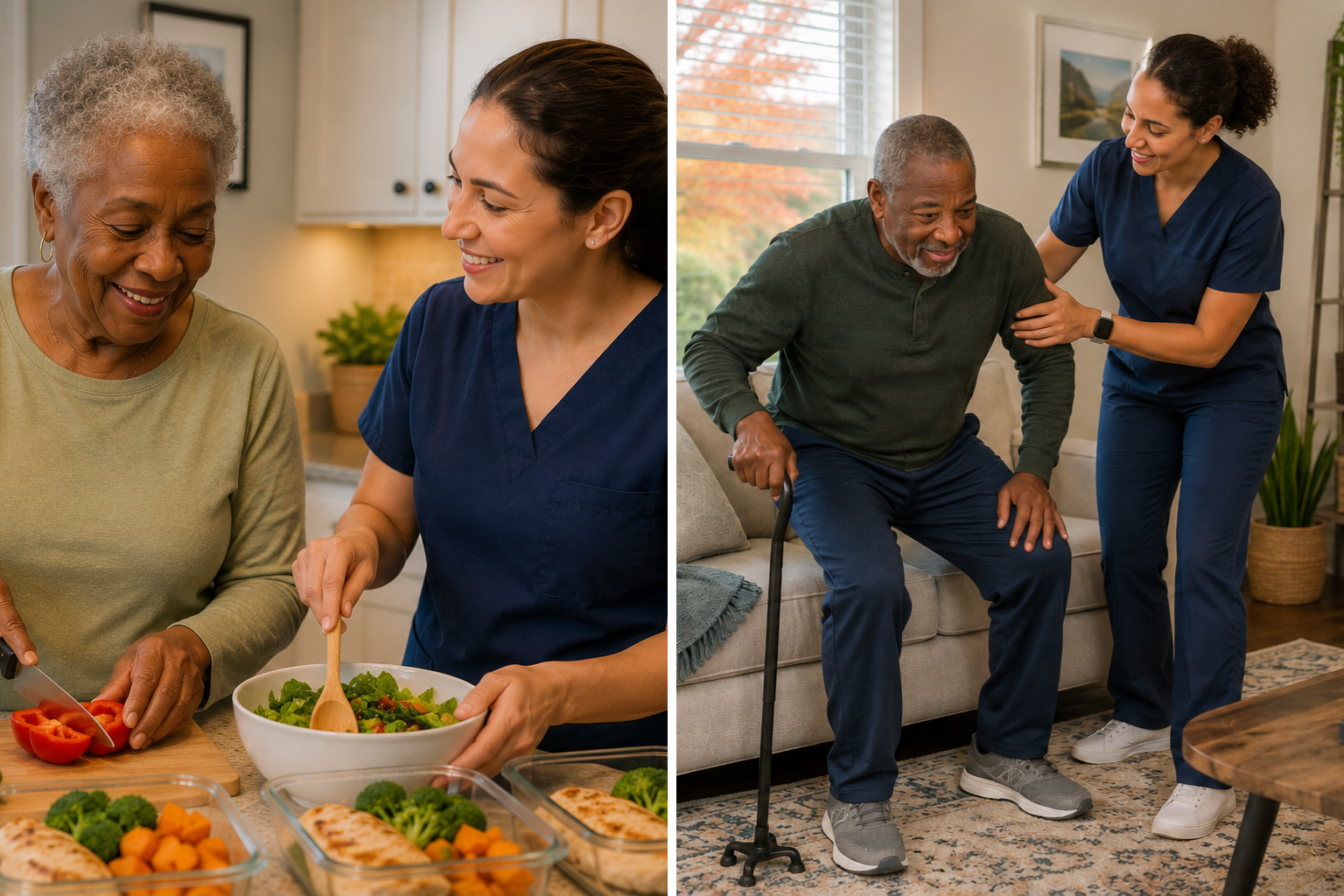
Personal care assistance helps with activities of daily living such as bathing, dressing, grooming, toileting, mobility, and transferring. These are highly personal tasks, so respectful care and clear communication matter. A good caregiver provides only the assistance that is needed, encouraging the senior to remain involved and independent wherever possible.
Personal care may be useful after a fall, during recovery, when arthritis makes movement painful, or when balance, strength, memory, or coordination begin to change. The purpose is to support safety and dignity rather than take control away from the person receiving care.
Meal Preparation and Home Management
Shopping, cooking, dishes, laundry, changing linens, and light housekeeping can become exhausting or unsafe over time. Caregivers can help prepare familiar meals, organize the kitchen, complete light household tasks, and maintain a cleaner, more comfortable environment.
This kind of help can also reveal concerns early. An empty refrigerator, spoiled food, unopened mail, piles of laundry, or a cluttered walking path may be signs that a senior is having more difficulty than they have shared with family.
Medication Reminders and Routine Support
Non-medical caregivers do not prescribe, change, or administer medications. They can, however, provide reminders based on an established schedule, encourage the senior to follow instructions from healthcare professionals, and help reinforce consistent routines.
Medication reminders are often combined with meals, hydration prompts, appointment preparation, and observation of day-to-day changes. Families should speak with the care provider about exactly what is permitted and how concerns are communicated.
Transportation and Accompaniment
Reliable transportation helps older adults reach medical appointments, grocery stores, pharmacies, social activities, family visits, and community events. The level of support may include more than a ride. Some seniors need help getting ready, walking to the vehicle, managing a mobility device, checking in at an appointment, carrying groceries, or settling safely back at home.
Green Bay Metro offers reduced fares for riders age 65 and older, Medicare recipients, and people with qualifying disabilities. Green Bay Metro and local paratransit options can be helpful for eligible riders, while caregiver transportation may offer more personalized door-through-door assistance and accompaniment. Families can combine community transportation with home care depending on the senior’s mobility, schedule, and comfort level.
Respite Care for Family Caregivers
Family caregiving can be meaningful, but it can also become physically and emotionally demanding. Respite care gives a spouse, adult child, or other family caregiver time to rest, work, attend appointments, travel, or focus on other responsibilities while the senior continues receiving support at home.
Care can be scheduled for a few hours, a recurring day each week, overnight assistance, or a longer period. Choosing respite before exhaustion becomes severe can help families maintain a healthier, more sustainable caregiving routine.
Dementia and Memory Support
Seniors living with Alzheimer’s disease or another form of dementia may benefit from consistent routines, calm communication, meaningful activities, supervision, and support with daily tasks. Remaining in a familiar home can reduce some of the disruption that comes with an unfamiliar environment, although the home must still be evaluated for safety.
Dementia care should be individualized. A person in the early stages may primarily need companionship, reminders, and help with meals. As the condition progresses, the care plan may need more hands-on support, closer supervision, and greater relief for the family caregiver.
Support After a Hospital Stay or Surgery
Returning home after surgery, rehabilitation, illness, or hospitalization can create a temporary need for extra help. A caregiver may assist with meals, personal care, transportation to follow-up visits, light housekeeping, and safe movement around the home while the senior regains strength.
Non-medical home care does not replace discharge instructions, skilled nursing, or therapy. Instead, it helps with the daily activities that can make a recovery plan easier to follow.
Signs a Loved One May Benefit from Home Care
Families often wait for a crisis because it can be difficult to know when ordinary aging has become a safety concern. Looking for patterns rather than one isolated event can help. Home care may be worth exploring when a loved one is:
- Skipping meals, losing weight, or relying mainly on snacks and convenience foods
- Wearing the same clothes repeatedly or having difficulty with bathing, grooming, or toileting
- Missing medications, appointments, bills, or important daily tasks
- Experiencing falls, near-falls, weakness, or fear when walking through the home
- Letting laundry, dishes, clutter, or basic housekeeping accumulate
- Driving less confidently or avoiding errands because transportation feels difficult
- Spending most days alone or withdrawing from hobbies, friends, or community activities
- Showing increased confusion, forgetfulness, anxiety, or changes in routine
- Depending heavily on a spouse or family member who is becoming exhausted
A conversation about care is usually easier when it begins with the senior’s goals. Instead of saying, “You cannot manage alone anymore,” a family might ask, “What would make it easier for you to stay in your home?” That question frames care as a tool for independence rather than a loss of independence.
How Home Care Can Protect Independence
Independence does not mean doing every task without help. It means having choices, maintaining control over daily life, and receiving support in a way that respects personal preferences. Home care can protect independence by addressing the specific tasks that have become difficult while allowing the senior to continue doing what they can safely manage.
For example, a caregiver may prepare ingredients while the senior helps cook, provide standby assistance during a shower, drive to the grocery store while the senior chooses their own items, or organize a daily routine without taking over decision-making. This right-sized approach can preserve confidence and reduce the frustration that comes from either too little help or too much help.
Home care can also help a senior stay connected to Green Bay life. Transportation and companionship may make it easier to attend a medical appointment, visit a favorite restaurant, participate in a faith community, spend time with family, or continue a familiar weekly routine. These ordinary moments are often central to quality of life.
Local Resources for Older Adults and Families in Green Bay
Private home care can be one part of a broader local support system. Green Bay and Brown County families may also find the following resources useful.
Aging & Disability Resource Center of Brown County
The ADRC of Brown County provides information and connections for older adults, adults with disabilities, and families. Its Green Bay office can help people understand local programs, caregiver resources, transportation options, nutrition services, and long-term care pathways. The ADRC also coordinates home-delivered meals in many parts of Brown County, including Green Bay and several nearby communities.
Green Bay Metro and Paratransit
Green Bay Metro serves Green Bay, De Pere, Allouez, Ashwaubenon, and Bellevue. Its buses are accessible, and paratransit is available within the qualifying service area for people who cannot use fixed-route buses because of a disability. Because routes, eligibility, and hours may change, families should review current information directly with the transit system.
Brown County Veterans Service Office
The Brown County Veterans Service Office helps veterans and eligible family members navigate benefits, referrals, and community resources. Green Bay veterans may also connect with the Green Bay Vet Center for counseling and referrals. Veterans who need help with personal care or activities of daily living should ask a VA social worker about programs such as Homemaker and Home Health Aide Care, eligibility requirements, and local availability.
Wisconsin Long-Term Care Programs
Wisconsin’s Family Care and IRIS programs support eligible older adults and adults with disabilities who need long-term services and supports. The ADRC is the best local starting point for understanding eligibility, enrollment, and available options. Program approval does not automatically mean every private provider participates, so families should verify coverage and provider arrangements before care begins.
Trusted Home Care Services
At The Home Halo®, we are a trusted home care agency dedicated to providing non medical home care, companion care, and caregiver services that support independence, dignity, and comfort at home.
Home Care, Home Health Care, and Assisted Living: What Is the Difference?
Home Care
Home care provides non-medical assistance in the senior’s residence. It may include personal care, companionship, meals, transportation, medication reminders, respite, dementia support, and help with household routines. Scheduling can range from occasional visits to more extensive daily support.
Home Health Care
Home health care provides skilled medical services in the home, usually under a healthcare provider’s order. Services may include nursing, wound care, physical therapy, occupational therapy, or speech therapy. Visits are based on clinical needs and insurance requirements.
Assisted Living
Assisted living is a residential setting where older adults have their own room or apartment and receive meals, activities, supervision, and varying levels of personal assistance from on-site staff. Moving to assisted living may be appropriate for some people, but seniors who prefer to remain at home may be able to do so with a combination of home care, family involvement, community resources, and medical services.
The right option depends on safety, health needs, finances, preferences, home environment, and the amount of support available. Families do not have to make the decision alone; a physician, social worker, care manager, ADRC specialist, and home care provider may each offer useful perspective.
How to Choose a Home Care Provider in Green Bay
A strong provider should be transparent about services, caregiver screening, communication, scheduling, and what happens when needs change. During a consultation, consider asking:
- Is the agency authorized to provide services in Wisconsin, and what oversight applies?
- Are caregivers employees or independent contractors?
- What background checks, references, and training are required?
- How are caregivers matched with clients based on needs, personality, and preferences?
- Can the care schedule begin small and increase later?
- How does the agency handle caregiver call-offs or schedule changes?
- How are family members updated, and who should they contact with a concern?
- Which personal care, dementia, transportation, respite, and household services are available?
- What tasks are caregivers not permitted to perform?
- How are rates, minimum visit lengths, holidays, mileage, and cancellations handled?
Pay attention to how the provider asks questions. A thoughtful consultation should explore the senior’s routines, preferences, abilities, risks, home environment, family support, and goals. The conversation should not feel like a generic sales script.
How Families Pay for Non-Medical Home Care
Payment depends on the senior’s situation, the services needed, and eligibility for benefits. Families commonly explore private pay, long-term care insurance, qualifying veteran programs, and Wisconsin Medicaid long-term care programs.
Medicare generally does not pay for ongoing custodial or personal care when that is the only care a person needs. It may cover certain skilled home health services when eligibility requirements are met. Families should confirm benefits directly with Medicare, an insurance carrier, the VA, Wisconsin Medicaid, or a benefits specialist rather than assuming a service is covered.
When comparing costs, ask for a complete explanation of hourly rates, minimum shifts, weekend or holiday charges, mileage, assessments, and cancellation policies. Also consider the cost of leaving needs unmet: missed work for family caregivers, preventable hospital visits, unsafe driving, poor nutrition, caregiver burnout, or a move that happens before the family is ready.
Why Green Bay Families May Choose Home Halo
Home Halo provides compassionate, relationship-driven, non-medical home care that helps seniors and veterans remain safe, comfortable, and independent at home. Care plans can include companionship, personal care assistance, meal preparation, home management, medication reminders, transportation, respite care, dementia support, and help with everyday routines.
Home Halo serves families throughout Wisconsin, including Green Bay and surrounding Brown County communities. Care begins with a conversation about the person, not just the tasks. The goal is to understand the senior’s routines, preferences, strengths, challenges, and family support before creating a personalized plan.
Some families need only a few hours of support each week. Others are planning for a hospital discharge, supporting a loved one with memory changes, or trying to prevent caregiver burnout. A flexible care plan can adjust as needs evolve.
Frequently Asked Questions About Home Care for Seniors in Green Bay
What does home care for seniors in Green Bay include?
Services may include companionship, personal care assistance, meal preparation, light housekeeping, laundry, medication reminders, transportation, respite care, dementia support, mobility assistance, and help with other daily routines. The exact plan should be personalized to the senior.
Can home care be provided for only a few hours each week?
Yes. Many families begin with part-time support for errands, bathing, meal preparation, companionship, or caregiver relief. Schedules can often be increased if the senior’s needs change.
Is home care the same as home health care?
No. Home care is non-medical and focuses on daily living support. Home health care provides skilled medical services from nurses or therapists. A senior may receive both when appropriate.
Can home care help a senior with dementia remain at home?
Home care may help by providing routine, supervision, companionship, personal care, meals, and respite for family caregivers. Whether remaining at home is safe depends on the person’s condition, the home environment, available supervision, and the overall care plan.
Does Medicare pay for non-medical home care?
Medicare generally does not cover custodial or personal care when it is the only care needed. It may cover qualifying skilled home health services. Families should verify coverage directly because benefits depend on the individual’s circumstances.
What areas near Green Bay may be served?
Home Halo provides home care throughout Wisconsin. Families in Green Bay and surrounding Brown County communities can contact the Wisconsin team to confirm service availability, scheduling, and caregiver coverage for their specific address.
How soon should a family begin exploring care?
It is often helpful to explore options before a crisis. Starting early gives the senior more time to participate in decisions, allows the family to compare providers, and makes it easier to introduce support gradually.
Trusted Home Care Services for Seniors & Families
Finding the right home care services for seniors and elderly loved ones can be overwhelming. We make it simple by connecting families with compassionate and reliable in-home care solutions tailored to individual needs.
Helping a Loved One Age at Home in Green Bay
The decision to bring care into the home can feel emotional, especially when a senior has always been independent. But accepting support does not erase independence. The right support can protect it.
Home care for seniors in Green Bay can help older adults continue familiar routines, remain connected to their community, and receive practical assistance without leaving the place they call home. It can also give family caregivers dependable relief and greater confidence that their loved one is safe and supported.
If your family is noticing changes in daily routines, mobility, nutrition, memory, transportation, or caregiver stress, a consultation can help clarify what level of support may be useful. Home Halo can work with your family to create a personalized care plan that respects your loved one’s preferences, dignity, and goals for aging at home.