


Finding dependable home care for seniors in Massachusetts can help an older adult remain safe, comfortable, and connected to the people and routines that make home feel familiar. Families across the Commonwealth may begin exploring care when a loved one needs help with bathing, meals, mobility, transportation, household tasks, companionship, or other parts of daily life.
Massachusetts includes busy urban neighborhoods, historic coastal communities, suburban towns, rural areas, and island communities. A senior living in Greater Boston may face different daily challenges than someone living on Cape Cod, in the Berkshires, or in Central or Western Massachusetts. The strongest care plan considers not only the tasks a person needs help with, but also the home, community, transportation options, family availability, and seasonal conditions surrounding that person.
Home care can begin with a few focused hours each week or provide more consistent support as needs change. For families searching online for “home care Massachusetts” options, understanding what non-medical care includes, how it differs from other senior care settings, and what questions to ask can make the decision feel more manageable.
What Is Home Care for Seniors in Massachusetts?
Home care for seniors in Massachusetts is non-medical support delivered in an older adult’s home. A professional caregiver may assist with personal care, companionship, meal preparation, medication reminders, mobility, transportation, errands, light housekeeping, and other everyday routines.
The goal is not to take over every task. It is to provide the right amount of help so the senior can continue participating in daily life, making choices, and maintaining as much independence as possible. Families who are new to care can begin with Home Halo’s guide to home care for seniors for a broader overview of services and common care decisions.
Home care is different from skilled medical care. Non-medical caregivers do not diagnose conditions, change treatment plans, or replace nurses, therapists, physicians, or emergency services. Instead, they help with the practical routines that support comfort, safety, and quality of life between medical appointments.
In-Home Care for Seniors & Veterans
Compassionate, personalized in home care designed to help seniors live safely and independently in the comfort of home. Our trusted home care services provide daily support, companionship, and specialized senior home care giving families peace of mind every step of the way.
Why Aging at Home Matters to Many Massachusetts Families
Home often represents far more than a physical address. It may hold decades of memories, familiar belongings, trusted neighbors, established routines, and meaningful connections to a community. Remaining at home can help older adults preserve a sense of stability and control during a stage of life that may involve many other changes.
The Massachusetts Executive Office of Aging & Independence works with a statewide network of regional agencies and community partners to help older adults live and thrive in the settings they choose. Its aging support resources for Massachusetts residents connect families with information about care, nutrition, transportation, housing, caregiver support, and other services.
For some families, aging at home means adding a small amount of assistance before a crisis occurs. For others, it means coordinating home care with family involvement, home health services, community programs, or medical care. The right combination depends on the senior’s needs and preferences rather than a single standard path.
Signs an Older Adult May Need Additional Support at Home
Changes in daily functioning often happen gradually. A senior may adapt, simplify routines, or avoid discussing difficulties because they do not want to worry family members or feel as though they are losing independence. Looking at patterns over time can help families decide whether additional support would be useful.
-
- Missed medications or confusion about medication schedules
- Difficulty bathing, dressing, grooming, or using the restroom safely
- Spoiled food, skipped meals, weight changes, or an increasingly empty refrigerator
- New bruises, falls, near falls, or increased unsteadiness
- Laundry, dishes, mail, or household tasks beginning to pile up
- Difficulty getting to appointments, stores, religious services, or social activities
- Withdrawal from hobbies, friends, or usual routines
- Increased forgetfulness, confusion, or repeated questions
- A family caregiver feeling exhausted, anxious, or unable to keep up
- A recent surgery, hospitalization, illness, or noticeable change in mobility
One sign alone does not automatically mean a senior needs extensive care. However, recurring concerns may indicate that it is time to discuss support. Beginning the conversation early gives the older adult more opportunity to participate in provider selection, caregiver matching, and schedule decisions.

Home Care Services Available to Massachusetts Seniors
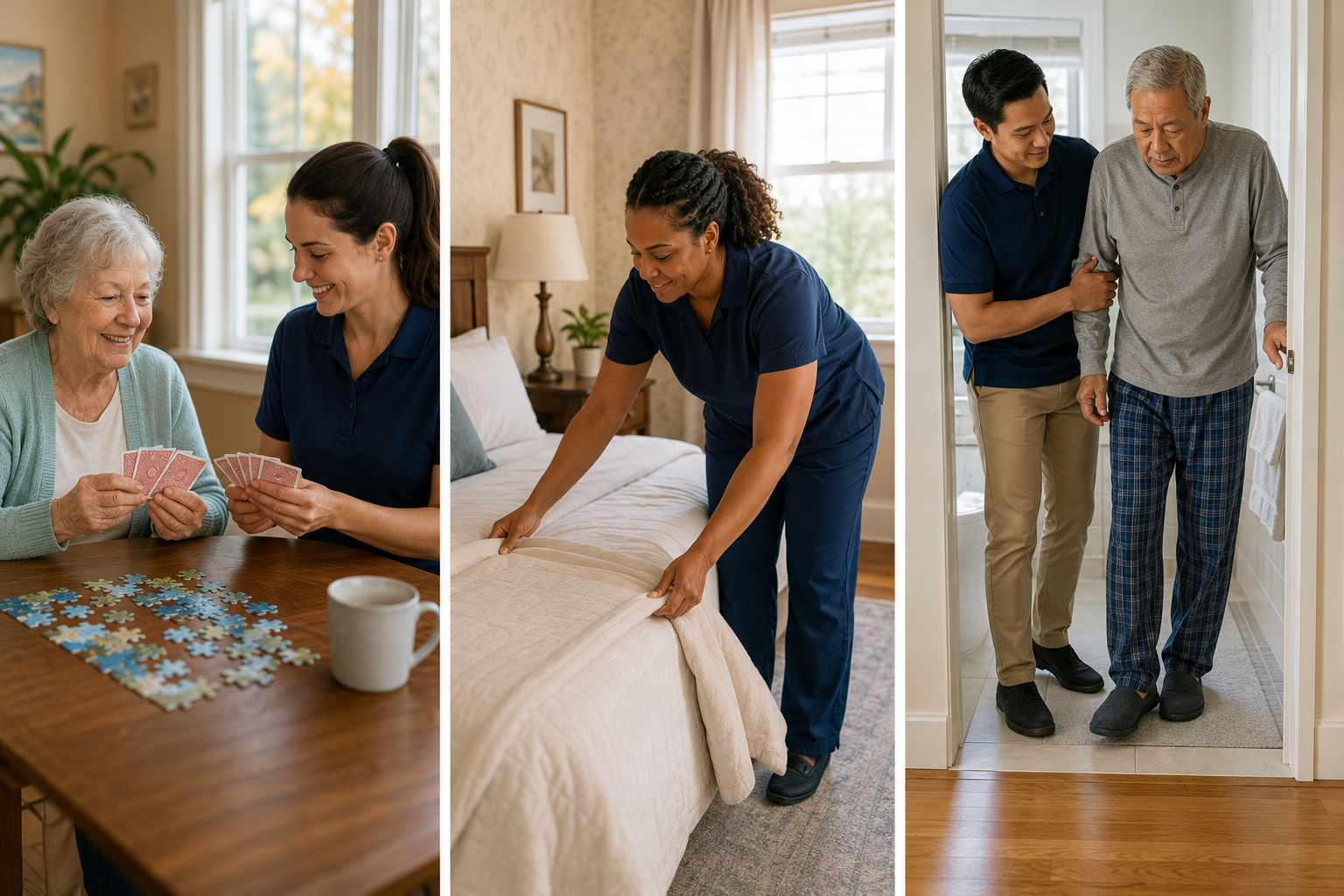
A thoughtful care plan should reflect the individual rather than a generic checklist. Some older adults need mostly companionship and household help. Others require hands-on assistance with personal care, mobility, or memory-related routines. Services can often be combined and adjusted as needs evolve.
Personal Care Assistance
Bathing, dressing, grooming, toileting, and transferring can become more difficult because of arthritis, weakness, pain, balance changes, reduced range of motion, or fear of falling. Respectful personal care assistance for seniors provides help while protecting privacy, dignity, and personal preferences.
A caregiver may offer hands-on support, standby assistance, or reminders depending on the senior’s abilities. The goal is to support safe participation, not remove choices or rush through routines.
Companion Care and Social Connection
Living alone does not always mean someone is lonely, but retirement, the loss of a spouse, reduced mobility, hearing changes, and limited transportation can make social connection harder. Companion care for seniors may include conversation, games, walks, hobbies, shared meals, errands, and accompaniment to appointments or community activities.
Consistent companionship can also help families notice changes in mood, appetite, mobility, or routine earlier. A familiar caregiver may become an important source of connection while still respecting the senior’s independence and personal space.
Meal Preparation and Home Management
Grocery shopping, cooking, laundry, cleaning, and organizing require time, energy, and mobility. When these tasks become harder, a senior may rely on snacks, skip meals, wear the same clothing repeatedly, or live in an environment that is less comfortable and safe.
Home management assistance can include meal preparation, dishes, laundry, changing linens, light housekeeping, grocery shopping, and errands. These services help maintain a comfortable household while allowing the older adult to save energy for activities that matter most.
Medication Reminders and Routine Support
Managing several prescriptions at different times of day can be confusing. Non-medical caregivers do not prescribe, administer, or change medications, but they may provide medication reminders for seniors and encourage the person to follow the schedule established by healthcare professionals.
Caregivers can also support daily routines surrounding meals, hydration, appointments, exercise instructions, and bedtime. Predictable routines may be especially helpful after a hospitalization or when memory changes make the day feel less organized.
Mobility, Transportation, and Errands
Transportation needs vary widely throughout Massachusetts. Seniors in Boston and nearby cities may need help navigating stairs, sidewalks, transit stops, traffic, and long walks from drop-off areas. Older adults in suburban or rural communities may have fewer nearby services and longer distances between home, appointments, grocery stores, and pharmacies.
Depending on the care plan and provider policies, a caregiver may assist with walking, safe transfers, errands, grocery shopping, prescription pickup, or transportation to appointments and community activities. Reliable support can help an older adult remain connected instead of avoiding essential outings.
Respite Care for Family Caregivers
Family caregiving can be meaningful, but it can also become physically and emotionally demanding. In-home respite care gives family caregivers time to work, attend appointments, travel, rest, or focus on other responsibilities while a trusted caregiver supports their loved one.
Respite care does not mean a family member is stepping away from their role. It can make caregiving more sustainable by providing planned relief before exhaustion becomes a crisis.
Dementia and Memory Support
Older adults living with Alzheimer’s disease or another form of dementia may benefit from familiar surroundings, calm communication, consistent routines, and one-on-one attention. In-home dementia care can support personal care, meals, engagement, safety awareness, and everyday structure.
Because dementia changes over time, families should review the care plan regularly. A senior who initially needs companionship and reminders may later benefit from more direct assistance or longer periods of supervision.
Support After Surgery or a Hospital Stay
The transition home after surgery, illness, or rehabilitation can be overwhelming. A non-medical caregiver can help with meals, light housekeeping, bathing, dressing, mobility, transportation, medication reminders, and other routines while the senior regains strength.
Post-surgery home care does not replace discharge instructions, skilled nursing, or therapy. It fills practical gaps between clinical visits and helps make the home recovery period feel more organized and supported.
How Massachusetts Communities and Seasons Can Shape a Care Plan
A care plan should reflect where and how the senior lives. Massachusetts is geographically compact, but daily life can look very different across the state. Housing design, transportation access, distance from family, and seasonal weather all influence the support a person may need.
Historic Homes, Apartments, and Stairs
Many Massachusetts communities include older homes, multi-level residences, triple-deckers, narrow hallways, high thresholds, and bathrooms that were not designed for limited mobility. Urban apartments may also have limited elevator access or challenging entryways.
A caregiver can support safe movement through existing routines, but families should also discuss fall risks and home modifications with appropriate healthcare or home-safety professionals. Caregiver assistance complements, rather than replaces, clinical recommendations or structural improvements.
Winter Weather and Seasonal Safety
Snow, ice, freezing temperatures, and early sunsets can make errands, transportation, and outdoor activity more difficult. Some families increase care during the winter for grocery shopping, meal preparation, transportation, companionship, and help maintaining daily routines when leaving home is harder.
Summer heat can also affect older adults, particularly those without reliable air conditioning or who have health conditions that influence temperature regulation. Seasonal planning may include hydration reminders, appropriate clothing, indoor activities, and family check-ins during extreme weather.
Urban, Suburban, Rural, Coastal, and Island Needs
In urban areas, seniors may live close to medical care and community programs but face traffic, stairs, parking limitations, and crowded transportation. In suburban and rural communities, services may be farther apart and family members may live at a distance. Coastal and island communities may experience seasonal traffic, weather disruptions, or limited provider availability.
These differences make local caregiver availability and scheduling especially important. Families should confirm that a provider serves the senior’s specific community and can support the times of day when help is most needed.
Home Care vs. Home Health Care
The terms home care and home health care sound similar, but they describe different types of support. Understanding the distinction helps families speak with the right provider and build a complete plan.
-
- Home care: Non-medical assistance with personal care, companionship, meals, light housekeeping, errands, transportation, medication reminders, and daily routines.
- Home health care: Skilled clinical services ordered or overseen by a healthcare provider, such as nursing, physical therapy, occupational therapy, speech therapy, or wound care.
A senior may use one or both. For example, a physical therapist may visit after a joint replacement while a home caregiver helps with meals, laundry, bathing, transportation, and routine support between therapy appointments.
Medicare has specific eligibility requirements for covered home health services and generally does not cover long-term non-medical custodial care by itself. Families should review Medicare’s official long-term care coverage information and speak directly with their plan or benefits counselor before assuming a service will be covered.
Trusted Home Care Services
At The Home Halo®, we are a trusted home care agency dedicated to providing non medical home care, companion care, and caregiver services that support independence, dignity, and comfort at home.
Home Care vs. Assisted Living
Home care and assisted living can both support older adults, but they provide help in different settings. Assisted living includes housing, shared amenities, meals, and organized activities in a residential community. Home care brings personalized support into the senior’s existing residence.
Home care may be a strong fit for someone who values familiar surroundings, wants one-on-one assistance, prefers a flexible schedule, or has meaningful neighborhood and family connections. Assisted living may appeal to someone who wants a residential community with shared dining and activities.
Needing more supervision does not automatically mean an older adult must leave home. Depending on provider availability and the family’s plan, home care may range from occasional visits to extended-hour, overnight, or around-the-clock support. The best choice depends on the person’s wishes, safety needs, budget, home environment, and available support system.
How Much Home Care Does a Senior Need?
There is no standard number of hours that works for every family. Some seniors benefit from a few hours each week for showers, errands, meal preparation, or companionship. Others need morning and evening support, daily assistance, overnight care, or a more continuous schedule.
Before meeting with a provider, families can consider these questions:
-
- Which daily tasks are becoming difficult, stressful, or unsafe?
- Are mornings, evenings, weekends, or overnight hours the biggest concern?
- Does the senior need hands-on personal care, standby support, or mostly reminders and companionship?
- How often are family members available, and what responsibilities can they realistically maintain?
- Has there been a recent fall, hospitalization, diagnosis, or change in mobility?
- Would starting with a smaller schedule make the transition easier?
- Are care needs likely to increase during the next several months?
A professional assessment can help translate these concerns into a practical schedule. The care plan should be reviewed whenever the senior’s health, routine, living situation, or family availability changes.
Understanding Home Care Costs and Payment Options in Massachusetts
The cost of home care varies based on location, schedule, visit length, level of assistance, and whether care is needed overnight, on weekends, on holidays, or around the clock. Agencies may also have minimum visit or weekly hour requirements. Families should request a personalized quote and ask exactly what is included.
Common ways families pay for non-medical home care may include private funds, long-term care insurance, qualifying veterans benefits, and certain state or Medicaid-supported programs. Coverage and eligibility differ, so families should verify benefits directly rather than relying on general assumptions.
The Massachusetts Home Care Program provides services for eligible residents and determines eligibility based on factors such as age, residence, need, and ability to complete daily tasks. Massachusetts residents can also contact a regional Aging Services Access Point for an assessment and information about community resources.
Veterans who are enrolled in VA health care and meet clinical and program requirements may be eligible for services such as Homemaker and Home Health Aide Care. Availability and eligibility vary, so a VA social worker or care team is the appropriate source for individual guidance.
Massachusetts Resources for Seniors and Family Caregivers
Private home care can be one part of a broader support system. Massachusetts offers statewide and regional programs that can help families explore community services, benefits, caregiver support, transportation, nutrition, housing, and care planning.
Executive Office of Aging & Independence
The Massachusetts Executive Office of Aging & Independence provides aging-related information and connects residents with a network of regional nonprofit agencies and community resources.
Aging Services Access Points
Massachusetts has regional Aging Services Access Points, commonly called ASAPs. These organizations coordinate services that may include assessments, care planning, home care programs, caregiver support, nutrition programs, and other community-based assistance. Families can use the state’s ASAP locator to identify the organization serving their community.
Local Councils on Aging
Local Councils on Aging and senior centers may offer transportation, meals, activities, outreach, health insurance counseling, and other community programs. The state provides a directory of local Councils on Aging to help residents find nearby services.
Options Counseling and Caregiver Support
Massachusetts Options Counseling is a free service that helps older adults, people with disabilities, and families understand long-term services and supports. Family caregivers may also be able to access information, education, and respite resources through the state’s Family Caregiver Support Program.
How to Choose a Home Care Provider in Massachusetts
Choosing a provider means inviting someone into a loved one’s home and daily life. Families should look beyond a list of services and ask how the agency approaches caregiver screening, communication, consistency, training, scheduling, and changes in care needs.
-
- Which services are available, and which tasks are outside the caregiver’s role?
- How are caregivers screened, trained, and matched with clients?
- Who should the family contact with a concern or schedule change?
- How does the agency respond to caregiver call-outs or unexpected absences?
- Can the care plan increase or decrease as needs change?
- How are families updated about care, routines, and concerns?
- Is there a minimum visit length or weekly schedule requirement?
- Does the agency serve the senior’s specific city, town, or county?
- How are rates determined, and what additional fees may apply?
- Can the agency provide documentation for long-term care insurance or coordinate with qualifying benefit programs?
A strong provider should be clear about what it can and cannot offer. Families should feel comfortable asking questions, discussing preferences, and requesting adjustments when a caregiver match or schedule is not meeting the senior’s needs.
Trusted Home Care Services for Seniors & Families
Finding the right home care services for seniors and elderly loved ones can be overwhelming. We make it simple by connecting families with compassionate and reliable in-home care solutions tailored to individual needs.
Why Families Choose Home Halo in Eastern Massachusetts
Home Halo provides compassionate, personalized, non-medical support designed to help seniors remain safe, comfortable, and independent at home. Through Home Halo of Eastern Massachusetts, families can explore care in Essex, Middlesex, Suffolk, Norfolk, Plymouth, Bristol, Barnstable, Dukes, and Nantucket counties.
Our relationship-driven approach recognizes that families are not simply hiring help with a checklist of tasks. They are trusting a caregiver to enter a loved one’s home, respect established routines, communicate clearly, and provide dependable support with dignity.
Care plans can begin with the needs that matter most today and evolve as circumstances change. Whether a senior needs companionship, personal care, meal support, transportation, respite care, dementia support, or a combination of services, Home Halo works to create a plan around the individual and family.
Home Halo also supports veterans and their families. Those exploring care for a former service member can read our guide to in-home care for veterans and speak with the local office about available services and potential next steps.
Frequently Asked Questions About Home Care for Seniors in Massachusetts
What services are included in home care for seniors in Massachusetts?
Home care may include companionship, bathing and dressing assistance, grooming, toileting, mobility support, meal preparation, light housekeeping, laundry, grocery shopping, errands, transportation, medication reminders, respite care, dementia support, and help with other daily routines. Services should be personalized to the individual.
Is home care the same as home health care?
No. Home care generally provides non-medical help with daily activities and household routines. Home health care provides skilled clinical services, such as nursing or therapy, under medical direction. Some seniors use both services at the same time.
Can home care be provided for only a few hours each week?
Yes. Many families begin with part-time support for bathing, meals, errands, companionship, transportation, or caregiver relief. Provider minimums vary, and schedules can often be adjusted if the senior later needs more or less assistance.
Can home care help after surgery or a hospital stay?
Yes. Non-medical caregivers can help with meals, personal care, mobility, transportation, light housekeeping, medication reminders, and daily routines during recovery. They do not replace skilled nursing, therapy, discharge instructions, or follow-up medical care.
What if my parent does not want a caregiver?
Resistance is common because accepting help can feel like losing independence. Begin with the older adult’s goals, such as remaining at home, keeping a familiar routine, continuing favorite activities, or making errands easier. Starting with a small amount of companionship or household assistance may make the transition feel less intrusive.
How much does home care cost in Massachusetts?
Rates vary based on the region, number of hours, schedule, level of assistance, and whether care is needed overnight, on weekends, on holidays, or around the clock. Families should ask providers for a written explanation of rates, minimums, and additional fees.
Does Medicare pay for non-medical home care?
Medicare generally does not pay for long-term non-medical custodial care when that is the only service needed. It may cover qualifying skilled home health services under specific conditions. Families should review current Medicare information and contact their plan for guidance based on the individual’s coverage.
How do I find aging services in my Massachusetts community?
Start with the Massachusetts Executive Office of Aging & Independence, your regional Aging Services Access Point, or your local Council on Aging. These organizations can help identify programs, eligibility requirements, and community resources available near the senior’s home.
Compassionate Home Care for Seniors in Massachusetts
Choosing home care for seniors in Massachusetts is not only about completing tasks. It is about helping an older adult continue living with dignity, familiarity, and a sense of control. The right support can make meals easier, routines safer, appointments more manageable, and family caregiving more sustainable.
For families in Eastern Massachusetts, Home Halo is here to help explain available options and build a care plan around the person, the home, and the routines that matter most. Support can begin with a few focused needs and grow as circumstances change.
Ready to explore care for your loved one?
Connect with Home Halo of Eastern Massachusetts to learn more about personalized in-home support for seniors and families.